Is government going wobbly on its migration plans?

 EPA
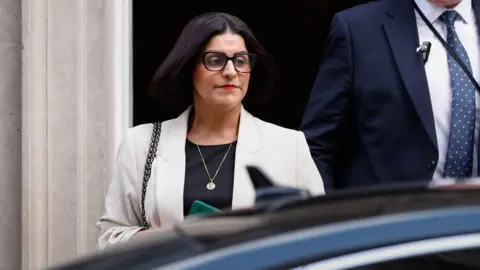
EPAMinisters are planning a big shake-up of the immigration system to make it harder for migrants already in the UK to settle permanently here.
But the idea is controversial. The former deputy prime minister Angela Rayner branded them "un-British" and more than 100 Labour MPs, peers and union leaders have criticised it too.
Ministers want to double the time it takes most migrant workers to qualify for permanent residence from five years to 10 years, while in the case of refugees it could take 20 years.
But after Rayner's intervention, the prime minister's team, facing questions from reporters, repeatedly failed to explicitly commit to the headline-grabbing idea originally set out by Home Secretary Shabana Mahmood.
Pressed on whether they were considering watering down their idea, they said they were currently studying the responses to a consultation on the plans, and would respond once they had.
But let's dig a little deeper.
Not long after these exchanges with reporters, a statement appeared in our inboxes from the government.
A spokesman said: "The government's position has not changed. The government will double the route to settlement from five to ten years. As announced in November, we are consulting to apply this change to those in the UK today but have not received settled status. We are currently reviewing the 200,000 responses and will outline our response in due course."
Back in November, the home secretary did say the government was seeking views in their consultation on "whether there should be some transitional arrangements available".
And earlier this month she said "the qualifying period for settlement should move – as a norm – from five years to ten."
Note the words "as a norm."
Put all of these things together and the hints and nods from the government appear to amount to a leaning on the wriggle room they did give themselves from the outset to be flexible in some instances, or for a period of time, about how their plans might be applied.
This probably means it wouldn't be fair to brand any softening of their position, should it come, as a U-turn.
But it does leave them scope, and scope they are currently not discouraging us from spotting, to acknowledge the opposition their plans are encountering and attempt to reflect some of these concerns in what they eventually put forward as their final plan.

Sign up for our Politics Essential newsletter to keep up with the inner workings of Westminster and beyond.