Cutting-edge designs of 'unsinkable' Titanic to be made public for first time

 Getty Images
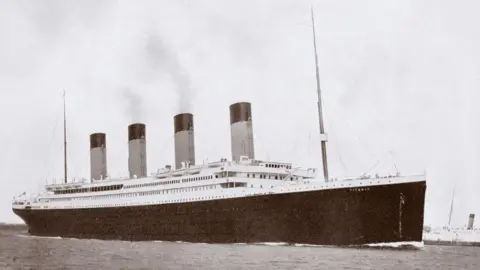
When Titanic departed on her doomed maiden voyage in April 1912 she was the largest, most luxurious and most technically advanced ship ever to sail the seas.
Her electrical plant could produce more power than an average city power station at the time and her features included Turkish baths, a swimming pool, gymnasium, and - even in third class - some of the best accommodation available at sea.
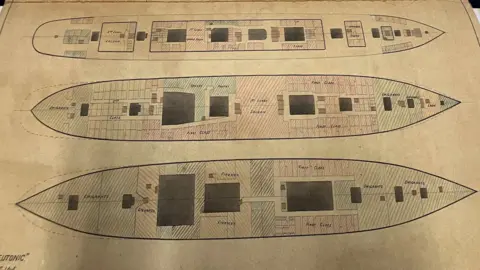
Now - 114 years after the ship hit an iceberg and sank in the north Atlantic - the technical plans and drawings used to build her will be made available to the public for the first time.
They are among hundreds of thousands of ship plans and documents made widely accessible.
 National Museums Northern Ireland
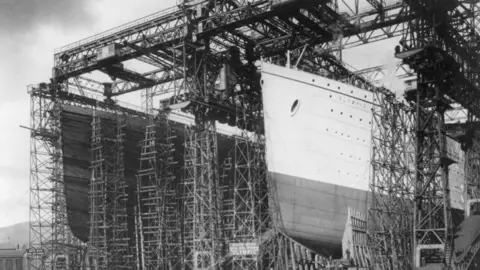
Titanic - along with her sister ships Olympic and Britannic - was designed at the drawing office of the Harland & Wolff shipyard in Belfast, which is now a hotel.
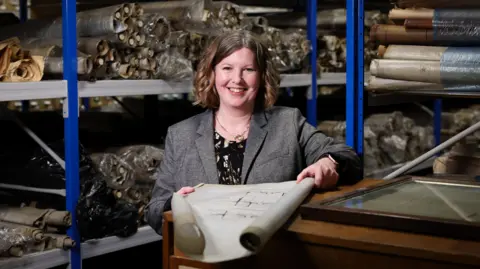
The designs and drawings are included in the Harland & Wolff ship plans archive.
It is stored at the Ulster Folk Museum and is being made available by National Museums Northern Ireland (NMNI).
When did the Titanic sink?
More than 1,500 people died when Titanic sank on its maiden voyage in 1912.
The vessel struck an iceberg on its way from Southampton to New York and sank within hours.
The story of the sinking later became an Oscar-winning film starring Leonardo Di Caprio and Kate Winslet.
While the ship had enough lifeboats on board to meet maritime regulations of the time they only had the capacity for half of the passengers on board the night she sank.
The ship also had a series of watertight compartments and could remain afloat if up to four were breached.
The safety features led to Titanic being considered by many to be "unsinkable".
After hitting the iceberg, five watertight compartments were breached, leading to Titanic sinking.
 Getty Images
The wreck was discovered on the ocean floor in 1985 by a team led by Dr Robert Ballard.
It lies at a depth of about 2.5 miles (4km), about 370 miles (595km) off the coast of Newfoundland, Canada.
As well as plans for Titanic, the archive also contains the plans for her sister ships.
HMHS Britannic also met a tragic end, sunk by a German mine in 1916 while serving as a hospital ship during World War One.
But RMS Olympic - launched the year before Titanic - served as a trans-Atlantic liner for the White Star line for 24 years.
Harland & Wolff began operations in 1861 and was once one of the world's largest shipyards.
Its archive contains hundreds of thousands of plans, drawings and documents detailing how ships were designed and built.
The archive is housed at the Cultra Collections Store at the Ulster Folk Museum.
A major project to catalogue the archive, called From Drawing Board to Slipway is also underway, with funding from the Archives Revealed grant programme.
In a statement, project archivist Siobhan McLaughlin said it would "unlock the hidden histories of Belfast's heritage in shipbuilding".
 Getty Images
The director of collections at NMNI, William Blair, said until now access to the archive had been restricted to academics and researchers.
"This project, however, shows how working with partners can broaden engagement and demonstrates our enhanced commitment to making our collections available to a wider audience than ever before," he said.
The project has also been welcomed by the director of operations at Navantia UK Harland & Wolff, Alex Haley.
The public will be able to access the ship plans online as well as making appointments to visit the plans and the Harland & Wolff collection.