Police told to reinvestigate man's death after suspected blackmail on Grindr

 BBC
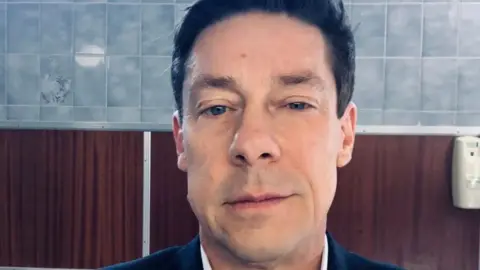
BBCPolice have been told to reopen their investigation into the death of Scott Gough, who allegedly took his own life after being targeted by a gang of men on the gay dating app Grindr.
A police Professional Standards Department (PSD) report found failures in the investigation into the 56-year-old's death, which happened the day after a group of men turned up at his home demanding his car keys.
His partner, Cameron Tewson accused the police of "marking their own homework" after his complaint of homophobia was not upheld.
Hertfordshire Police, the investigating force, said it remains committed to "ensuring members of the LGBTQ+ community feel supported when approaching the force".
The report into the police's actions comes after a BBC investigation found multiple cases of suspected blackmail involving victims targeted on Grindr in Gough's local area, with at least four connected to the same gang, which remains at large.
The 55-page document, seen by the BBC, upheld allegations that a failure to properly examine links between the cases led to Gough's death not being adequately investigated as potential blackmail, and that the force took too long to deal with subsequent complaints regarding their investigation.
It also told the force that while its investigation into a sudden death was sufficiently detailed, the decision not to investigate it as a criminal blackmail investigation may have been wrong, as there was "sufficient suspicion" to record a crime of blackmail.
The report recommended an independent officer from the force should now reinvestigate the case.
A spokesperson for Hertfordshire Police told the BBC they were in discussions over whether an independent department, or an officer from a neighbouring force, should be appointed to conduct the review and any subsequent reinvestigation of the case.
A complaint of homophobia lodged by Gough's partner against the investigating officers was not upheld after the officers in question told investigators from the PSD they were "absolutely not" homophobic and that the allegations were "deeply offensive".
One of the officers involved told those investigating the complaint that Tewson, 32, had developed a "personal vendetta" against them.
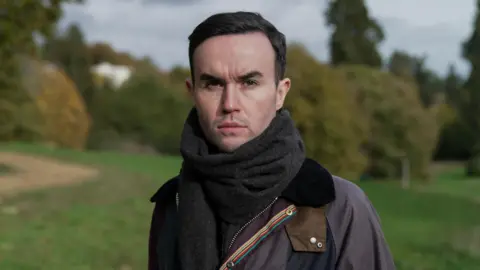
In an interview with BBC News, Tewson dismissed the finding and said interviewing the officers over alleged homophobia was "like asking them to mark their own homework and scrutinise their own processes".
Hertfordshire Police said "the investigating officer leading the reinvestigation did not identify discrimination or homophobia within the investigation".
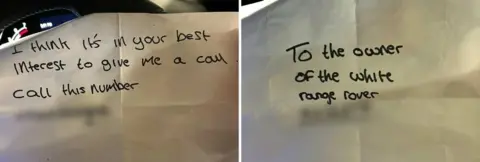
As previously reported by BBC News, Tewson had complained about the force's handling of the investigation into the death of Gough - who took his own life in March 2024, the day after he reported a group of six men arrived at his door demanding the keys to his Range Rover.
 Handout
At the time of investigation, police recorded the case as a sudden death rather than a potential crime and did not record a blackmail offence, stating there was "insufficient evidence" to do so despite a phone number linked to the group being used in other reported blackmails in the area involving the app.
Police records seen by the BBC also showed that although police had identified some suspects, the group were treated as "individuals requiring safeguarding" rather than as potential offenders involved in extortion or blackmail.
The report found that there were in fact "reasonable grounds" to suspect Gough could have been a victim of blackmail due to the linked phone number, the suspicions of Gough's family members that he was targeted online, and a vehicle identified in the area belonging to one of the suspects.
'Missed opportunities'
The Professional Standards Report also brings to light new details about police failures in the case, including how officers "missed opportunities" to gather evidence, such as mobile phone records or interviews with those identified as suspects.
Records show an officer from the force's Child Online Safety Team (COST) visited the suspects' homes after a further blackmail was reported, but did not interview them or treat them as potential offenders, instead treating the visit as an "informal intervention to stop the group from targeting anyone else" and to "provide stern words of advice".
Despite the alleged victim telling police the group had recorded him, their phones were never searched or examined by the officers.
Hertfordshire Police told the BBC the visit "appears to predate any link being identified between the males who had attended the home address of the deceased", but that the decision not to treat them as potential offenders "may have led to a potential loss of evidential material".
The report upheld a complaint that the police "made several errors following the death of [Scott Gough] and did not investigate [his] sudden death fully as a result".
Although the investigation was found to be "unacceptable", investigators for the PSD found that the individual officer had conducted a "thorough" sudden death investigation and that their supervisors should have provided further guidance on recording an offence of blackmail.
It also reminded the officer in question to follow best practice when logging crime reports, as they had failed to do so in Gough's case, meaning information about the investigation was not properly stored or readily available to the PSD's investigation.
 Gemma Laister / BBC
The report found that delays in dealing with Tewson's complaints were unacceptable.
Hertfordshire Police told the BBC the team managing the complaints had been restructured with the aim of "ensuring these delays are now avoided".
The BBC understands Tewson intends to ask the independent police watchdog, the Independent Office for Police Conduct (IOPC) to review the PSD report and any reinvestigation, as he is not satisfied with the outcome.
The IOPC previously found the death had not been "robustly investigated"
Tewson told the BBC that dealing with the complaint for almost two years following his partners death was "like reliving his death every single day".
He said: "I don't think I've been able to grieve properly yet, but I knew that I was onto something from the beginning and if I hadn't pushed them for answers I would have thought to myself in five or six years time, 'Why didn't I push more?'"
Hertfordshire Police said it has "dedicated LGBTQ+ liaison officers, whose role is vital in providing tailored support to victims from the LGBTQ+ community, addressing specific needs, building their trust, and helping break down barriers that prevent people reporting incidents or seeking police assistance.
"We are also dedicated to delivering learning to ensure that officers understand specific issues faced by members of the LGBTQ+ community."
Clarification 5 February 2026: This article originally explained the IOPC's role as the review body in the event of further investigations, but included wording which could be taken to suggest that the IOPC has been asked to review the PSD report. We have removed this sentence from the story and also added a line which explains that the BBC understands that Mr Tewson intends to ask the IOPC to do so.