'I'm in constant pain after vaginal mesh surgery'

 BBC
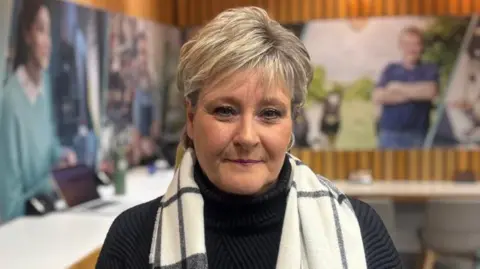
BBC"I walked into the hospital able-bodied and came out on crutches."
Susan McLarnon is one of thousands of women across the UK who have experienced serious complications after being given a vaginal mesh implant to treat a prolapse and urinary incontinence
She says she now lives in "constant pain" and is calling for the government to commit to a deadline for a redress scheme.
McLarnon is one of several women who travelled to Downing Street to hand a letter to the prime minister asking for "urgent action" to be taken on compensation for those harmed by pelvic mesh implants.
Some women were left in permanent pain, unable to walk, work or have sex, after the surgery to treat incontinence and pelvic organ prolapse.
Two years ago, a major report called for urgent action but campaigners are still waiting.
Kath Sansom, founder of Sling The Mesh, who handed in the letter at Downing Street with the other women, said pelvic mesh had "stolen women's health, irreversibly ruined their quality of life, their independence, and their future".
They are calling for a timescale for a funded, government-backed compensation scheme for all women who have been harmed.
The UK Department of Health and Social Care said it is "carefully considering" the recommendations in the report and aims to provide an update in due course.
 Susan McLarnon
'Excruciating pain'
McLarnon, who is from Belfast, had her surgery in 2016.
She was told it was a simple operation to fix the prolapse and the surgery would be "easy".
But she says she was not told about the risks and afterwards was in "excruciating pain".
Since then, her mobility has been affected, along with her ability to carry out day-to-day tasks like getting washed and dressed and driving.
McLarnon later had another surgery to take the mesh out, but it was not fully removed and she says the pain never goes away.
The group Sling the Mesh NI, which is made up of women who have been affected, has almost 700 members and McLarnon says she considers herself "one of the lucky ones".
She says others have "lost organs", have had to sell their homes and their relationships have broken down.
Men have also been affected by surgical mesh, with the implants used to treat hernias.
McLarnon says while they are also suffering, it is harder to get men to speak about it.
"They don't like to speak about personal things – but they are also in excruciating pain," she says.
In her report, Dr Henrietta Hughes recommended initial payments of £20,000 should be made to women across the UK who have been injured by mesh implants.
There were then calls for the Northern Ireland Executive to set up a scheme to pay compensation to women injured by pelvic mesh implants.
McLarnon says their campaign for redress is "not just about compensation".
"It will help those who are on waiting lists to see surgeons for removal or go privately."
What is vaginal and hernia mesh?
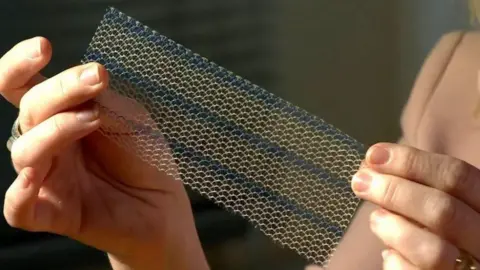
Surgical mesh is a medical device used to support the vagina and organs including the bladder, the rectum, or the urethra.
It was considered to be the gold standard treatment for incontinence and prolapse in women for years.
However, the net-like implant can erode and harden, cutting through tissue causing serious pain and damage to organs.
Some were left in permanent pain, unable to walk, work or have sex.
It is unclear exactly how many women in Northern Ireland are adversely impacted by mesh implants.
While for many the operation has been successful, it's thought that hundreds require removal.
According to an NI Audit report, between 1998 and 2018, there were about 11,000 total vaginal mesh implants carried out in Northern Ireland with a conservative estimate of between 5-10% experiencing problems.
The audit found data was not properly collated within the local health trusts.
What has NI's Department of Health said?
The Department of Health (DoH) in Northern Ireland said it is mindful that those who have been harmed by pelvic mesh have had to wait so long for a response to the recommendations of the Hughes Report, but medical devices and medicines are "matters that remain reserved to Westminster".
The DoH is, therefore, "unable to move forward on this matter whilst the UK Government formulates its position in response to the recommendations".
The DoH noted that Prof Hughes wrote to the prime minister in March asking him to set a clear timetable for the financial redress to be delivered without further delay.