Stormont assembly members in line for £14,000 pay rise

 Getty Images
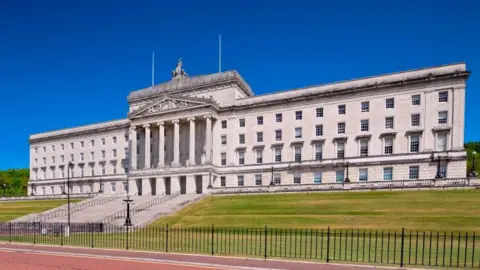
Stormont's 90 assembly members (MLAs) are in line to see a pay rise of more than £14,000 from April this year taking their salaries to £67,200, the panel that sets their salaries has said.
MLAs currently earn £53,000 a year, which is less than their counterparts in the UK's other devolved parliaments in Scotland and Wales.
The independent remuneration board is responsible for determining the salaries and pensions of MLAs.
On Thursday, it said it will now seek feedback and views on its draft proposal before presenting a final determination.
The board was set up last year with support from the largest Stormont parties but faced criticism from the TUV and People Before Profit who said it would lead to MLAs receiving significant uplifts in their pay.
It also said that in recognition of "public frustration at stop-start government, the board has also signalled significant financial sanctions that would apply" if an executive is not formed following the next and subsequent elections.
The board said this would also apply at any time the offices of first minister and deputy first minister become vacant.
The chair of the Police Federation for Northern Ireland (PFNI) said the proposed salary increase for MLAs is unjustified and "a slap in the face" for struggling public sector workers.
Liam Kelly said the recommendation to boost MLA salaries by more than £14,000 is "a staggering own goal" and amounts to a disgraceful reward for doing "very little as legislators".
Kelly said: "We, and other public sector workers, struggle to get minimum, single digit pay awards across the line but it's clearly one rule for MLAs and another for police officers and others."
What do they earn elsewhere?
Members of the Scottish Parliament receive £74,507 while members of the Welsh Parliament earn £76,380.
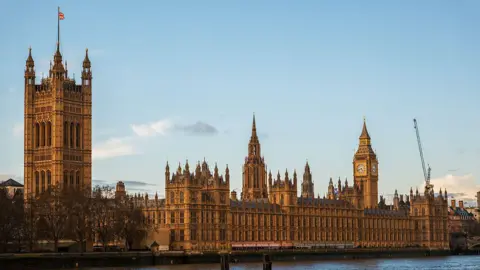
At Westminster, MPs earn £93,904 a year while members of the Dáil (lower house of the Irish parliament) earn €118,284 (£103,416).
 Getty Images
The chair of the board, Alan Lowry, said the panel had taken into account what elected representatives in the other devolved nations earn as well as in Westminster and Dublin.
"We recognise these proposals come at a time when public confidence has been impacted by periods in recent years when our political institutions were not sitting and working normally," he said.
"That is why, as a board, we were determined that although MLAs should be paid more, that should only be on the basis of them doing their full jobs."
'Dereliction of duty'
The Ulster Unionist Party (UUP) leader Jon Burrows told BBC News NI that he is going to discuss the matter with "the team of MLAs at Stormont tomorrow".
Burrows said he had just heard the news and hadn't yet had a chance to discuss it with his team.
"It is really important that Stormont provides value for money for the public and what we need to see is highly-effective, highly-efficient government," he continued.
Burrows also said he wanted to be clear where the UUP stand on collapsing Stormont, outlining this is a "dereliction of duty" and that MLAs have a "responsibility to the public".
He said that collapsing Stormont "shouldn't have happened and must never happen again".
 PA Media
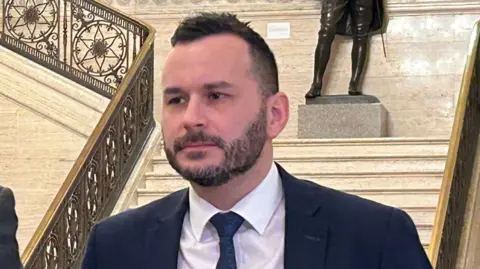
In a statement, TUV MLA Timothy Gaston said the "so-called independent remuneration board has delivered exactly the outcome MLAs always intended".
"When this legislation came before the Assembly, I warned that the dice were loaded to produce a massive pay hike," Gaston said.
"That warning has now been vindicated."
 PA WIRE
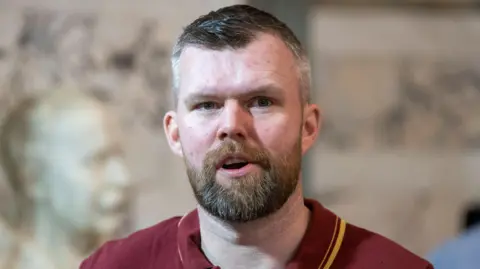
People Before Profit MLA Gerry Carroll said the pay rise is a "complete disgrace and shows that Stormont is completely and utterly out of touch with ordinary people".
"MLAs are already well paid, and this extortionate increase isn't warranted," Carroll said in a statement.
"A public representative can't relate to their constituents if they've just received a £14,000 pay rise, while most people have seen their wages stagnate and the cost of living skyrocket."
Salary reduction if executive not re-formed
For five years, the Independent Financial Review Panel (IFRP) set wages and expenses for politicians in the assembly.
But the terms of the three panel members ended in 2016 and they were never replaced. The new panel came into operation last year after new legislation was passed.
"Our MLAs are elected to demanding roles which they perform within their own constituencies and at Parliament Buildings," it said.
They make important decisions around legislation, holding ministers and departments to account and their work on the Assembly's scrutiny committees.
"It is important this work, as well as representing the views and concerns of their constituents, is recognised and valued," said Lowry.
"With the previous independent financial review panel last making a determination in 2016, it is clear the system of MLA pay has not been functioning normally for a decade.
"Today's announcement is a corrective measure and, without prejudicing future determinations, the board would expect those to be considerably smaller adjustments, and more in line with inflationary and other pay trends of the day."
He added that should a new executive not be formed after the next assembly election, a reduction of 10% will be applied to MLA salaries after six weeks, and again at weeks 12 and 18 weeks.
The board is due to make a total of three determinations in the 2026 calendar year. The other two, on MLA salaries in respect of the 2027-32 mandate and separately on MLA pensions, will be made in the latter half of this year.