Schools 'struggling' for pupils as birth rate falls

 Getty Images
Schools in a Welsh county are "struggling" to fill their spaces leading to competition for pupils, according to a Welsh language playgroup board member.
Anna Webb, from Caerphilly, says she has witnessed a dramatic shift in behaviour as people adjust following the pandemic and deal with rising costs.
It comes after a Caerphilly council report described a "continual falling birth rate" dropping from 2,000 births a year to around 1,400 over a 10-year period.
A spokesperson said the decline in birth rates was "in line with trends seen across Wales", adding that it had an impact on the demand for school places.
The "mismatch" has also affected budgets and schools' sustainability, according to the council.
"Significantly fewer" children are entering the primary school system as a result, creating "surplus places across many schools", a report said.
It added: "There is a risk that our school infrastructure will not reflect future demand, leading to inefficient use of assets and missed opportunities for learners."
Anna Webb, 51, has served on the board of trustees for two Welsh language playgroup Cylch Meithrin nurseries in the county for the past 12 years.
She said nurseries were "flourishing" before the pandemic with a waiting list "bursting at the seams".
But she has witnessed a shift in behaviour since then.
"I think everybody reprioritised their lives around what was important," she said.
"When we came out of pandemic, the number of children coming through definitely declined."
Anna said the aftermath of the pandemic made life "a lot more difficult for people" because of rising costs.
"The effects of Brexit have also been felt quite deeply in the valleys," she added.
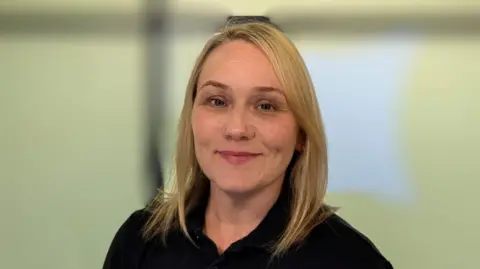 Anna Webb
Anna said she was aware of schools in Caerphilly county "that are struggling to get numbers in" and even competing with each other for pupils.
"My daughter is in a local Welsh-medium primary school and there's usually about 30 children in her class," she said.
"Numbers have fallen as children have moved to different schools."
Jane Grandon, 43, lives in Nelson where she has noticed changes in the opportunities afforded to her children.
Her eldest son, now 22, used to play rugby as child when there were "20-plus members" of the team all from the Nelson area.
But she said her youngest child, aged 11, is in a team of "just 12 children" now.
"He is the only child from Nelson," she added.
 LDRS
LDRSUnder the Childcare Offer, parents and guardians can claim up to 30 hours of free childcare each week, provided they met a certain criteria.
But there have been concerns about the availability of places and the cost of extra, unfunded hours.
One family in Monmouthshire decided to leave Wales and move to Gloucestershire so they would be eligible for childcare support in England.
 Google
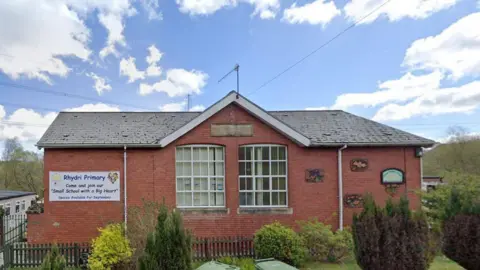
Rhydri Primary School, in Rudry, and Cam Glas Infants School, in Llanbradach, are among schools to have closed in recent years.
Both cited falling birth rates as a reason for reduced pupil numbers leading to increased costs.
Similar decisions in other parts of Wales have also taken place such as Ysgol Bro Cynllaith, in Powys, which closed in August last year.
A former council leader in Pembrokeshire warned in July 2025 that the trend in his county was "unsustainable" after falling pupil numbers led to a consultation about further school closures.
Schools across Caerphilly county are expected to reduce their budgets by between £11,000 and £60,000 on average next year.
The council's education committee heard last November how schools were expected to report budget deficits this year, worth an estimated £6 million.
Leane Sykes, the council's director of finance, said schools made up a large proportion of the budget so they "cannot be immune" from cutbacks.