FBI fugitive found hiding in Wales can be extradited to USA

 FBI
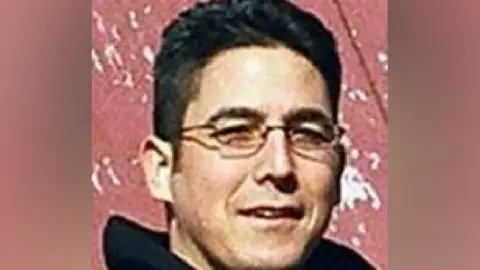
FBIA suspected terrorist who evaded the FBI for more than 20 years before being found in Wales can be sent back to the USA to face trial, a court has heard.
Daniel Andreas San Diego, 47, was one of the agency's "most wanted fugitives" after bombings in San Francisco, California, in 2003.
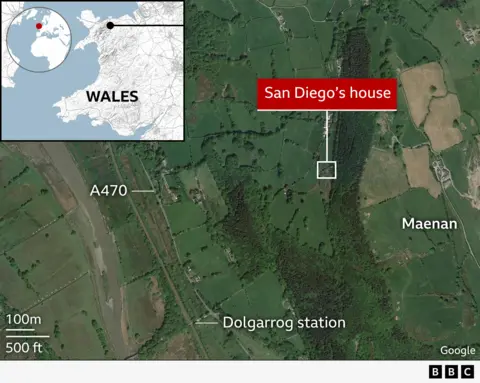
He was arrested in November 2024 in a remote location near Maenan, Conwy, after 21 years on the run.
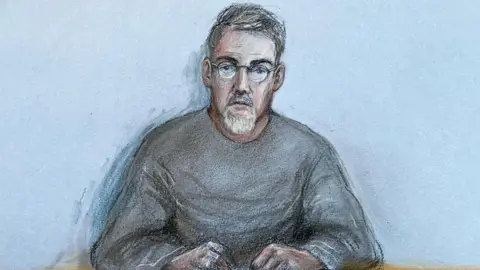
Judge Goozée told Westminster Magistrates' Court the arguments raised by San Diego's legal team were rejected.
He will have to seek permission from the home secretary before he can appeal the extradition order.
San Diego, who was born in Berkeley, California, is accused of planting three nail bombs across California in 2003.
The case against San Diego was compiled by Assistant US Attorney Helen Gilbert.
She wrote: "It concerns the detonation of three improvised explosive devices at two different companies based in California.
The two companies, Chiron Corporation and Shaklee Corporation had a relationship with the research organisation Huntingdon Life Sciences, which conducted animal testing. The companies were targeted because of this relationship."
She added two homemade bombs were detonated at Chiron's Headquarters in Emeryville, California in the early hours of 28 August 2003.
It was noted there were employees on site at the time, but no one was hurt - although damage to property was caused.
The following day Gilbert told the court that an animal rights group called the Animal Liberation Brigade, Revolutionary Cells, claimed responsibility for the bombing in an electronic message posted on the bulletin board of an animal rights magazine.
The post read: "In the early hours of 28 August volunteers from Revolutionary Cells descended on the animal killing scum Chiron.
"We left them with a small surprise of two pipe bombs filled with ammonium nitrate slurry with redundant timers."
 PA Media
The second bombing at Shaklee Headquarters in Pleasanton, California took place at around 03:20 am on 26 September 2003.
Nobody was harmed, but the US Assistant Attorney said the bomb contained nails "which would have caused serious injuries if any person had been nearby when it was detonated".
The same animal rights group would later claim responsibility for this bombing.
Earlier that night, at around 02:20 San Diego became a prime suspect in the bombings after being stopped by traffic police close to where one of the devices exploded. He was released, after which he vanished.
The US government also told the court that his fingerprints were found among some bomb-making equipment in the car he abandoned.
 Aled Evans
San Diego was arrested by officers from the National Crime Agency in November 2024 and taken to the high security HMP Belmarsh in London.
The patio doors in his home were left open and there was a wrapped Christmas present on a table.
The couple who sold the £400,000 house to San Diego were one of many who told reporters that the man they knew as a Canadian kept himself to himself and was often seen walking his dogs in the surrounding countryside.
He was found with an Irish passport in the name of Danny Webb and had worked as an IT consultant but little is known of his whereabouts during his 21 years on the run.
Shortly after his arrest it was revealed that San Diego was one of America's most wanted fugitives and had featured five times on the Fox programme America's Most Wanted.
The FBI had placed him on their Most Wanted list of Terrorists alongside Usama Bin Laden and Abdul Rahman Yasin, the man wanted for his part in planning the bombing of the World Trade Centre in 1993.
He had not been seen since he disappeared into a subway station in San Francisco as the FBI, who were monitoring his movements 24 hours a day, were prepared to make an arrest in connection with a series of bombs that had exploded in California.
 Getty
GettyDuring the extradition hearing Mr San Diego's legal team argued he could never expect to receive a fair trial in the USA due to possible political and legal interference in his case.
Prosecutors disagreed saying neither President Donald Trump or anyone else in a position of power had mentioned San Diego's case at all and there was no proof that he would not receive a fair trial.