RSPB uses £50k to clear lakes of 'choking' weed

 BBC
BBCA fast-growing invasive plant which was threatening to "choke out" a habitat at a nature reserve has been removed, experts say.
Lakes and ponds at the RSPB Sandwell Valley Nature Reserve in the West Midlands were covered by the non-native succulent plant called crassula helmsii, also known as New Zealand Pygmyweed.
The plant can spread from a tiny fragment and thrives in areas like wetlands, squeezing out the reserve's native marsh and wet grassland plants, as well as choking up the muddy edges of pools where birds feed.
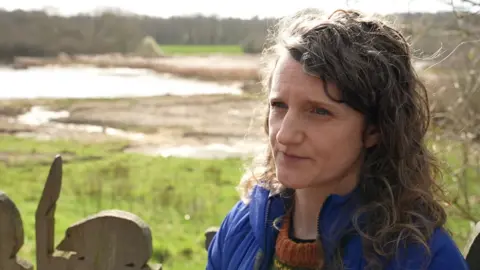
"It was soaking up all of the oxygen, it was bright green and you couldn't see any of the water," said RSPB area manager Mel Dyer.
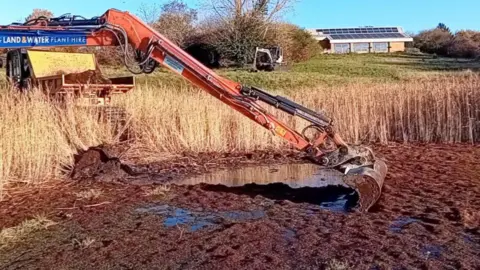
Specialist equipment, including floating diggers, were used for two weeks as part of the removal project, with extra care taken to bury the plant on site.
"We removed as much as we possibly could and buried it so it's no longer got any light, so that will kill all of the plant," Dyer added.
"Hopefully that means we will have another 10 years of a free crassula water body."
 ELMS Contracting Ltd.
The weed can easily attach itself to clothing or equipment such as a boat, paddleboard, wetsuit or angling equipment. It then spreads when moved from one body of water to another.
RSPB secured £50,000 funding for the work from the Enovert Community Trust, which distributes money to community projects from a tax on taking waste to landfill.
Angela Haymonds, from the trust said, "The trustees were very happy to provide a grant to help ensure that birds such as lapwings can continue to be found at Sandwell."
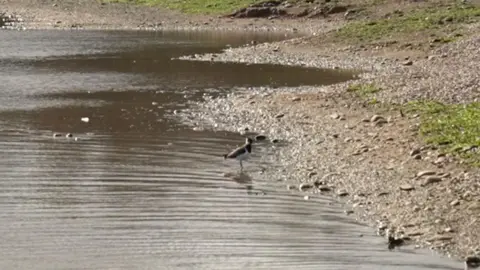
The RSPB also used the funding to create scrapes, man-made shallow muddy seasonal ponds where birds can feed.
"Rare species like lapwing, oystercatchers and snipe need soft muddy edges to probe into with their big long bills," said Dyer.
"These types of habitats are just declining across the country, especially in urban locations like this."
Follow BBC Birmingham on BBC Sounds, Facebook, X and Instagram.