'God squad' waives animal protections to expand oil drilling

 Getty Images
A US federal panel has voted to exempt oil and gas drilling in the Gulf of Mexico from a decades-old law to protect endangered species.
A vote by a committee known as the "God Squad" - because of its ability to influence the future of certain species - followed a request by Pete Hegseth, US secretary of defence.
Speaking on Tuesday, Hegseth said "recent hostile action" by the Iranian government illustrated why securing more domestic oil production was important for the country's national security.
Environmental groups tried to sue to stop the vote, claiming it could push some species like the Rice's Whale into extinction - only 51 remain in the wild.
The Endangered Species Act was passed in 1973 to protect the most at risk animals and plants in the US from the impacts of development. It includes measures such as banning activities in certain areas where species could be harmed or killed, like dam construction.
But the Endangered Species Committee has the power to bypass the law in the interest of national security or when there are no other alternatives to a project.
A few weeks ago, Hegseth wrote to the committee asking for an exemption for oil and gas drilling in the Gulf. He said although the request was made before the war with Iran started, it illustrated why securing national oil supplies was so important.
"The Strait of Hormuz is the world's busiest oil route and recent hostile action by the Iranian terror regime highlights yet again why robust domestic oil production is a national security imperative," he told the committee on Tuesday.
Iran effectively closed off the Strait, one of the world's busiest oil shipping channels, after the US and Israel attacked Iran on 28 February. The average price of gas at the pump has now topped $4 in the US for the first time in nearly four years.
On Tuesday, the 'God squad' voted unanimously to approve the exemption - only the third time in it's 53-year history.
The decision was met with strong condemnation from environmental groups who said it will likely drive the Rice's Whale to extinction. The whale is only known to live in the Gulf of Mexico, and its population dropped by more than 20% to only a few following the Deepwater Horizon spill, according to the US National Oceanic and Atmospheric Administration (NOAA).
"Americans overwhelmingly oppose sacrificing endangered whales and other marine life so the fossil fuel industry can get richer," said Brett Hartl, government affairs director at environmental charity Centre for Biological Diversity.
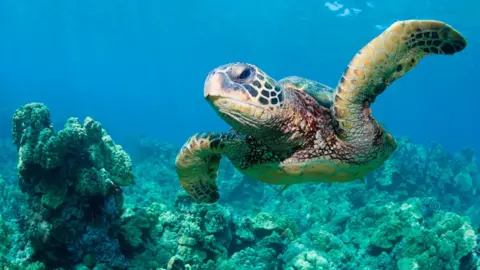
The Gulf of Mexico is home to at least 19 other threatened and endangered species including various types of turtles, the giant manta ray and mountainous star coral.
Speaking at the meeting Hegseth said that litigation by environmental groups had hampered oil and gas activity, and instead this exemption would allow the "integration of oil and gas production with responsible endangered species protection".
In 2025, the National Marine Fisheries Service concluded oil and gas activities in the Gulf of Mexico would lead to the Rice's whale's extinction and recommended precautionary measures such as reducing vessel speeds.
These measures will no longer apply.
Andrea Wood, spokesperson for the trade body American Petroleum Institute, said: "Our industry has a long track record of protecting wildlife while developing offshore energy responsibly."
She added that there needed to be balance between "science-based protections while meeting growing energy demand".
But environmental groups already said they will take further legal action to prevent the exemption going ahead.

Sign up for our Future Earth newsletter to get exclusive insight on the latest climate and environment news from the BBC's Climate Editor Justin Rowlatt, delivered to your inbox every week. Outside the UK? Sign up to our international newsletter here.