University fights abuse of women on dark web

 BBC
BBCUniversity researchers have created a set of tools to help protect young women and girls from violence and abuse on the dark web, the mostly hidden parts of the internet.
The CyberDIVA project between Aston University and tech company Forensic Pathways came about following the largest ever study of the issues faced by woman and girls online.
It found nearly 70,000 incidents of some sort of abuse facilitated by technology between 2021 and 2024, and over 50,000 officially recorded incidents of harassment and malicious communication.
And while boys and men were also affected by online abuse, the group most targeted were women aged 16 to 34, alongside a significant number of under 16s.
The tools include an emoji decoder to help adults understand what messages are being sent to children and how humour can often be used to hide online harm.
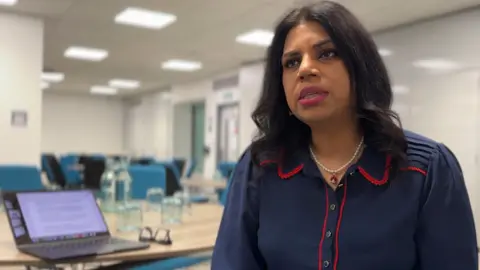
The leader of the CyberDIVA project, Dr Anithan Chinnaswamy, said online problems soon affected people's real world lives.
"Online harms are not just restricted to online spaces," she said. "It pours over into your physical world, into emotional and sentimental spaces. Into how you look at yourself and how you are in society."
CyberDIVA has brought together a wide variety of people, including academics, telecoms companies and West Midlands Police.
Birmingham-based Forensic Pathways has built the tools included in the kit itself. Director Ben Leary drew on the firm's database of dark web intelligence to identify emerging threats and patterns of abuse.
But at its heart, Chinnaswamy said, is listening to the experiences of those affected by these issues.

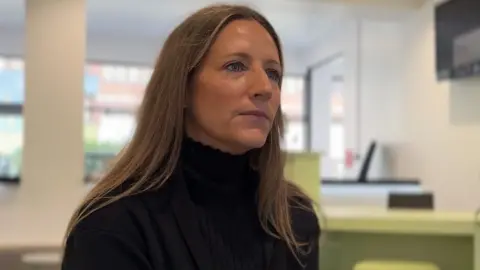
Researcher Nina Jane Patel, from Aston University, said she was using virtual reality when she was "surrounded by three to four male-sounding and male-representing avatars, who started sexually harassing me in a verbal sense and then sexually assaulting my avatar".
Harkirat Kaur Assi said she was catfished and abused by a man online.
"You slowly start to doubt yourself and become a nothing of yourself," she said.
Both woman said people needed to be much more conscious of what girls and women are experiencing online.
"Be aware it's not just a game," Patel said.
Assi said people should think twice before sharing information online that could be used against someone.
"Often grandparents think nothing of sharing details about their grandchildren with strangers."
Alongside the new tools, the university is launching the Gender Equity Research and Inclusive Innovation Technology Group (GRIIT), which brings together academics and industry to tackle these problems.
The CyberDIVA project hopes to arm users to fight back against abuse.
"We wanted to develop resources that would help not only young women and girls, but parents with confidence to help their child navigate this world," Chinnaswamy said.
Follow BBC Birmingham on BBC Sounds, Facebook, X and Instagram.