Charles Jeffrey: My brand is 'for weirdos by weirdos'

 Getty Images
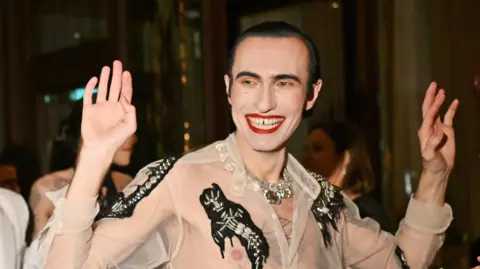
After more than a decade running a fashion brand which he describes as "for the weirdos, by the weirdos", Charles Jeffrey is exploring what it means to be Scottish and who gets to claim it.
Jeffrey, who grew up in Cumbernauld, is the founder and creative director of Loverboy, an international fashion label worn by figures such as Tilda Swinton and Harry Styles.
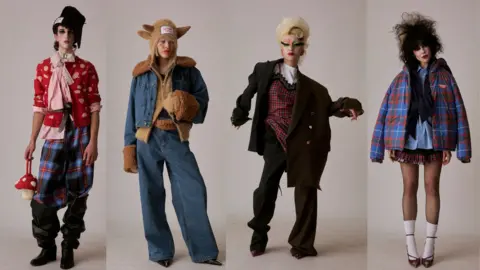
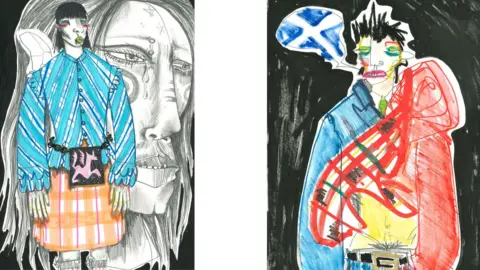
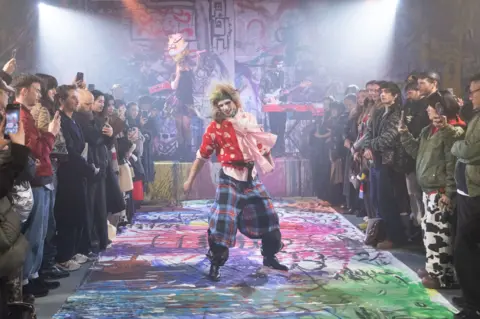
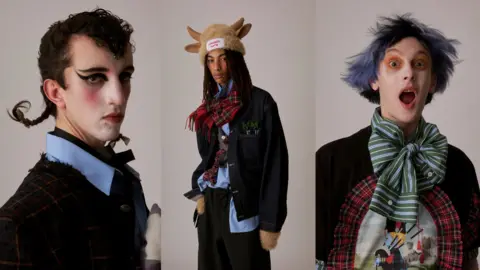
His latest collection, Thistle, celebrates Scottish clothing and identity but through a queer, club‑culture lens.
Or in his own words: "queering Scottish nationalism".
 Charles Jeffrey LOVERBOY
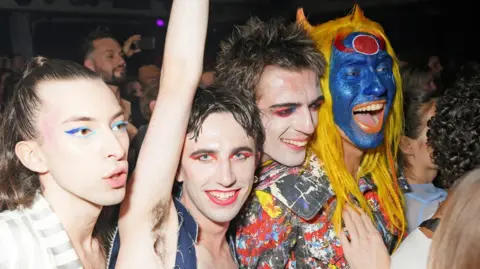
Jeffrey, 35, first captured the fashion world's attention with his distinctive blend of Scottish dress, camp drag looks, and club‑culture energy when he emerged as the "club kid" of London fashion.
But before that he was a teenager growing up in the west of Scotland with his mum in the early 2000s.
"I loved comic books, video games and superhero films," he says.
"I was always drawing my own characters."
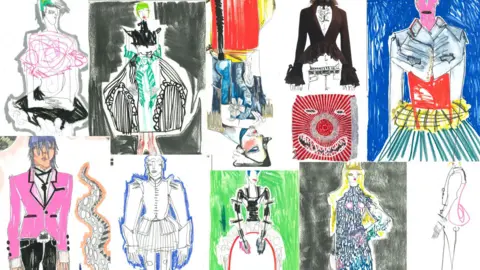
At the time, he imagined a future in game design rather than fashion.
But that changed as he became more aware of his sexuality and began engaging with music, nightlife and fashion culture.
 Charles Jeffrey Loverboy
 Getty Images
As a teen he was a mainstay of an underage club in Glasgow called I-D that used to put on New Rave nights and he says his creativity was fed by early social media site MySpace and magazines like Dazed and Disorder.
But the scene in London was his inspiration, where designers such as Gareth Pugh were starting to make their mark with looks based on club culture and fantastical dressing.
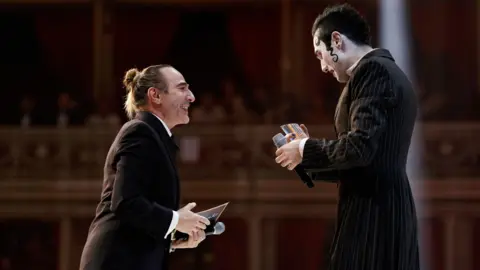
Jeffrey applied to Central Saint Martins, the London art school that has produced many of the designers he most admired, such as Pugh and John Galliano.
 Getty Images
He was accepted but initially struggled to find his way.
"I went from being one of the best students in high school to being surrounded by people who were technically incredible," he says.
"I found it very difficult to be a 'serious' designer."
Jeffrey describes struggling with traditional garment construction and pattern cutting, despite having strong conceptual ideas.
That sense of insecurity pushed him towards alternative ways of working.
"I had to use a different route to get there, which was much more DIY," he says.
That route became Loverboy, initially a drag-infused club night run with friends alongside his studies.
It was informal, playful and rooted in humour, qualities that would later define the brand itself.
 Getty Images
Over time, elements of the club night - painted denim, ripped fabrics, collage and performance - began to merge with more tailored clothing.
Jeffrey says this combination helped him find his voice.
"Something just clicked," he says.
"It was about collaging something artistic with something very specific and tailored."
 Getty Images
 Charles Jeffrey Loverboy
That balance between playfulness and seriousness remains central to Loverboy today, he says.
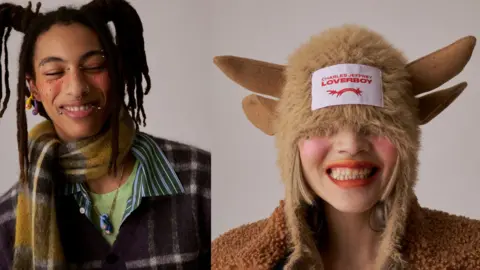
The brand continues to work closely with long-term collaborators, many of whom are friends, a choice Jeffrey links directly to his upbringing.
"It comes from being Scottish," he says.
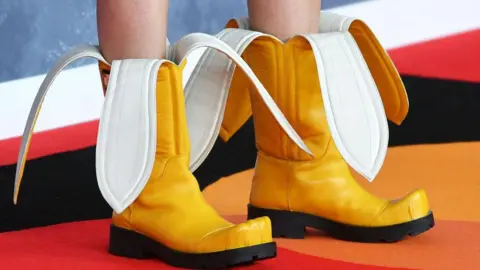
"We never try to take ourselves too seriously, and people don't like it when you're too big for your boots."
 Charles Jeffrey Loverboy
 Getty Images
His latest collection takes its name from Scotland's national flower, often associated with a legend in which invading Vikings were defeated after stepping barefoot onto thistles.
Jeffrey says he arrived at the title late in the process, but felt it captured the moment.
"It's a really resilient flower," he says.
"I feel like that's what we're needing to be right now."
For Jeffrey, the thistle also represents survival within an industry he describes as increasingly unequal.
"It's a rich man's game," he says. "But it's not hopeless."
 Charles Jeffrey Loverboy
The collection is framed as a form of "queer Scottish resistance", drawing on research into Scottish Romanticism and the way national identity has been shaped, retold and sometimes controlled.
The late 18th century romanticism movement helped shape an idealised view of Scotland through art, literature and fashion.
But Jeffrey says it also simplified Scotland's history and sometimes left out groups or identities that didn't fit the romantic image.
He says that modern day nationalism can be used in the same way - to exclude people of colour and LGBTQ+ people.
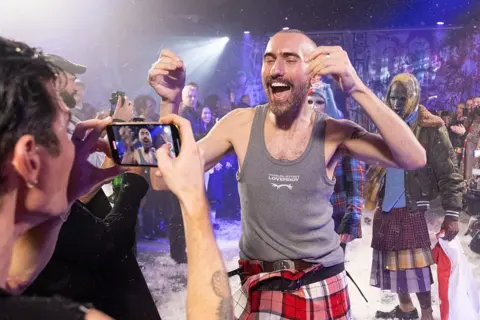
He stresses that while his work is political, its primary aim is to create visibility and safety.
"It's about signalling: this is a safe space," he says.
"We're still here, and you can't get rid of us."
 Getty Images
Despite the success of Loverboy, Jeffrey says self-doubt has never fully disappeared.
"I still look at other designers and think, 'am I doing anything the right way?'," he says.
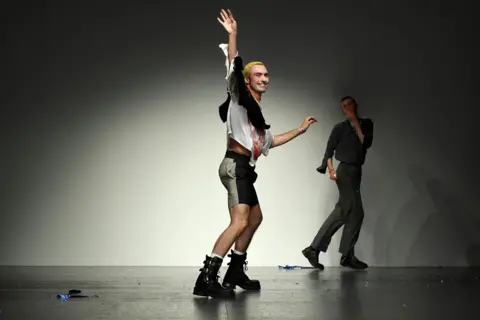
More than a decade into his career, Jeffrey says he no longer expects things to become easier.
"It's always going to be a hustle," he says.
 Getty Images
Throughout it all, home remains the emotional starting point.
"That's where it all began, in my high school art class, and walking around the golf course with my friend dreaming of going places," he says.
"I don't want to leave that space."