How simulating dementia can help with care quality

 BBC
BBCI'm in the middle of the NEC in Birmingham trying to fold laundry and I'm finding it both incredibly difficult and even upsetting.
The event I'm at is called Naidex - a show devoted to independent living and social care, and many of the stands here are about treatments and care for people living with dementia. But I've come to a stand that will allow me to experience what dementia can actually be like.
To take part, I have to put insoles into my shoes that produce an uncomfortable prickling sensation in my feet. I have to wear thick gloves where some fingers are sewn together and goggles are reducing my vision.
Finally, I go inside a simulator and am given headphones to put on - I'm led into what I'm told is a pretty normal-looking room where I have to do simple tasks - like folding the laundry.
But, it's impossible.
My vision and touch are compromised. I'm in some pain in my feet. The sounds played through the headphones are overwhelming.
It is hard to deal with this simple task.
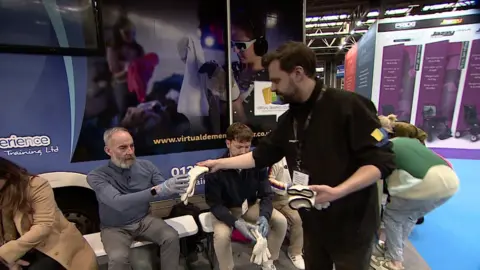
This simulator is designed to help carers in particular understand how they can make simple changes that will bring real relief to those they look after.
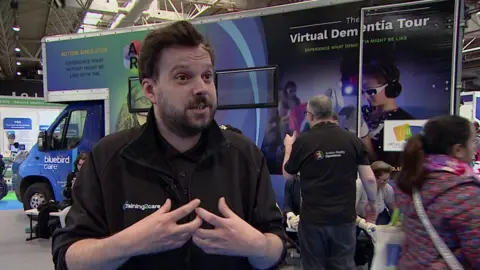
"It's a simulation of what dementia might be like," said Michael Peachey, from Training2Care, which operates the dementia simulator.
"It was created over 20 years ago by a lady in America called P.K. Beville, who is a geriatric specialist.
"She worked with hundreds of people living with dementia to come up with a simulation that would allow people such as us to understand what life might be like," he said.
"We don't want anyone going away though thinking: 'Oh my God it's terrible'," said Peachey of the machine.
"Everything you went through in there, all the challenges you had, there's some really easy things we can do which don't cost money… don't take time… which could massively improve the quality of your life."
This included things like helping carers understand what patients might be trying to communicate to them.
For example, using the simulator to try and eat food to experience how they struggle, which could help with determining the layout of dining rooms in care homes.
A limited study carried out by Ulster University found such simulations could "enable care staff to develop a more empathetic experience for the person living with dementia".
Follow BBC Birmingham on BBC Sounds, Facebook, X and Instagram.