Police framed man for murder, new evidence suggests

 BBC/Family of Omar Benguit/Getty Images
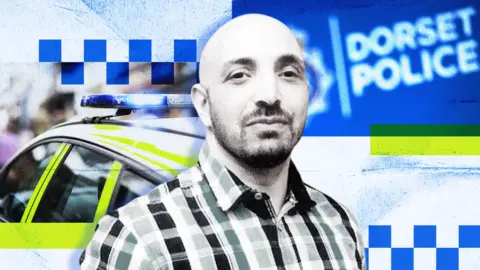
New evidence in the case of a man who has spent 23 years in prison for murder suggests he was framed by police, BBC Panorama has found.
Police knew the testimony of the main prosecution witness in the trial of Omar Benguit for the murder of South Korean student Jong-Ok Shin was directly contradicted by CCTV evidence, we have learned.
A total of 13 other witnesses used to support the prosecution case have now told the BBC the police pressured them to embellish their statements or lie in court.
Dorset Police did not directly address the suggestion that officers had framed Benguit, but said its investigation was "thorough, detailed and very complex".
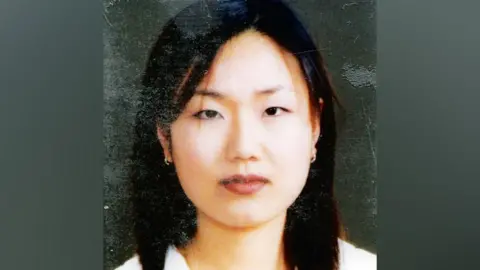
Jong-Ok Shin - known as Oki - was stabbed to death while she was walking home from a Bournemouth nightclub in 2002. Benguit, an addict with a history of drug and knife crime, was convicted at a third trial in 2005, after two previous juries failed to reach verdicts.
The BBC has investigated this case over nine years, previously reporting that some witnesses had said they gave false evidence after being pressured by police. But Panorama's latest investigation reveals:
- Phone records suggest Benguit had an alibi that discredited the evidence of the main witness and the police buried it
- Police built their case around the testimony of a proven liar, even though they knew CCTV footage contradicted her story
- Two additional witnesses say they lied in court after police pressured them
- Four more people told the BBC that officers had tried to get them to give false evidence and they refused
- The evidence of all the key prosecution witnesses has now been undermined or discredited
Witness testimony was crucial to the prosecution as there was no CCTV or forensic evidence linking Benguit to the crime.
After reviewing Panorama's evidence, retired murder squad detective Brian Murphy called for the Independent Office for Police Conduct to investigate Dorset Police's handling of the case.
The former detective chief inspector, who has been involved in more than 200 murder investigations, said in his view Benguit's conviction was not safe. "This cries out for a review without a doubt," he said.
Des Jenson, Benguit's barrister, said that if police had coerced witnesses to lie, "it means that they have manufactured evidence, they've perverted the course of justice".
A proven liar
The murder led to intense pressure on Dorset Police, because Bournemouth's economy relies heavily on international students and the South Korean government wanted the murderer caught.
The police built their case against Omar Benguit around the testimony of a drug addict, who we are calling BB for legal reasons. She said she had been driving three people, including Benguit, on the night of the murder.
BB said she had stopped the car after passing Oki - and that all three men had gone to talk to her. They tried to persuade the student to come to a party and, when she refused, Benguit stabbed her, she said.
BB had a history of making false allegations and her account contradicted Oki's dying testimony, that she had been stabbed by a single, masked attacker.
During the investigation, BB had also changed her story - initially accusing two other men, before naming Benguit in her third statement to the police.
Panorama has now discovered that police viewed CCTV footage during their investigation which discredited BB's story.
In her third and final statement, she claimed she had stopped at a BP garage on Charminster Road in Bournemouth before picking up Benguit and the others.
But Panorama has found that when police checked CCTV cameras, they could not find any footage of BB or the men.
It was the same with her description of what happened after the murder. She claimed she had driven the three men to what was then a crack house a mile away to get cleaned up.
There was a CCTV camera across the road and police could see footage of addicts going in and out. But they did not find any evidence of BB, the three men or the car.
Witnesses said they were coerced
BB's account was the only evidence placing Benguit at the murder scene, but her account was supported in court by witnesses who gave evidence about his actions before and after the murder. Most of them were also drug addicts.
Leanne is one of the witnesses who has previously admitted to lying in court. She was just 17 at the time and said she had been pressured into signing a false statement in the back of a police car.
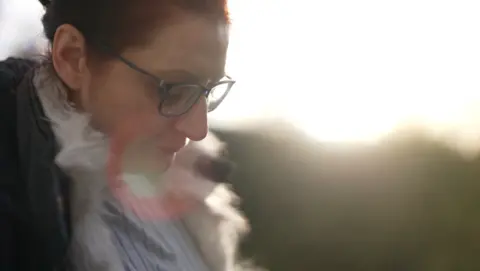
"I was a kid and I was thrown in the back of a car. I was petrified. There was already a statement wrote out," she said.
"And then when they start asking me questions, they start crossing things out, putting other things in. It's like they started with a template or something. This statement was their words, 95% of it."
Panorama has now obtained more evidence that suggests some officers may have been deliberately trying to frame Benguit.
Police interviewed five drug addicts who had been at the crack house that night and they all initially denied having seen him there.
But when they were re-interviewed months later, all five changed their stories in the same way. They all said they had seen Omar Benguit on the night of the murder and that he had been covered in blood.
It was their evidence in court that helped to convict him.
One of the crack house witnesses had already told the BBC she lied in court.
Panorama has now tracked down two more of them. One, who asked to remain anonymous, said the police pressured her to change key details.
The second witness, Andi Miller, said BB had told the police about dozens of thefts they had committed together, and the police used that to get him to tell lies.
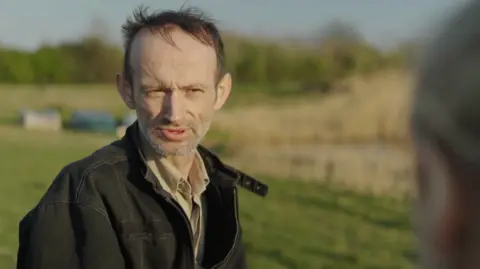
"They had me bang to rights on jobs, you know what I mean?" he said. "And I never got charged for any of it. I felt as though the police pressurised me into saying something that wasn't true."
The BBC has also spoken to the family and friends of the last two crack house witnesses. They say the couple have admitted lying in court.
Along with the 13 who told the BBC they were pressured to embellish their evidence or lie, that means the evidence of 15 key prosecution witnesses has now been discredited or undermined.
New alibi evidence
The Criminal Cases Review Commission (CCRC) is currently considering Omar Benguit's case, after the BBC discovered CCTV evidence in 2021.
It was grainy CCTV footage of a man who looked like Benguit using a phone box on Charminster Road about 25 minutes after the murder.
If the man in the footage is him, then he cannot have been at the crack house cleaning up, as BB claimed.
The CCRC discovered that 135 CCTV tapes from the original police investigation had gone missing.
The commission has concluded it was possible that the man in the grainy phone box footage was Benguit, but it could not be sure.
Now, Panorama has uncovered new evidence that strengthens the possible alibi.
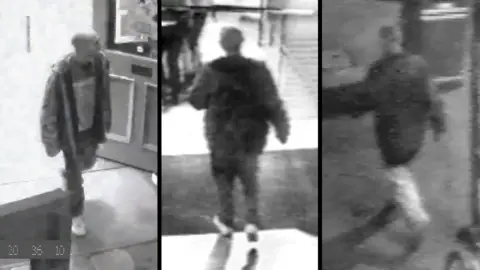
At the time, Benguit and other addicts were regularly using the phone box on Charminster Road to arrange drug purchases with their dealer.
Documents obtained by Panorama show a call was made from the phone box to Benguit's dealer at the exact time that the man who looks like him was captured on CCTV.
The combination of the CCTV footage and the phone records strongly suggests that Omar Benguit was in the phone box that night and has an alibi that disproves the crack house evidence.
The programme has also discovered that the police were aware of this potential alibi at the time.
They knew the man in the phone box resembled Benguit and they knew that a call had been made to his dealer at exactly the same time. Rather than investigating the alibi properly, police appear to have buried it.
Criminologist Barry Loveday, who has been researching the case for 20 years, said Dorset Police has serious questions to answer.
"The police were highly selective in the way they collected evidence. In my opinion, Omar was framed. This was a quite elaborate frame-up," he said.
The suspect police missed
There is a possible motive for the police to try to frame Benguit - their failure to stop a suspected murderer from killing again.
Danilo Restivo was suspected of murdering a 16-year-old student in Italy before he moved to England in 2002.
He lived just three streets from where Oki was killed and he was an early suspect in her murder too.
A woman reported to police that she heard Restivo discussing details of Oki's murder that had not been made public.
Italian police then warned Dorset Police about their suspicions, but detectives stopped investigating Restivo after his girlfriend gave him an alibi.
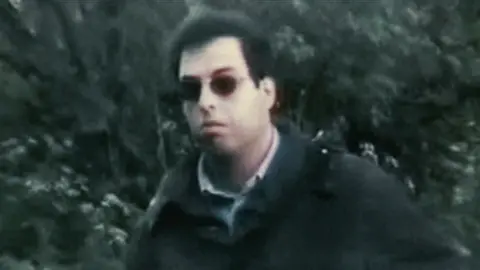
Four months later, Restivo killed his neighbour Heather Barnett in a brutal attack. It was another nine years before he was convicted of her murder and the earlier murder of 16-year-old Elisa Claps in Italy.
In 2014, the Court of Appeal discounted Restivo as a suspect because Oki's murder was different from the other two killings.
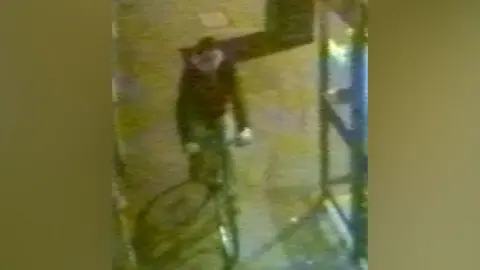
But now Panorama has found a grainy CCTV image that could be him. It shows a man on a bike just around the corner from the murder scene and it was recorded about 10 minutes before Oki was killed.
Panorama wrote to Restivo about Oki's murder, but he did not respond. Neither did BB.
Omar Benguit is now clean of drugs. Having served 23 years, he could now be eligible for parole if he admitted murdering Oki. But the 53-year-old told Panorama he could not confess to something he had not done.
"I'd rather die in prison saying I didn't do it, than get released now saying that I did do it. It's not going to happen. I'm an innocent man. Why should I lie just to get out?" he said.
A Dorset Police spokesperson said that Omar Benguit had appealed twice against his conviction and that his claims of wrongful conviction had been dismissed by the Court of Appeal.
"This case has been through a series of reviews and any matter surrounding concerns regarding this conviction is ultimately a matter for the CCRC and the Court of Appeal," the spokesperson said.
The force said it would "instigate investigations if directed by the courts and responsible authorities", adding: "As always, our thoughts are with Oki's family and friends who remain devastated by their loss."

Get our flagship newsletter with all the headlines you need to start the day. Sign up here.