Erosion threatens UK's most easterly golf course

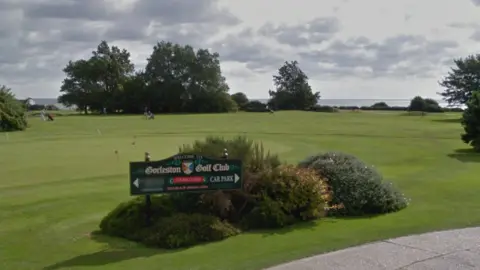 Google
The UK's most easterly golf course could get new holes as the threat of erosion affects its clifftop site.
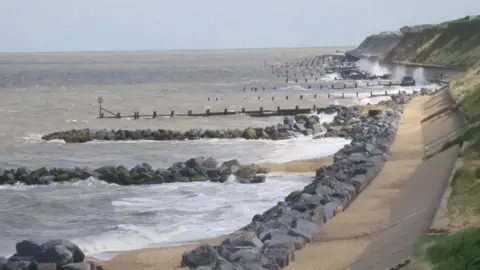
Gorleston Golf Club, which overlooks the North Sea south of the Norfolk town, is located along one of the fastest-eroding stretches of coastline in Europe.
Part of the 120-year-old course could be lost to the sea imminently so the club wants to replace two at-risk holes inland.
Great Yarmouth Borough Council's planning officers have recommended the changes to the course are approved at a meeting on 8 April.
 Simon Gidman
The 18-hole golf course is located next to the shoreline, between the town and the village of Hopton.
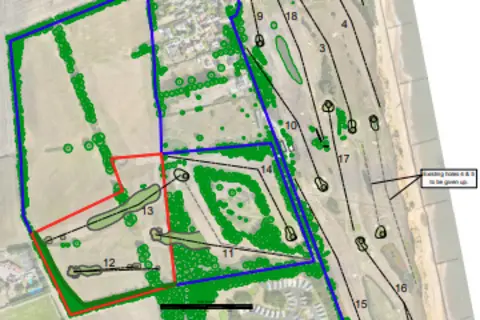
Two of the current holes, four and five, have been identified as being at immediate risk of being lost to the sea.
The club wants to replace these holes on land it owns about 1,300ft (400m) to the west inland, providing a buffer zone away from the eroding coastline.
 Brian Hardisty
Council officials said in a report the "loss of existing golf holes because of erosion would severely [affect] the viability of the golf club".
According to the club's agent and golf course architect, Simon Gidman, the site has been affected by erosion for a number of years, particularly the southern half.
The north is perhaps better protected thanks to the sea wall at Great Yarmouth, he said in a report to the council.
The club purchased 50 acres of land at the beginning of the millennium to prepare for the threat posed by erosion.
The club hoped work could start this spring and could be the course could be open for play by 2028.
It is one of the oldest courses in east Norfolk and it is visited by 2,500 golfers each year.
Follow Norfolk news on BBC Sounds, Facebook, Instagram and X.