'Mobile child chemo unit will be a game changer for our teenage son'

 BBC
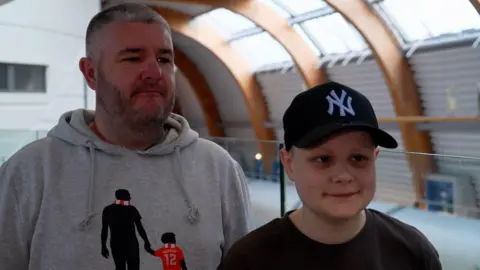
BBCThe UK's first mobile children's chemotherapy unit has been described by the father of a 13-year-old leukaemia patient as an "absolute game changer" for families.
The unit, being trialled in the north-west of England, is run by staff from Alder Hey Children's Hospital in Liverpool and the Royal Manchester Children's Hospital.
It aims to reduce pressure on families who often have to regularly travel long distances to get treatment for their children at specialist paediatric cancer centres.
Steve's son Ollie was diagnosed with leukaemia just over a year ago. Ever since, his family have spent three or four days a week travelling to and from their home in Warrington for appointments.

Steve said it had been "a long 12 months" with the whole family's lives upended – first by the shock of the diagnosis, and then by the practicalities of getting treatment.
Living in Warrington means it currently takes about 90 minutes for Ollie and his family to get to appointments.
"We literally bought a brand new car and I think we've done 20,000 miles in the last 12 months," said Steve.
Children receiving chemotherapy typically have to travel much further than adults because there are far fewer specialist centres.
The hospitals in Manchester and Liverpool, for example, look after an area ranging from Barrow in Furness in Cumbria to North Wales.
The cost in terms of both time and money can be huge, and it comes at a time when many parents have to reduce their working hours or even quit their jobs altogether to look after their child.
"From a petrol point of view it costs you a bomb and you're reduced in wages," added Steve. "We're lucky - me and the wife - we're still working but we're still on a reduced income."
A recent report by the Young Lives vs Cancer charity estimated the additional costs at about £250 per month, with some families going into debt as a result.
'Ease pressure'
Last month the government announced a £10m fund to meet those costs, a scheme that is expected to roll out in England by 2027.
In the meantime, though, the additional costs will continue to be met by families.
Harder to tackle is the disruption and stress caused by long journeys several times a week.
Steve said: "From Ollie's point of view, it's the stress it puts him under.
"He loves being on the ward, the nurses are really excellent, but he gets so stressed coming here.
"You're losing a whole day of school. By the time you've driven here, you've had your chemotherapy, he's lost half a day and then you get home, you can't plan anything.
"He has a tutor once a day for an hour and we're finding most days we're having to cancel him."
This mobile chemotherapy unit aims to ease that pressure.
It has been made possible by a team from the North West Children's Cancer Network, the region's three Cancer Alliances, the two children's hospitals, and a national charity, Hope for Tomorrow.
Staffed with specialist paediatric oncology nurses, the unit will visit different parts of the north-west of England throughout the week, parking in areas easily accessible to patients.
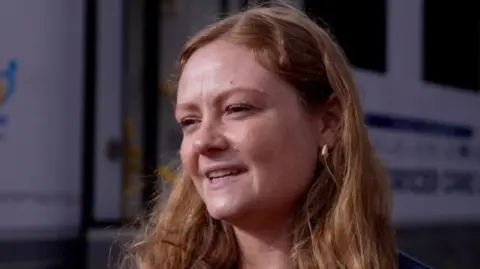
Katharine Field, the North West Children's Cancer Network's innovation project officer, said they hoped it would make a huge difference to young people and their families.
"The impact of having a child diagnosed with cancer is massive," she said.
"Kids coming to hospital – it's not fun, is it? And not having to go as often will have a massive impact on their sense of normality."
To make it more child-friendly, the unit has been redecorated with an underwater theme.
There is also extra seating to allow the whole family to be with the young person.
The treatment is the same as children would receive in hospital, but learning to give it on a truck, away from the back-up of a major hospital, has taken weeks of preparation.
Consultant paediatric oncologist Dr Lisa Howell is in charge of the medical care for the project at Alder Hey.
"The final checks, training, sign-offs are being put in place," she said.
"We've identified areas where we feel it's appropriate to park the unit, based on where our patients are located.
"So we're keen firstly to deliver some of the care on the unit next to the hospital and then we'll take it out and start delivering care for real."
'Feeling optimistic'
The unit is currently parked outside Alder Hey Hospital, where the first patients will be treated.
It is expected to hit the road within the next few weeks.
The initial cost of the project is being funded by Merseyside and Cheshire, Greater Manchester, and Lancashire and South Cumbria Cancer Alliances, with staff being supplied by both Royal Manchester Children's and Alder Hey hospitals.
Hope For Tomorrow specialises in fundraising to buy mobile units for hospitals but for this pilot project they are renting one out to the network.
If the concept proves to be successful, the charity will launch a campaign to raise enough money to buy two units – one each for the two children's hospitals.
Field says she is optimistic this will happen, adding: "Hopefully other regions will then be able to do something similar and then children across the UK will be able to access treatment closer to home."
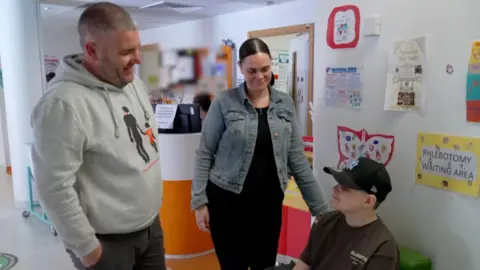
Ollie is looking forward to spending less time in hospital and more at home.
"I like coming here - it's just that I get really nervous so it'll be a lot better," he said.
After a long year, his family are hoping his chemotherapy visits will become less frequent, as well as closer to home.
His dad Steve said he was hopeful that Ollie would be able to return to school.
He said: "Just from a learning perspective and normality for Ollie, it's going to be a game changer. And any kids in the future... they're not going to have that inconvenience.
"It's an absolute game changer.
"And I think from Ollie's point of view, just that extra couple of hours at home – it's where he wants to be."
Read more stories from Cheshire, Lancashire, Greater Manchester and Merseyside on the BBC, watch BBC North West Tonight on BBC iPlayer and follow BBC North West on X.