How responsible are climbers for each other's safety? Mountaineers react to manslaughter

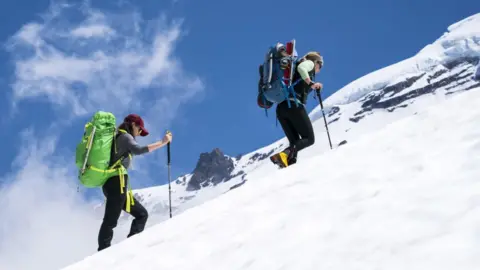 Cavan Images/Gabe Rogel via Getty Images
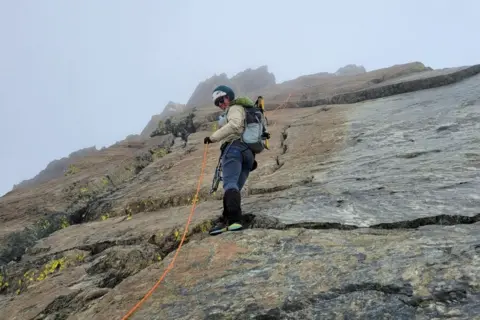
When Rebekah Lee was in her twenties, she decided to embark on an ambitious climb up Mount Stuart in Washington State and "made a series of bad decisions".
She and her two friends had arrived at the base of the climb hours behind schedule and with low water supplies, and spoke about whether to turn back - but decided to go ahead with the route anyway.
"We were young and dumb and had summit fever and really wanted to do that route and we continued anyways," Rebekah, a nurse, says. They ended up running out of water and finishing the climb 24 hours later than expected - but they were lucky.
"It could have been much worse than just being very tired and very dehydrated," admits the 34-year-old.
 Rebekah Lee
Climbers and mountaineers have always had to make difficult decisions during expeditions about how to stay safe, which routes to take and whether to turn back. They might not know whether they'll get exhausted, if the weather will get worse, or how big the risk of a serious accident is.
But in the last week, debates about how to make these decisions, as well as who is responsible for them, have broken into the mainstream. It comes after an Austrian man was convicted of gross negligent manslaughter over his girlfriend's death from hypothermia while climbing Austria's highest summit, Grossglockner, in January last year.
Thomas P was accused of failing to turn back or call for help in time after he left his girlfriend and reached the summit of the mountain. More than a year after Kerstin's death, Thomas was found guilty, given a five-month suspended sentence and fined €9,600 (£8,400).
The judge (himself an experienced climber) said Thomas P had not left his partner behind "wilfully", but concluded he was much more experienced than Kerstin G and should have accepted they needed to turn back earlier.
The prosecution argued that Thomas P was "the responsible guide for the tour", failed to call for help in time, and didn't send any distress signals when a police helicopter flew overhead. Thomas P pleaded not guilty and Kerstin G's parents told the court she had been "really active" in mountaineering since 2020.
The case has sent ripples through climbing communities.
People die while climbing every year. According to data from the Austrian Board of Trustees for Alpine Safety published in Austrian newspaper Der Standard, 29 people have died on Grossglockner in the past 20 years. Angela Benavides says she's reported on "many accidents on many mountains" during her more than 15 years working at the adventure sports website Explorers Web.
But what sets this incident apart is the fact that it resulted in a criminal case, and that a non-professional climber was held responsible.
People in the mountaineering industry in the UK, the US and Europe told BBC News they've been keeping a close eye on the case. Some have questions over whether this may lead to other similar cases. Others wonder if it could make non-professional climbers more hesitant to take friends out into the mountains in future.
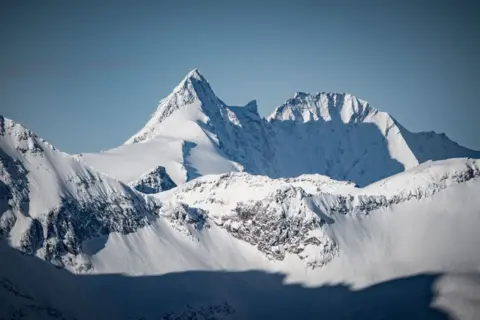 Coberschneider/Getty Images
'You're choosing to take a risk'
One of the biggest issues the case has raised is the topic of personal versus collective responsibility.
When people climb with a paid guide, it's clear who should be in charge of the group's safety. But when unpaid amateurs climb together, things becomes murkier.
There is no formal code of conduct that mountaineers are obliged to follow, but the International Climbing and Mountaineering Federation has an ethics declaration, which says climbers "engage in this activity at their own risk and are responsible for their own safety". However, it also notes that mountaineers "should be prepared to make compromises in order to balance the needs and abilities of all the group".
The mountaineers BBC News spoke to largely agreed that while the most experienced climber should be expected to take the lead when they climb in a group, everyone involved takes on an inherent risk when they decide to go into the mountains. "You're choosing to take a risk that you don't have to take," says Zoe Hart, a mountain guide in France.
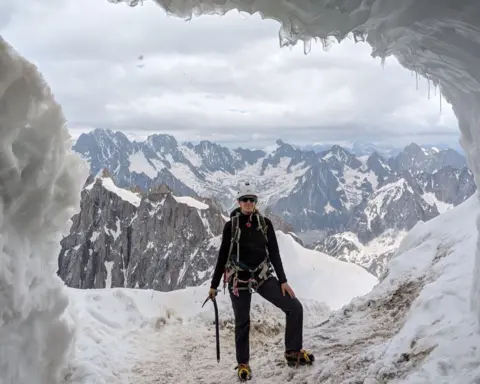
"Everybody should take personal responsibility for their own safety," says Cardiff-based mountain leader El Robertson. "It's very important that you, in the mountains, don't just switch off and give your safety to somebody else."
 @el.ventures.earth
Poor planning causes accidents
Most accidents that occur during climbing are down to "poor planning", says Matt Cooper, a mountain rescue team member in Wales and founder of the Mountaineering Company. This includes not having suitable clothing and equipment, like crampons and an ice axe, not checking and fully understanding the weather forecast, like which wind speeds are too strong, and not navigating properly, he says.
People also often struggle to decide how much equipment to take with them when they undertake a long climb. "The more you carry, the heavier your pack," says El. But packing too light "opens you up to risk," says editor of Alpinist magazine, Derek Franz.
Angela Benavides, editor of Explorers Web, notes that as well as choosing Austria's highest summit, 3,798m (12,461ft) high, Kerstin G and Thomas P also chose a more difficult, technical route.
One Austrian climber told us that in harsh conditions, climbing Grossglockner "can feel like fighting to survive".
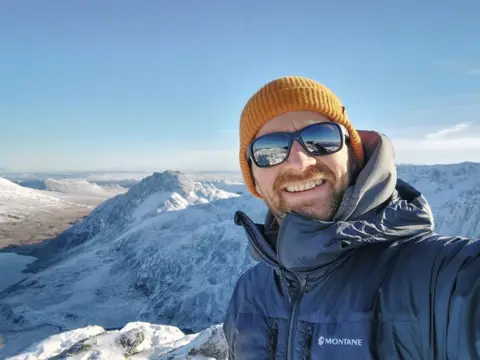 Matt Cooper
Knowing when to turn around
Persevering with an overly challenging route is an experience some climbers will be able to relate to. Mountaineers say they sometimes get overcome by what's known as summit fever - the desire to reach the top - even if they have concerns about their climb. They might have spent months planning their trip - and considerable amounts of money, too.
"Everybody's ratio of risk and reward is different," says Zoe.
And climbers often push through any pain they experience, says editor Derek Franz.
"There's a certain amount of stoicism," he says. "We embrace a certain amount of discomfort and hardship and suffering."
Angela has turned around "many times" during climbs. She says you have to do so "not when everything is dramatic" but rather "long before that".
"Bailing isn't failing," adds El.
Should climbing be specifically regulated to make it safer? Should people undertaking such ambitious routes as Grossglockner be obliged to climb in bigger groups, to prove that they're experienced enough or have packed sufficient safety supplies?
It's a resounding 'no', from the mountaineers BBC News spoke to.
"I don't know how I feel about the government getting involved in allowing and dictating who is ready to go into the mountains and who's not," says Rebekah. "Part of the beauty of the mountains is that you can push yourself at your own pace, at your own limits."
"How would you even possibly begin to regulate that?" agrees her friend Mekenzie Sutton, noting that it's hard to determine who is ready to undertake a climb.
But there are lots of steps that people can take to stay safe while out climbing, says Brendan Hughes, safety lead at Mountaineering Scotland. He says there's lots of information out there about what to pack and stresses that good-quality waterproof clothing doesn't have to be expensive.
Though mountaineers have been watching the Grossglockner case, they're not sure yet what effects it will have.
"Does this change anything?" Brendan wonders, "what does it mean for mountaineering in the UK?"
As yet, there isn't a firm answer.