Why are sixth forms shutting their doors?

 Getty Images
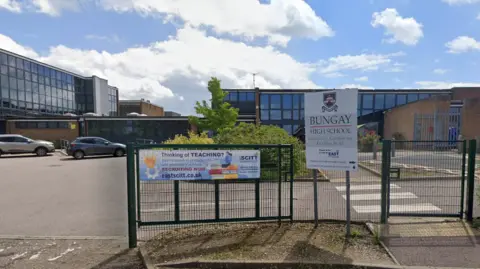
As another Suffolk sixth form announces it will be closing at the end of the academic year, some might be questioning - why are they struggling? Bungay High School's sixth form has been given permission from the government to shut later this year after it struggled to enrol enough students. It follows Felixstowe School which said earlier this year it was pausing its intake. So, how did this become a problem and are there any solutions?
Which sixth forms have closed?
In August 2020, King Edward VI School in Bury St Edmunds shut its sixth form.
More recently Stowupland High School stopped operating its sixth form in July last year but said it hoped to relaunch within the next five years.
Then similarly last year East Anglian Schools' Trust announced its proposal to shut Bungay High School's sixth form which has now been accepted by the Department for Education, meaning the sixth form will shut at the end of this academic year.
A spokesperson for the trust said it felt "deep sadness" but insisted every step of the process was "carefully considered and reflected upon".
Earlier this year Unity Schools Partnership also took the decision to pause new admissions for Felixstowe School's sixth form due to the low numbers of students.
It said the cost of delivering the sixth form provision "significantly" exceeded the funding it generated - meaning it required subsidy from the lower school's budget.
Why is there a struggle?
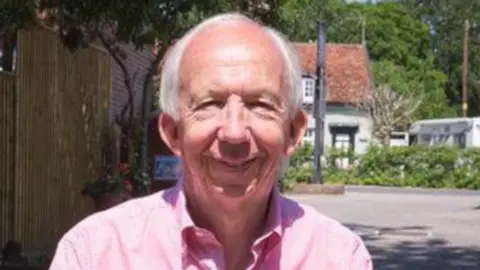
Neil Watts is a former headteacher of Northgate High School in Ipswich and is now an education consultant.
He believes there are several reasons why there has been a decline in sixth forms attached to secondary schools.
Watts thinks there are two issues - the first being cost pressures alongside the growth of specialist sixth form centres.
"The funding per unit for sixth form has gradually gone down since the early 2010s.
"Secondly, the establishment and growth of sixth form centres which can provide a wider range of subjects and which are marketed as a better stepping stone to adult life or higher education."
Watts says it is still important for education providers to offer "core" subjects, but says there are other subjects today which attract young people.
What about colleges and sixth form centres?
Watts says there are economies of scale when it comes to sixth forms and alternative provisions such as sixth form centres and colleges.
He says these centres and colleges get reasonably large numbers of students and therefore can offer a wider range of subjects, but they do have their own issues.
He gave the example of when Suffolk One in Ipswich was in financial difficulties back in 2015 and had to make savings.
"I think all of these establishments at times have found it financially challenging, but essentially they are a viable economic unit as well as a viable educational unit."
What issues could the closures cause?
 Google
The closures of sixth forms at schools can have a large range of implications.
For example, it means that children who have been at one school since the age of 11, then have to look at continuing their education in a new environment, potentially in a completely different area to where they live.
It might work for some and be a positive thing, but others may struggle.
For example Anne Belton's child, who had hoped to attend Felixstowe School's sixth form before it announced it was potentially pausing its intake, told the BBC the prospect of having to get buses to another town to go to college was daunting.
Watts says there are also wider implications on staff as well.
"I look at it from a head's point of view, I attracted high quality staff to teach in an 11 to 18 school because the staff wanted to teach across the age and ability range.
"They didn't just want to teach sixth formers, they wanted to teach across the age and ability range so somebody could be doing A-level physics one lesson... then go and teach a year seven group and begin to include them about some other aspects of physics.
"The subject is irrelevant, but you get somebody who's enthusiastic about their subject and I think that impacts right across the age and ability range."
Watts also fears we could see smaller sixth forms closing in the near future.
What are the solutions?
Watts believes it will be hard to reverse the decline of sixth form closures at schools and says the effect the sixth form centres and college have on them as well as local communities will be significant.
"For most schools what really matters is happy youngsters, youngsters who are challenged, you have high expectations of them," he says.
"I think the danger is as soon as you lose the sixth form from a school then the expectations are not necessarily as high as they might have been across the school, not just in the sixth form, but across the school.
"One concern I have is that sixth forms, 'yes they are freer' - and perhaps don't have a uniform etc, but there is still the pastoral care, there's still the watchful eye.
"Certainly I think there's a danger in the bigger organisations, the bigger sixth forms and colleges, where that is lost and often you would find the drop out rate in these institutions would be higher than they are in sixth forms.
"So it's a lot more than just the odd extra subject."
The DfE has been approached for comment.
Follow Suffolk news on BBC Sounds, Facebook, Instagram and X.