Austria becomes latest to propose social media ban for children
 Photothek via Getty Images
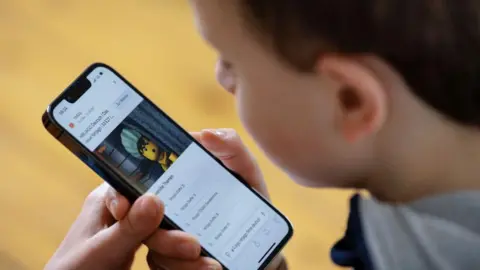
Austria has announced plans to ban social media for children aged under 14, becoming the latest country to consider introducing restrictions for children online.
It follows lengthy negotiations within the conservative-led three-party coalition government, but it is not yet clear how or when the ban will be implemented.
Announcing the plans, Vice-Chancellor Andreas Babler of the Social Democrats said the government could not stand by and watch as social media made children "addicted and also often ill".
He said it was the responsibility of politicians to protect children and argued that the issue should be treated no different to alcohol or tobacco: "There must be clear rules in the digital world too."
In future, said Babler, children under 14 would be protected from algorithms that were addictive.
"Other information providers have clear rules to protect young people from harmful content." These, he said, should now be implemented in the digital space.
Austria is the latest among a growing number of countries to consider restricting social media access for children, citing concerns about potentially harmful content made available to them on the platforms.
In a landmark case in the US on Wednesday, a jury found two social media giants had intentionally built addictive algorithms that harmed young people's mental health.
Social media companies point to under-13s being disallowed from joining their platforms - though questions remain about how strictly this is enforced - and versions of their sites with parental controls when challenged on questions of harm.
Australia introduced a ban for under-16s in December, becoming the first nation to do so.
France's lower house approved a ban for under-15s in January. In a post on X French President Emmanuel Macron thanked Austria for "joining the movement".
The UK government has launched a consultation on banning social media for under-16s, while Denmark, Greece, Spain and Ireland are also considering similar moves: Spain and Ireland for under-16s, and Denmark and Greece for under-15s.
Austrian Education Minister Christoph Wiederkehr, from the liberal Neos party, stressed the "harmful" nature of social media, adding: "People need to learn how to use it responsibly."
The state secretary for digitalisation, Alexander Pröll, from the conservative ÖVP, said that a draft bill codifying the ban would be presented by the end of June.
The bill is expected to contain technical details of an agreed mechanism to verify people's ages when accessing social media platforms. Babler said Austria could use an EU system if it was ready, but that it would pursue a national plan if not.
The general secretary of the far-right opposition Freedom Party, Christian Hafenecker, condemned the plans as "a direct attack on young people's freedom of expression and freedom of information".
However, Austrian political analyst Thomas Hofer said the proposed ban seemed to be proving popular.
"The government is trying to evoke the feeling that, in turbulent times, they have at least something under control," he told the BBC.
"Such a ban is very popular, also among parents. So, it's one of the easy points that they can make across party lines.
"In most other fields, the governmental parties are on the defence, though, be it the economy, the budget deficit or rising prices."
The coalition government's proposed social media ban has been agreed alongside controversial reforms to secondary schools, which include more lessons on democracy and artificial intelligence, and a cut in the number of Latin lessons.