First look at cathedral's restoration work

 BBC
BBCWork to restore the original decoration in three chapels in Nottingham Cathedral is under way, with the first of the three almost complete.
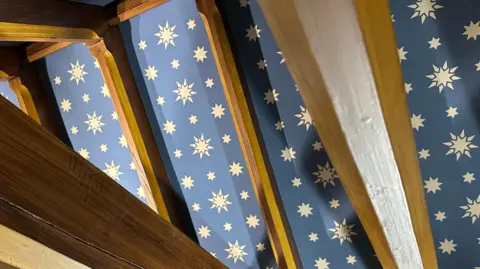
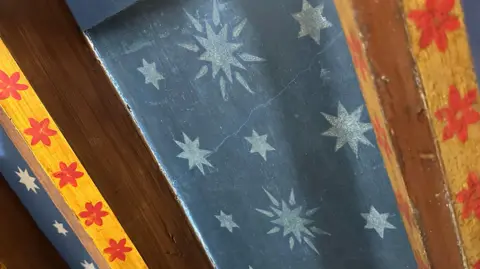
Hiding underneath five to seven layers of paint, conservators have found vividly coloured starry ceilings, floral motifs, emblems and texts designed by architect Augustus Pugin in 1841.
The Restoring Pugin project received £1.69m in funding from the National Lottery Heritage Fund toward its total cost of £2.3m.
It will eventually see the restoration of the three chapels and ambulatories at the east end of the cathedral, bringing the inside back to Pugin's original vision.
Pugin is hailed as one of the greatest British architects, designers and writers of the 19th Century and is mainly remembered for his pioneering role in bringing back a revival of the medieval gothic style of architecture.
As well as designing the Big Ben clock tower, he also worked on the designs for the interiors of the Houses of Parliament.
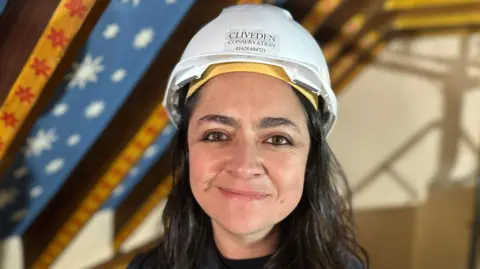
Speaking about Nottingham Cathedral, senior conservator at Cliveden Conservation, Ana Longreira, said: "It's one of the biggest buildings that Pugin designed, so it's quite rich, it's quite important in terms of its history.
"The decoration is a really important part of the cathedral.
"It's not just the walls, it's not just the ceilings, it's how the building is dressed, and how it is designed by the architect, so that part is really important."
The conservators have uncovered "windows" of the original work on the walls, so they can reproduce designs as close to the original decorations as possible.
The team have recruited seven career starters on to paid training programmes, three conservators and four heritage management roles. They have also given opportunities to volunteers.
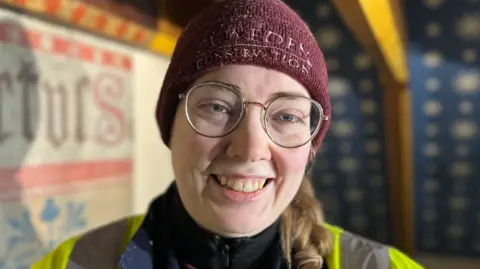
Mary Scott, 26, was an intern last year after finishing her degree and is now a conservator for the project.
She said: "It's been really great from the beginning of the project where we didn't know what we would find, and then discovering these decorations and being able to produce them. It's really satisfying from the beginning to the end."
Work began in August and is due to be completed by the end of 2026.
Follow BBC Nottingham on Facebook, on X, or on Instagram. Send your story ideas to [email protected] or via WhatsApp on 0808 100 2210.