Why should we learn to love cockles again?

 Getty Images
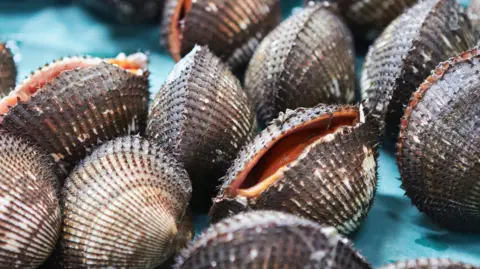
A century ago, cockles were a beloved seaside snack enjoyed by the pint. In the last couple of decades, their popularity has waned to the extent that much of what is caught in the UK is exported elsewhere rather than being eaten locally.
Now a campaign is encouraging shoppers to think about eating more sustainable seafood - with a focus on bringing cockles back into fashion for the next generation.
So where do cockles come from, what do they taste like and why should we learn to love them again?
Where do cockles come from?
 Matt Knight/BBC
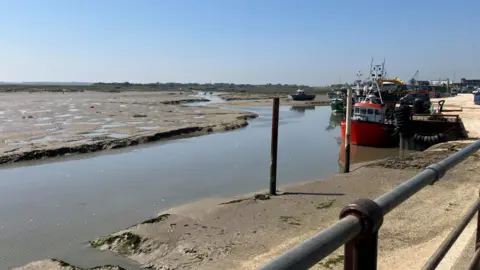
The common cockle is an edible mollusc which grows up to about 50mm (2in) in length, and is found in waters around the UK including the Thames Estuary, the Wash, Morecambe Bay, Poole Harbour and the Dee Estuary on the border between north Wales and north-west England.
Cockles live for between five and 10 years, and bury themselves in shallow layers of sediment in sea or river beds to feed. They can often be dislodged or washed away during stormy conditions, meaning cockle fishing is unpredictable and has a short season between June and September.
Across the UK, a number of different Inshore Fisheries Conservation Authorities decide when and where fishing can be carried out.
Cockles are fished using a variety of techniques depending on the local area - these include suction dredging, prop washing (blowing through the sand to blast the cockles up before catching them) and hand-gathering.
How valuable are cockles to the UK fishing industry?
 John Fairhall/BBC
The Department for Environment, Food and Rural Affairs (Defra) estimates the UK's cockle fishing industry is valued at £10.3m annually.
Defra says the value of how much is caught is based on an estimate of £900 per tonne, but that value can vary greatly because of different factors.
About £5.3m of the UK's total cockles come from the Thames Estuary area, including Leigh-on-Sea, Essex, which has been associated with cockle fishing since the 1880s.
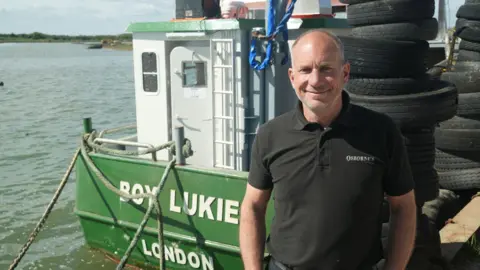
One company co-owner there, Andrew Lawrence of Osborne Sons Shellfish, said many of the cockles caught in the Thames ended up in Spain - and his firm exported "40-45%" of its annual catch to the country.
"They like their little tins and cans with different flavours - so anything that comes from the sea, if they can cook it and tin it, they'll do it," Lawrence said.
Known as berberechos, tinned cockles are popular as tapas dishes, particularly in Spain's northwestern Galicia region.
How are they best served?
 BBC Food
Like many kinds of shellfish, cockles have a sweet, salty and buttery taste. They can be eaten raw, boiled or steamed like mussels until their shells open.
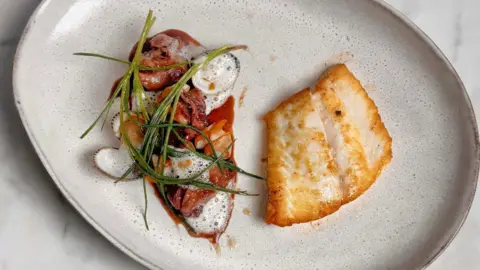
BBC Food has a number of recipes for how to enjoy them, including in a Thai-style fish curry, a take on surf n' turf with pan-fried brill and oxtail. Cockles are also regularly paired with lamb.
In Leigh-on-Sea and many other areas where cockles are caught locally and then served up, they are simply boiled then doused in vinegar and white pepper.
Are they popular?
 John Fairhall/BBC
Popularised as seaside or street snacks along with winkles and whelks, cockles were sold by the pint as a method of measuring their weight.
But demand for cockles in the UK has dropped by about a third over the past 50 years, research has found.
"Tastes have changed in terms of what we think of as a street snack," said food historian Annie Gray.
"We're much more likely to reach for a packet of crisps or perhaps a sweet bun than we are to reach unfortunately for a cup of cockles now," she said.
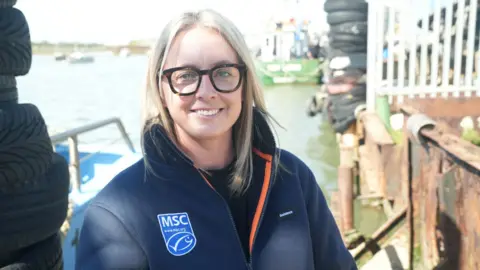
Loren Hiller from the Marine Stewardship Council (MSC) said 80% of the fish eaten in the UK nowadays was one of "the big five" - cod, haddock, tuna, prawns and salmon.
"I think cockles have gone a little bit out of fashion," she said.
"But actually what we found through our research is that the younger seafood consumer, the Gen Zs, they're actually willing to try different things and the more traditional dishes.
"Things like shellfish, mussels, cockles are a great example.
"Cockles are delicious and they're locally sourced, which makes it a bit more special as well," Hiller added.
Why should we be eating more of them?
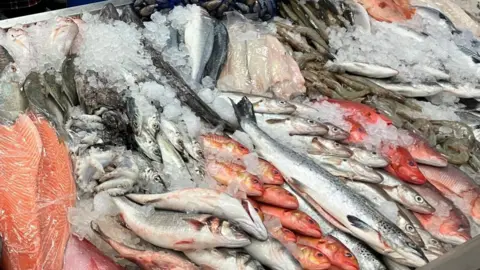
MSC is running a campaign called Buy Blue, Protect Dinner, which focuses on four places in the UK made famous by their local seafood, and encourages customers to look for a blue "ecolabel" to indicate sustainable fishing when buying their seafood.
"It's important that we choose sustainable seafood as by doing so we contribute to securing the right balance between environmental and economic benefits which leads to ensuring healthy seas, sustainable fisheries and a viable industry," said Sam Dell from Southern Inshore Fisheries and Conservation Authority.
"The Buy Blue Protect Dinner campaign recognises our local fishing community and demonstrates the positive role they play in sustainable fisheries and food security at a local level."
Do you have a story suggestion for Essex? Contact us below.
Follow Essex news on BBC Sounds, Facebook, Instagram and X.