Saltmarshes to be created from dredged material

 Andy Hay/RSPB
Sediment collected during harbour maintenance is being used to restore saltmarsh habitats at a river estuary.
Mud that is dredge to keep shipping channels clear at Harwich Harbour is being taken a few miles along the Stour Estuary to Copperas Bay, near Wrabness in Essex, until 20 March.
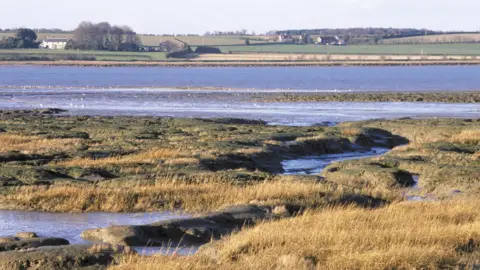
Conservationists hope the project, which will cover up to 189 acres (76.5ha), will also stabilise shorelines and support biodiversity, such as native sea lavender and samphire.
Jim Warner, harbour engineer at Harwich Haven Authority (HHA), said routine dredging was being turned into "a nature-positive opportunity".
Rather than being disposed of at sea, the dredged sediment could also enhance coastal protection.
"This approach delivers long-term benefits for both local communities and the wildlife that depends on these coastal habitats," Warner added.
 Andy Hay/RSPB
Saltmarsh is a special habitat in the UK that teems with wildlife, but much has been lost due to rising sea levels and change of land use.
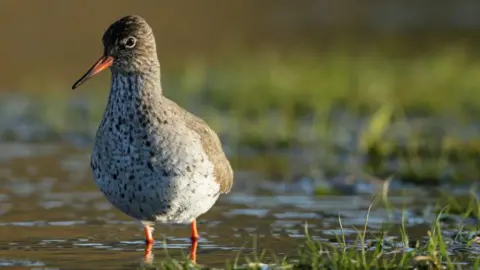
Creating a new habitat could help black-tailed godwits, redshank and turnstones, as well as flocks of wildfowl during the winter months.
It is hoped over time the restored saltmarsh will repopulate with small plants that help catch more mud and silt, leading to consistent growth.
Rick Vonk, of RSPB Stour Estuary, said it was "a clever way of using a natural solution" to resolve saltmarsh loss.
 Andy Hay/RSPB
Shipping channels serve the major ports of Felixstowe, Harwich at the mouth of the estuary, and further inland at the Ipswich and Mistley on the Orwell and Stour respectively.
Researchers from the University of Essex have been asked to monitor the success of repurposing the material collected form the harbour bed.
Dr Natalie Hicks, from the School of Life Sciences, said: "There is a real potential for this novel approach to enhance saltmarsh restoration and future-proof our coastlines."
Follow Essex news on BBC Sounds, Facebook, Instagram and X.