New by-law to stop people roaming at first Scottish Center Parcs

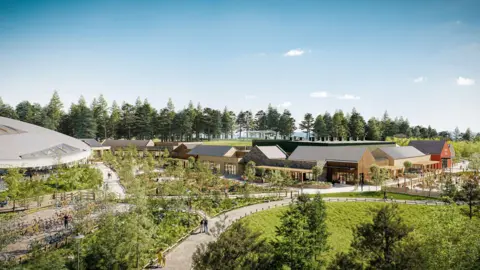 Center Parcs
A by-law restricting the right to roam on the proposed site of Scotland's first Center Parcs has been granted.
The decision means there will be no public access to more than half the land earmarked for the holiday village near Hawick in the Scottish Borders.
Concerns were raised by opponents about the precedent this might set and the potential implications for other sites across Scotland.
But Scottish Borders Council (SBC) agreed to support the restriction after hearing that the creation of a fenced area with one point of access was "central to the business model" of the firm.
The Scottish government was then asked to confirm that decision. The council said it had been approved by ministers on Monday, with the restriction coming into force in April this year.
 Center Parcs
The right to responsible access is set out in the Land Reform (Scotland) Act 2003.
However, SBC has argued that its terms are not sufficient to meet the needs of Center Parcs, which recently secured planning permission for its proposals.
Late last year the council agreed to take forward the by-law as the "only effective way forward", having ruled out other options.
Center Parcs' plans cover 405 hectares of land at Huntlaw and Muirfield Farm, near Hawick.
The company wants the 214-hectare main site, which will include accommodation and the village centre, to be fully enclosed by a secure fence.
The only access point would be a secure, gated entrance point for arrivals.
Center Parcs said the remainder of the site would remain accessible to the public.
SBC leader Euan Jardine said the decision to approve the move was "warmly welcome".
"We appreciate ministers' acknowledgement of the extensive work undertaken to address the concerns raised by access groups and local residents, and their agreement that these can be appropriately mitigated through the proposals put forward," he said.
"This positive decision provides clarity and confidence for the project to move forward, bringing significant economic and employment opportunities to the Borders, while ensuring our communities and environment are respected."
Ramblers Scotland raised concern about the precedent the move could set as it might encourage others to come forward with proposals which would have a "greater negative impact" on outdoor access.
ScotWays - the Scottish Rights of Way and Access Society - raised an objection with similar concerns and the possibility of erosion of the rights of responsible access nationally.
It argued the move to restrict access was "contrary to the spirit and purpose" of the Land Reform Act and was "excessive in scope".
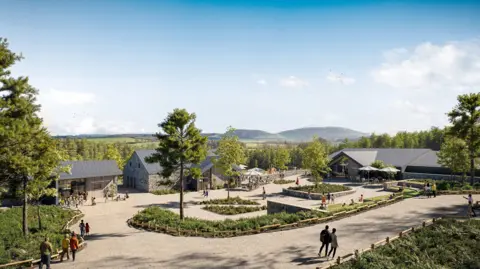 Center Parcs
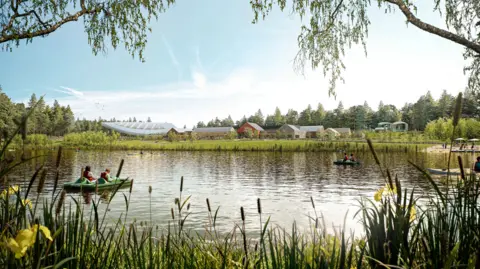 Center Parcs
However, a special full meeting of SBC concluded the Center Parcs development was an "exceptional case" and the by-law should move forward to seek Scottish government approval which has now been granted.
The park will be the seventh Center Parcs village in the UK and Ireland but the first in Scotland and it is hoped it can open by 2029.
It has been claimed it can support about 800 jobs during construction and create about 1,200 permanent posts once up and running.
What is Scotland's right to roam?
Scotland's right to roam laws came into force in 2005.
The Land Reform Act guarantees a statutory right of responsible access to land and inland waters for recreation, crossing and for educational and commercial purposes.
Supporters hoped it would end disputes over rights of way in conjunction with the Scottish Outdoor Access Code.
The code provides guidance on the behaviour expected by recreational users and how public access is managed by farmers and other land managers.
It is the duty of local authorities to make sure the code is being complied with, and that any route subject to access is kept open and free from obstruction.