How rumours of a live burial led to an exhumation

 Simon Furber/BBC
A 19th Century obsession with people being accidentally buried alive may have led to a 24-year-old woman being exhumed from a Sussex churchyard.
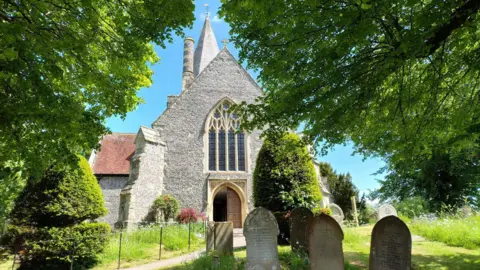
It is alleged to have happened in 1816 at St Andrew's Church in Alfriston.
Fear of being mistakenly buried while still alive continued throughout the century, with conditions such as catalepsy and cholera mimicking death closely enough to fool doctors at the time.
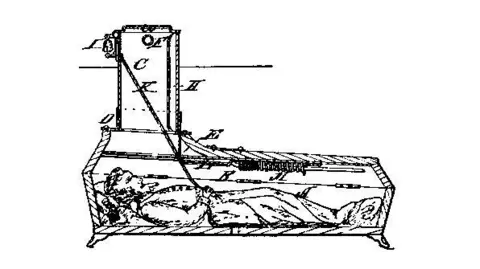
It led to the Victorian invention of the safety coffin, which could include bells, flags and breathing tubes should the deceased suddenly wake and need to raise the alarm.
Historian Kevin Gordon said the Alfriston incident, which would have happened when gothic novels such as Frankenstein were becoming enormously popular, involved a woman named Mildred Reid.
"There were rumours she had been buried alive, no doubt stoked by all these stories people were reading," he said.
"These rumours got worse and worse, so in the end the vicar decided he had to dig her up to prove to everyone she was still dead."
He said the story was recounted in the parish magazine.
"John Ben, who was the curate, wrote 'her grave was opened 11 days after her internment, in the presence of the minister of the parish, one of the church wardens and the medical gentleman who attended her last illness, and a great multitude all of whom wanted to inspect the body until they were perfectly satisfied the rumour was unfounded'."
 Kevin Gordon
Mr Gordon said another parishioner buried in the churchyard, Charles Springate Booker, went to extraordinary lengths for his funeral in 1851.
"He made a provision in his will that there was a hole in his coffin and a hole in the tombstone so if he woke up he could call out to people," he said.
"Not surprisingly, he was very dead and he didn't need to use that."
Follow BBC Sussex on Facebook, on X, and on Instagram. Send your story ideas to southeasttoday@bbc.co.uk or WhatsApp us on 08081 002250.