How much is the BBC licence fee and how could it change?

 BBC
BBCThe BBC has said it needs a new funding model to sustain its public service mission.
The corporation was responding to a government consultation which forms part of the process to renew the BBC's charter, which sets out how it operates. The current charter expires in 2027.
The licence fee raised £3.8bn in the year ending March 2025 - 65% of the BBC's total income - but the number of households which pay is dropping.
How could the licence fee change in the future?
The BBC licence fee - which rises from £174.50 to £180 a year on 1 April - is guaranteed until 31 December 2027, when the current charter expires.
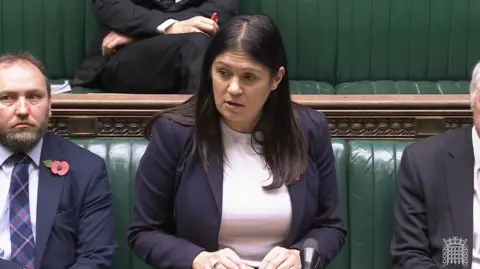
Culture Secretary Lisa Nandy has repeatedly called the current funding arrangements "unenforceable".
A number of alternative funding models have previously been suggested by politicians, broadcasters and industry bodies:
- a tax on broadband connections
- a government grant funded out of general taxation
- part-funding through advertising
- a subscription model
In January 2025, Nandy ruled out funding the BBC from general taxation.
 UK Parliament/PA
Announcing the consultation in December 2025, Nandy said the BBC was "fundamental to the health of our nation", and that the government wanted to ensure it was "on a firm [financial] footing for decades to come".
The government is asking the public for its views about several funding options - including the possibility of allowing adverts or a "top-up subscription service" offering premium content. That consultation closes on 10 March.
Outgoing BBC director general Tim Davie welcomed the green paper, talking of the need "to secure a public service BBC that is independent, sustainably funded for the long term, and meets our audience's needs".
What has the BBC said about how the licence fee could change?
In its March 2026 response to the green paper, the corporation argued that the current "outdated" funding model is no longer fit for purpose.
Although 94% of adults use BBC services each month, the number of households paying the licence fee has dropped to 80%, down from more than 90% in 2016/2017.
It said there is a mismatch between TV licence rules based on watching live TV and the growing popularity of streaming platforms.
The BBC suggested that a lower licence fee paid by more people could work, but said the government should decide how best to reform the system.
"The choice here is clear," said Davie. "Back the BBC or watch it decline. The status quo is not an option."
The corporation said it will have to cut spending by another £500m over the next two years because of falling income and rising costs.
It also wants the government to pay the full £400m cost of the BBC World Service. Whitehall used to foot the bill until 2014, when responsibility was transferred to the BBC.
It would also like the current 10-year Charter system to be scrapped to provide greater financial stability.
Why is the licence fee controversial?
The fee, which dates back to 1946, was introduced when the BBC was the UK's only broadcaster.
But the broadcasting landscape has transformed since then, with advertising-funded TV channels, online content such as YouTube and subscription streaming services such as Netflix, Disney+ and Now TV.
You need to have a licence to watch or record programmes as they are being shown on any TV broadcast service in the UK, not just the BBC. It is also required to watch live streams via any online TV services as well as watching or downloading programmes on BBC iPlayer.
However the BBC acknowledges this is not necessarily well-understood and is difficult to enforce. Some people ask why they should pay for the BBC if they do not use its services.
Critics also point out that the the licence fee is a flat-rate payment, which means that the poorest households pay as much as the richest.
In addition, questions have been raised about whether non-payment of the licence fee is a serious enough issue to merit prosecution.
What does the licence fee pay for?
The income from the licence fee funds the BBC's public service broadcasting operations, including:
- eight national TV channels
- the Welsh-language public service TV channel S4C
- multiple national and local radio stations and two-thirds of the World Service budget
- BBC iPlayer
- the BBC website and the BBC news website
- podcasts
- apps including those covering news, sports, CBeebies and weather
The BBC's charter says its mission is "to act in the public interest" by providing "impartial, high-quality and distinctive" content, which will "inform, educate and entertain" everyone who pays the licence fee.
The organisation's remaining income comes from commercial and other activities - such as programme sales, grants, royalties and rental income.
Who needs to pay for a TV licence?
By law, each household in the UK - with some exceptions - has to pay if they:
- watch or record programmes as they're being shown live on any TV channel
- watch programmes live on streaming services
- download or watch programmes on BBC iPlayer
The rules apply to any device on which a programme is viewed, including a TV, desktop or laptop computer, mobile phone, tablet, games console or set-top box.
In most cases, people with second homes need to pay for a separate TV licence.
Tenants are responsible for ensuring they have a TV licence unless their tenancy agreement says their landlord will provide it.
In 2020, the BBC became responsible for paying the licence fee for all over-75s. The cost was previously covered by the government.
Since then, it has only funded free licences for households where someone of that age also receives the means-tested pension credit. The BBC funded more than a million free licences in 2024-25.
Anyone who is registered blind can get a 50% discount.
Customers who struggling to pay can spread the cost across 12 months.
How many people are prosecuted for not paying the licence fee?
If you do not pay the licence fee, you can be taken to court, and fined up to £1,000 (£2,000 in Guernsey) plus legal costs and/or compensation.
The most recent figures show there were 25,550 convictions for licence fee evasion in 2024.
You cannot be sent to prison for licence fee evasion, but you can be jailed for failing to pay the resulting fine.
In March 2025, the TV licensing body estimated that around 88% of households which need a TV licence had one.
It said officers visited more than 1.9 million addresses over the previous 12 months, and found more than 64,000 people watching live TV without a licence.
It said £166m had been spent collecting the licence fee during the period.