Summary

Media caption,

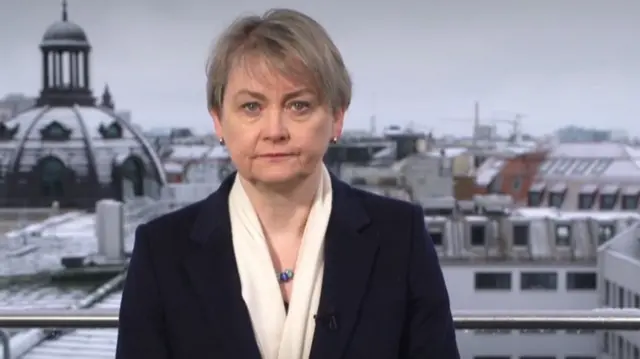
Watch: 'Cold War peace dividend has gone,' Foreign Secretary Yvette Cooper warns

  1. Patel urges government to step up actions against Russia as Cooper says 'Cold War peace dividend' has gonepublished at 10:07 GMT 15 February

    This week's edition of Sunday with Laura Kuenssberg has just finished.

    On the agenda was the announcement from the UK and European allies on Saturday that Russia killed opposition leader Alexei Navalny using dart frog toxin.

    Foreign Secretary Yvette Cooper said "only the Russian regime had the means, the motive and the opportunity to administer this poison while he was in a Russian prison".

    She added that Navalny's death shows the "Cold War peace dividend that we had all believed in and hoped for has gone".

    Shadow Foreign Secretary Priti Patel said the latest on Navalny's death "is absolutely devastating and awful to comprehend".

    Patel added that the government must look at the financial lifelines that Russia has and "cut off the head of the snake", and the UK "need to do much more" on action against Russia.

    We also heard from Baroness Hilary Cass, author of a government report on gender identity services for children and young people.

    She said children have been "weaponised" by both sides of the transgender debate - read more on this in Kuenssberg's story.

    With that, we're ending our live coverage. Thanks for joining us - we'll see you next week.
  2. Wrong to say Conservatives turned blind eye to Russian interference, Patel sayspublished at 09:57 GMT 15 February

    Kuenssberg next asks Patel if she wishes the Conservative Party took a tougher stance against Russia, amid accusations that it "turned a blind eye" to dirty money in London or suggestions that party members were linked to Russian donors.

    "I don't agree with that on the basis that you have to remember Britain has been subject to Russian aggression for so long," says Patel.

    She outlines actions she says the party took when it was in power, including imposing new sanctions after the Salisbury poisonings, and the units that Patel set up to go after dirty money while she was foreign secretary.

    It's wrong to say that the party turned a blind eye, she says.

  3. UK says Russia killed opposition leader Alexei Navalny using dart frog toxin - a recappublished at 09:50 GMT 15 February

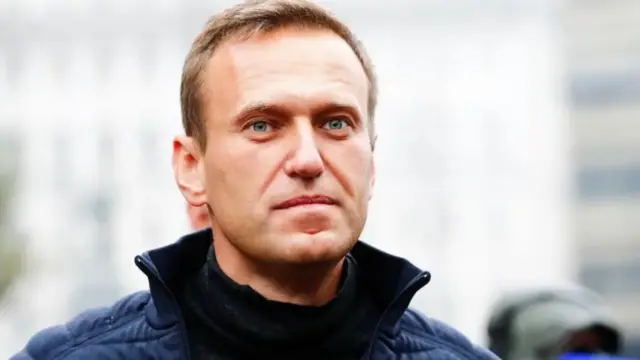
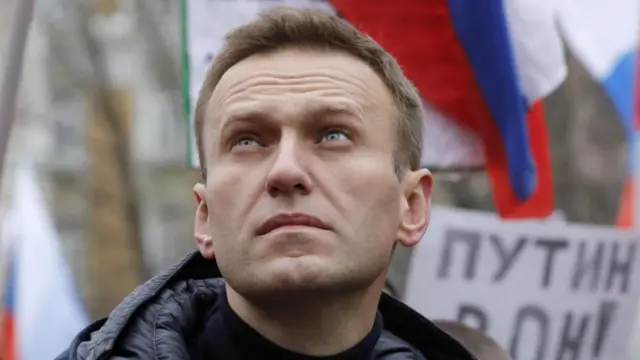
    Alexei Navalny at a rally in 2015Image source, Reuters

    Russian opposition leader Alexei Navalny was killed using a poison developed from a dart frog toxin, according to findings announced by UK Foreign Secretary Yvette Cooper at the Munich Security Conference.

    A joint statement from the UK, Sweden, France, Germany and the Netherlands said: "Only the Russian state had the means, motive and opportunity to deploy this lethal toxin" and "we hold it responsible for his death."

    Cooper also met Navalny's widow Yulia Navalnaya at the conference, saying "Russia has demonstrated the despicable tools it has at its disposal".

    At the time of his death, Navalny had been in jail for three years on trumped-up charges and had recently been transferred to a Siberian penal colony. According to Russian accounts, the 47-year-old took a short walk, said he felt unwell, then collapsed and never regained consciousness.

  4. 'We have to do much more against Russia' - Priti Patelpublished at 09:44 GMT 15 February

    Media caption,

    UK has to do much more against Russia - Priti Patel

    Next up on the show is shadow foreign secretary Priti Patel, who is also at the Munich Security Conference.

    Kuenssberg spoke to Patel before the show began, and asked her about Alexei Navalny.

    "Everything we have learnt about the death of Alexei Navalny in the last 24 hours is absolutely devastating and awful to comprehend," Patel says.

    She says that Russia has a "long and dark history of state sponsored assassination" and there is no doubt that action should be taken against it.

    She adds that when Navalny was murdered it was the Tory government that led the way with sanctions and a transparent investigation.

    Patel adds that the government must look at the financial lifelines that Russia has and "cut off the head of the snake".

    She says the UK "need to do much more" on action against Russia, calling for direct action against individuals in the UK and for the Russian ambassador to be called in.

  5. Cooper voices anger at Mandelson appointmentpublished at 09:39 GMT 15 February

    After a turbulent week in Westminster, Kuenssberg asks the foreign secretary whether the prime minister should listen to the women in his government more.

    Cooper says that through the years she has seen different examples of "Westminster boysy culture, at different times".

    Cooper briefly changes tone and voices her anger at the government's appointment of Peter Mandelson as US ambassador.

    "I do actually feel quite angry about some of the issues that we've had. Peter Mandelson should never have been appointed, there has been now obviously the debates around Westminster, but the real focus should be on Epstein's victims and also the work that this Labour government has been doing to tackle violence against girls".

    "With all of the debates around culture issues, that have to change and that I frankly don't have any time for some of the issues that we've had, actually the real issue is the priorities and the things that we need to deliver.

    "That's what a Labour government is about".

  6. Cooper: Europe needs to do more for its own defencepublished at 09:34 GMT 15 February

    Yvette Cooper

    When asked about US threats to annex Greenland, Cooper says that the UK "were very clear" that the sovereignty of the territory "was an absolute principle".

    She says that the government "argued successfully" that Arctic security is "a collective security issue" and that they've dealt with issues where the "most direct threat comes to the eastern side of Europe".

    "It is legitimate to say that Europe needs to do more for its own defence" while at the same time maintaining strong Transatlantic relationships, Cooper says.

    "We do have to take greater responsibility and that is exactly what we are doing."

  7. UK needs strong security alliances to deter threats, Cooper sayspublished at 09:20 GMT 15 February

    Kuenssberg turns to Keir Starmer's speech at the Munich Security Conference on Saturday when he mentioned the UK must build its hard power and be ready to fight.

    She asks Cooper what the public should be ready for.

    Cooper says the UK is increasing its defence investment and increasing partnership with European allies.

    She points to have the UK is building joint frigates with the Norwegians to respond to threats from Russian Northern Fleet to ensure Britain has strong deterrents in place, strong vigilance and strong surveillance.

    She says it is important to have strong security alliances to deter threats and protect national security too.

    Cooper adds that the UK has hoped after the Cold War the security threats to Europe would go away.

    "It has not. It is back," she says.

  8. Cooper says Navalny poisoning shows Russia's willingness to use lethal toxins against its own citizenspublished at 09:19 GMT 15 February

    Alexei Navalny.Image source, Getty Images
    Image caption,

    Alexei Navalny

    Foreign Secretary Yvette Cooper is asked what the consequences will be for the Kremlin, now that the UK has said Russia was responsible for killing Alexei Navalny.

    "It is deeply serious, and we have the evidence," she says.

    Cooper adds that "only the Russian regime had the means, the motive and the opportunity to administer this poison while he was in a Russian prison".

    Cooper says it shows the "willingness by the Russian regime to use these lethal toxins against their own citizens," and it also shows evidence that aggression will continue.

    More broadly, she adds, "that Cold War peace dividend ... has gone, and we need to be ready for Russian aggression continuing towards Europe".

    As a reminder, yesterday the UK and other European allies announced at the Munich Security conference that Navalny had been poisoned while in Russian custody.

    Pressed further on the consequences of these findings for Moscow, Cooper says the UK "continues to look at co-ordinated action, including increasing sanctions on the Russian regime".

    Moscow has called the accusation a "planted story".

    Media caption,

    'Cold War peace dividend has gone,' Foreign Secretary Yvette Cooper says

  9. Kuenssberg gearing up to quiz Cooper and Patelpublished at 09:06 GMT 15 February

    This week's Sunday with Laura Kuenssberg has just started.

    As a reminder, we'll be hearing from Foreign Secretary Yvette Cooper and her Conservative counterpart Priti Patel.

    We won't be providing regular text updates, but will bring you key developments. You can follow along by clicking watch live at the top of this page.

  10. One giant boys' club? Why Westminster can still feel like a man's worldpublished at 08:52 GMT 15 February

    Laura Kuenssberg
    Presenter, Sunday with Laura Kuenssberg

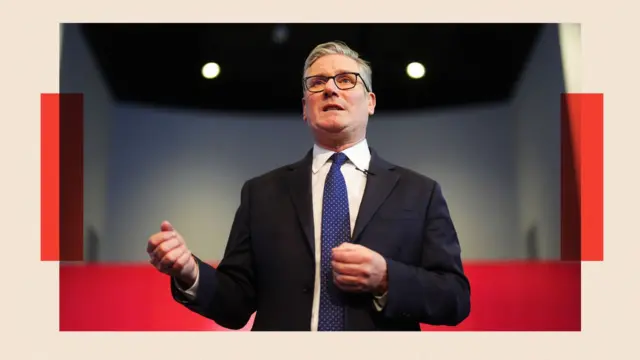
    A close up shot of Keir StarmerImage source, PA Media

    Is there a boys' club in politics? I ask a smart, tough, very experienced woman who has worked at the highest level of government.

    "Yes," comes the answer - without a second's hesitation. "The end."

    Yes, many more women than ever have taken up perches on the green benches - but that's not the same as having access to the inner sanctum where decisions are made.

    Yes, there are many more women working at senior levels in Whitehall - and all the main parties have made big efforts to get more women into Parliament. But that's not the same as being listened to.

    And yes, as part of Sir Keir Starmer's efforts to prop up his administration, three senior men have used the exit - the boss of the civil service, his chief of staff, and his head of communications, to be replaced, at least in part, by women.

    But this week, a serving member of the cabinet, Lisa Nandy, suggested Labour had been operating as a "boys' club" and went on to complain "some of the briefings have absolutely been dripping with misogyny".

    Don't just casually ignore one of Labour's most senior politicians suggesting - quite openly - that a clique of men have had too much sway in government, and some of them have used woman-hating as a political tool.

  11. Cooper and Patel to face questions from Laura Kuenssbergpublished at 08:39 GMT 15 February

    It's that time of the week again - Sunday With Laura Kuenssberg will kick off at 09:00 GMT.

    Foreign Secretary Yvette Cooper and shadow foreign secretary Priti Patel are in the hot seat today. Kuenssberg will also be speaking to Baroness Hilary Cass, author of a government report on gender identity services for children and young people.

    On the panel are singer Billy Bragg, Labour MP Emily Thornberry, and former Tory minister Jake Berry.

    We won't be bringing you regular text updates this morning, but you can follow along at the top of the page by clicking Watch live.

Trending Now