Hwyl fawrpublished at 14:45 GMT 24 March
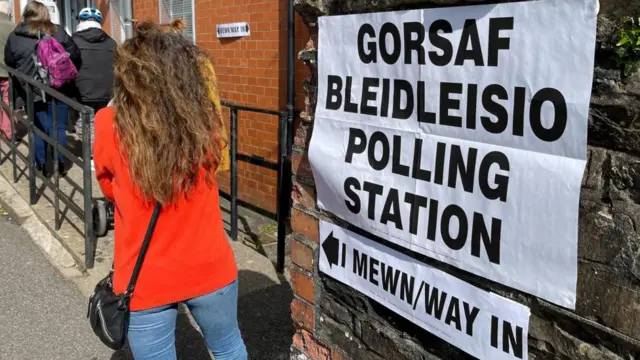 Image source, Getty Images
Wales is voting on 7 May 2026
The final FMQs before the dissolution of the Senedd ahead of the election on May 7 comes to a close.
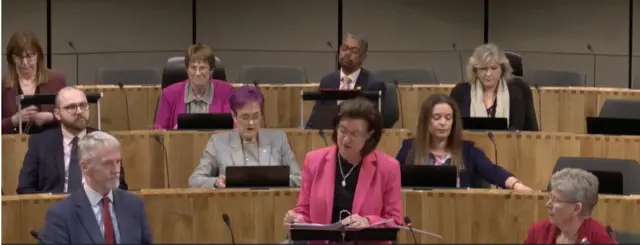 Image source, Senedd Cymru
Eluned Morgan
Eluned Morgan is quizzed by opposition party leaders and other MSs during the final First Minister's Questions before the dissolution of the Senedd ahead of the election on May 7.
Image source, Getty ImagesWales is voting on 7 May 2026
The final FMQs before the dissolution of the Senedd ahead of the election on May 7 comes to a close.
Image source, Senedd CymruEluned Morgan
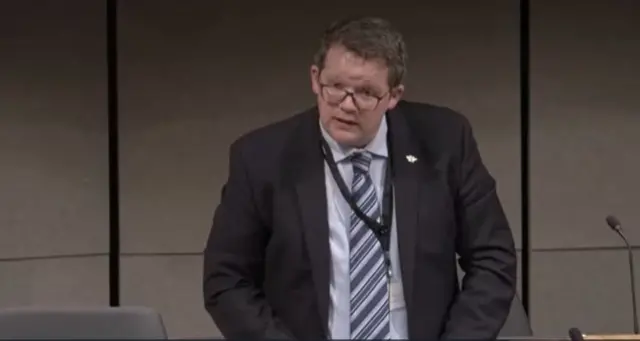 Image source, Senedd Cymru
Joel James
Conservative Joel James asks "what assessment has the Welsh government made of the number of excess deaths associated with long waiting times in accident and emergency departments?"
Eluned Morgan replies, "every death in an accident and emergency department is a tragedy, but ones that could have been avoided if prompt action had been taken are wholly unacceptable. We've heard of many examples where this has occurred, and health boards absolutely need to act. Every patient should be triaged within 15 minutes of arrival, which should assess the seriousness of the patient's condition, and they should be treated in accordance with need. Now, the pressure on our emergency departments is huge, and we've seen an increase of 2.4 per cent in the numbers attending since last year."
Joel James says "you will know that NHS Wales has a 12-hour waiting target for A&E, but, last year, over 122,000 people waited 12 or more hours. That's the second-highest figure on record. To put it simply, it means that about one in seven people were waiting at least 12 hours; in 2015, it was close to one in 32."
He asks, "will you accept responsibility for these appalling outcomes, or will you continue to deny the reality facing patients across Wales?"
Eluned Morgan says, "for the vast, vast majority of people, care is still clinically safe and effective. Let me just give you a sense of the scale of what we're dealing with here: 1.1 million people attended emergency departments in the past year, in a population of 3 million people. The vast majority were treated with dignity and care, and the average wait was under three hours. Now, do we want to do better? Of course we do. Is it acceptable for anybody to be in that situation? No, it's not - no, it's not. And that's why we are doing everything we can to make sure that we put the support in place."
The emergency figures for December last year showed just under 87,700 patients attending A&E, with performance against the four-hour and 12-hour targets worsening.
Over time the trends show an increase in attendance in hospital emergency departments, but with 64.3% of patients spending less than four hours before being admitted, transferred or discharged, which is the lowest in three years.
The goal is 95%, though that has never been met.
The median time spent in emergency departments by age bands (hours and minutes) can be seen here, external.
 Image source, Getty Images
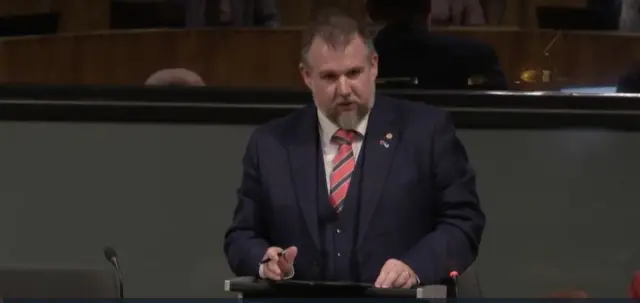 Image source, Senedd Cymru
Peredur Owen Griffiths
Plaid Cymru MS Peredur Owen Griffiths raises the topic of "community cohesion" in south east Wales, an issue he says is "coming to the fore" in light of the war in Iran.
He says, "we know from previous wars in the region that increased tension can arise in our communities, particularly for members of the Muslim community and the Jewish community. An example of this was last week; we saw the shocking events happening in London that affected the Jewish community there. Closer to home, I know that concerns have been raised in recent months about the robustness of security at a number of places of worship. Have you made any extra support available to safeguard the more vulnerable members of our communities, to ensure that they are protected from hate speech, racism and physical violence?"
Eluned Morgan says this is "a time of heightened tensions" and that she has "asked the officials concerned to make sure that we have put that additional support in place to protect those communities that feel vulnerable at the moment. I'm sure lots of us were involved in the Eid celebrations on the weekend; it's great to see our Muslim communities celebrate. But it's also important that we protect the Jewish community, who do feel under strain at this time."
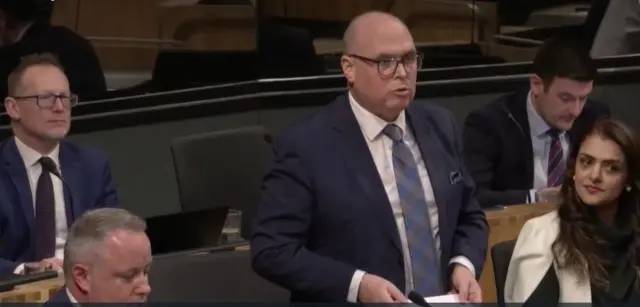 Image source, Senedd Cymru
Paul Davies
Conservative Paul Davies again raises concerns about Hywel Dda University Health Board’s plans to remove services from hospitals in west Wales.
Eluned Morgan replies, "I understand how strongly people feel about services at Withybush, and they’re right to. These services matter. But let me be absolutely clear that urgent and emergency care will continue at Withybush Hospital."
She adds, "what's happening here is a decision by the health board, based on clinical advice, about how to keep services safe and sustainable, because nobody benefits from a service that isn't properly staffed or safe. Workforce pressures have been building across the NHS for years, despite the fact that we now have 12 per cent more people working in the NHS than we did at the beginning of this Senedd term [in 2021]. That's not something that's unique to west Wales, that NHS workforce challenge; it's an international challenge."
Last month thehealth board decided to make changes to a number of its services, including a reduction in the number of specialist stroke units in its hospitals from four to one. The board approved changes to nine services, including stopping emergency general surgery at one hospital, and changing an intensive care unit at another to an enhanced care unit, providing a lower level of care.
The changes will not come into place straight away.
Paul Davies says, "you can spin this as much as you want, but residents across west Wales are understandably upset and angry at these decisions to strip services from their local hospitals, and they want the Welsh government to stand up for them and stop the health board from removing those vital services. Now, my colleague Samuel Kurtz and I have written to the health secretary to intervene, and indeed to the counsel general to consider any and all legal options to stop the health board, and we will leave no stone unturned in standing up for the people that we represent."
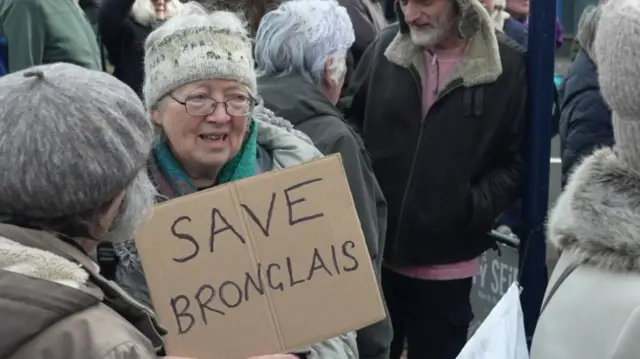
Hundreds of people have protested over the future of the stroke unit in Bronglais
Labour's Rhianon Passmore asks "what discussions has the Welsh government had with the UK government about the progress of the Ajax armoured vehicle programme to secure the future of high skilled jobs in Islwyn?"
In November, the Army paused the use of its Ajax armoured vehicles after soldiers became unwell from noise and vibration during a military exercise. About 30 soldiers became ill when training to use the armoured fighting vehicles over a weekend and an investigation was launched "out of an abundance of caution", the Ministry of Defence (MoD) has said.
Eluned Morgan replies, "we're working closely with the UK Labour government on the Ajax programme, because this is about protecting highly skilled jobs in the south Wales valleys. Hundreds of people are employed at General Dynamics in Oakdale and Merthyr - good, well-paid jobs that people rely on. I understand that uncertainty is going to cause anxiety. We have been clear that we need a swift resolution to give workers confidence, particularly in communities like Islwyn."

The Ajax vehicles were originally due to enter service in 2019 but the programme has seen long delays
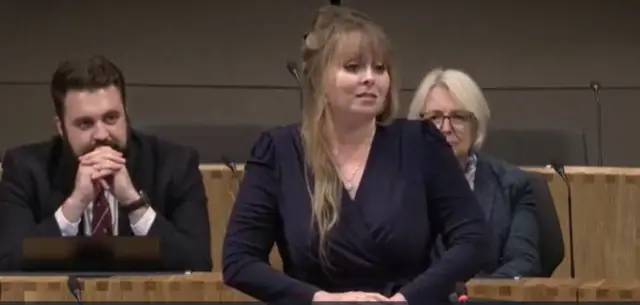 Image source, Senedd Cymru
Delyth Jewell
Plaid Cymru MS Delyth Jewell asks "what assessment has the first minister made of how well the current devolution settlement is working for Wales?"
Eluned Morgan replies, "devolution is working, and it’s working because of the choices made by the Welsh Labour government. And let’s be clear, we are the party of devolution. We established it and we’ve made it deliver for the people of Wales."
She adds, "we want to go further. That’s why we backed the constitutional commission, because Wales should have a stronger voice and more control over the future."
Delyth Jewell says, "this Senedd is Wales's voice. It was hard fought for, hard won. There are voices in our politics that seek to denigrate and belittle us. How damaging and dismaying it is that the current prime minister seems one of them. Keir Starmer, like Boris Johnson before him, seems happy to sideline this Senedd, to rebuff calls for powers over policing, over transport, to deny us the billions we're owed from HS2, to tell his Westminster Cabinet they can spend in devolved areas without the Welsh government's consent."
She was referring to a leaked memo which sparked accusations the prime minister was undermining devolution. It emerged Sir Keir Starmer told members of his cabinet in December to be prepared to take decisions and spend cash across the UK's nations even if it was against the wishes of devolved governments.
Sir Keir has said he would make no apologies "for spending more money in Scotland or in Wales to improve people's lives".
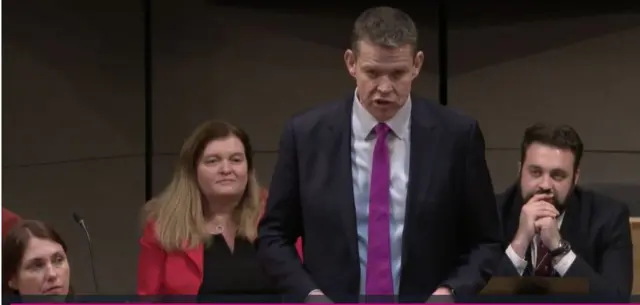 Image source, Senedd Cymru
Rhun ap Iorwerth
Plaid Cymru leader Rhun ap Iorwerth says "it is the people of Wales who will decide if this is the last session in which a Labour first minister answers questions from opposition leaders. If that does indeed prove to be the case, what does the first minister think will have driven that loss of faith in her party's ability to deliver for Wales and to stand up for our country?"
Eluned Morgan replies, "I think the people of Wales will take their time to consider what we've delivered for them over the past five years - and, boy, have we delivered."
She lists what she sees as successes - "that eight month in a row of waiting lists coming down. Look at the potholes being filled on our streets - 200,000 and more. Think about those women's health hubs that have been opened across the whole of Wales. Think about those 20,000 homes that we've delivered. Think about the 100,000 apprentices that have been created in Wales. All of those things have been delivered on our watch."
Rhun ap Iorwerth says "the people of Wales are ready for a new leadership. That's what Plaid Cymru offers - new ideas, new energy, new ambition after 27 years of Labour first ministers".
He adds "we in Plaid Cymru have taken seriously our role of holding government to account, but it's also been about influencing government, getting things done from opposition - free school meals, we lost count of the times Labour voted against that but Plaid Cymru never gave up. The north Wales medical school, an idea once dismissed outright by Labour, is now a reality after the long Plaid Cymru campaign."
Eluned Morgan says "you talk about ideas. Where are they?" and accuses Plaid Cymru of only committing to "having a little think" in its first 100 days if it forms the next government.
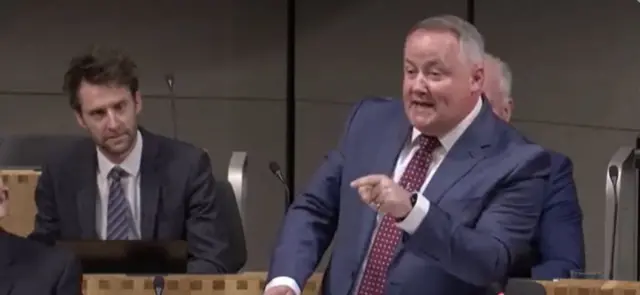 Image source, Senedd Cymru
Darren Millar
Following the sacking in January by Conservative group leader Darren Millar of his shadow health secretary James Evans for talking to Reform - a party he has since joined - the Conservatives and Plaid Cymru have 13 members each in the Senedd.
So the two parties now take turns to ask the first leader's questions to the first minister.
The Conservatives go first today.
Darren Millar asks his question in Welsh. He says the clip of Reform UK leader Nigel Farage describing Welsh people as "foreign speakers" in a paid-for video message is an "insult" to people in Wales.
Farage made the comment in a recorded greeting where he said he was "gutted" to be unable to attend a wedding because half of the number of guests were Welsh.
Eluned Morgan replies, "I do think that it was an insult to the language and to our nation in terms of the way that Nigel Farage spoke of our language. The fact is that he will do anything for money, anything at all and that is something that he shares with his dear friend Trump."
Darren Millar moves on to a statement issued by the Welsh government last week on the cost of living.
He says, "it made for remarkable reading because it told us next to nothing. It mentioned £3.8 million worth of UK government funding to support people in Wales who use oil for heating and hot water, but it gave absolutely no indication as to how that money will be deployed. And it also ignored the many other cost-of-living pressures that have been heaped upon the shoulders of the people of Wales - council tax through the roof over the past five years, water bills up by hundreds in recent years, too, and of course the very recent spike in the cost of petrol and diesel on forecourts across Wales. What on earth are you doing issuing a statement on the cost-of-living pressures that buries your head in the sand when it doesn't discuss those particular pressures clobbering every single household in Wales?"
Eluned Morgan replies, "I can't believe I'm getting lessons from the Tories on how to support people when it comes to poverty. You threw people on the scrap heap when your government was leading in Westminster. Let's remember the years of austerity, the years of cuts, the years of not protecting people who needed protection. And let me tell you what we did in Wales. While you were cutting in England, we were protecting here in Wales. We made sure that people over 60 could use their buses free of charge; we made sure that we introduced new bus regulation to make sure that we can take more control and we can charge people a decent amount but not too much. And that's why £1 fares for young people has proved massively successful and why when we are back in government here after May, let me tell you, we will be introducing a £2 cap when it comes to bus fares, making a difference, a real difference, to the cost-of-living challenges that people are suffering."
The first minister's husband and children are in the public gallery, as are some of her staff.
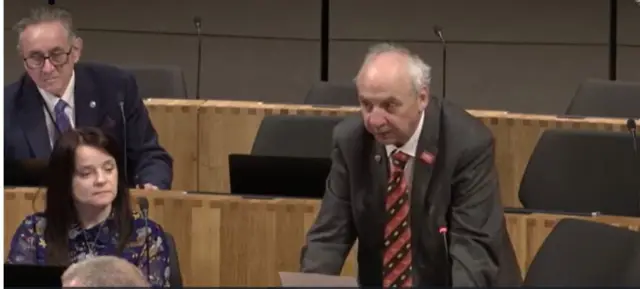 Image source, Senedd Cymru
Mike Hedges
Labour's Mike Hedges raises the topic of the role of higher education in growing the Welsh economy.
Eluned Morgan replies, "our universities are central to Wales's economy. They train our workforce, they drive innovation, and support local jobs right across the country. Now, you see that in places like Swansea, where the university is working with industry, on everything from advanced manufacturing to green energy. Now, I know this is a difficult time for the sector and I recognise the real anxiety for staff, including in Swansea, where people are worried about their jobs. That's why the Welsh Labour government has backed our universities, with additional investment of over £40 million in capital funding, to help them adapt and plan for the future."
Mike Hedges says, "I want to stress the importance of higher education in growth areas such as computing and life sciences, while also generally providing a highly educated workforce, which is what employers need. If you examine the economically successful areas in the world, they all have major universities. Be it Swansea's twin city in Mannheim, Silicon Valley or Cambridge, the universities drive the economy and the high economic growth in the area. Universities provide the opportunity for high salaries and economic growth."
Several universities in Wales have been reducing staff numbers, with Swansea University announcing in January that it is cutting 55 academic jobs and the University of South Wales saying earlier this month it is cutting a further 200 jobs.
 Image source, PA Media
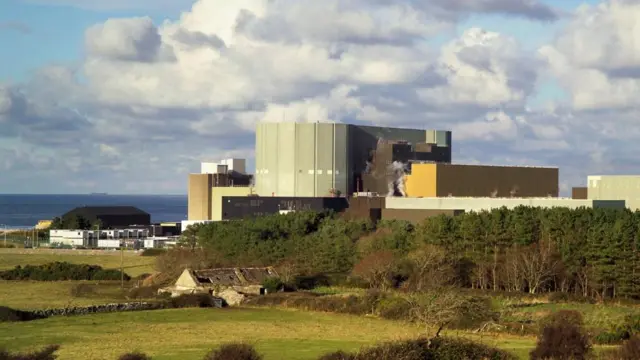 Image source, Getty Images
Work will begin this year at Wylfa, with the aim of generating power by the mid 2030s
Y Llywydd Elin Jones conducts a ballot to determine the names of members who may table questions to the first minister.
Former first minister Vaughan Gething - who answered the questions in 13 of these sessions while at the helm of the Welsh government - seeks a statement "on how the recommendations of the Fingleton review of nuclear development regulation will be considered and taken forward in Wales".
The UK has become the "most expensive place in the world" to build nuclear power plants, according to the UK government review which criticises "overly complex" bureaucracy around the sector.
The report, which was commissioned by Prime Minister Sir Keir Starmer,calls for a "one-stop shop" for nuclear decisions.
A "radical reset" of the rules around nuclear power could save Britain "tens of billions" in costs and reverse the industry's "decline" in recent years, the Nuclear Regulatory Taskforce said, external.
First Minister Eluned Morgan replies, "we've already set up a working group across the Welsh government to go through the review on the regulation of nuclear power - the Fingleton review - and decide what works for Wales, particularly in areas where we have devolved responsibilities. Now, we'll work with the UK regulators to speed things up where we can, but what we won't do is to lower standards. And this matters because of Wylfa on Anglesey. This is a huge opportunity opportunity for Wales".
A first-of-its-kind nuclear power station is to be built on Anglesey, bringing up to 3,000 jobs and billions of pounds of investment.
The plant at Wylfa, on the northern coast of Ynys Môn, will have the UK's first three small modular reactors (SMR), although the site could potentially hold up to eight.
Work is due to start this year with the aim of generating power by the mid 2030s.
Vaughan Gething says, "energy security and sovereignty has never been more important. We will need more power, not less, to secure well-paid work for communities across Wales in the industries of the future that are of course identified in the UK industrial strategy. We'll need both renewables and a generation of new nuclear, to secure power for homes, businesses and jobs. And it is fantastic news for Wales that the small modular reactor programme for the UK will be led from Wylfa."
Conservative Samuel Kurtz says, "nuclear power has the capability of transforming our grid, providing reliable baseload energy and increasing the demand. But let's not underestimate the role of the previous UK Conservative government in advocating for Wylfa - full-scale nuclear at Wylfa, rather than just SMRs."
Reform MS Laura Anne Jones says "Wales needs energy that is affordable for households, reliable for industry, and secure for the long term. For too long, Welsh energy policy has been driven by ideological net-zero targets, without regard for cost, reliability, rural impact, or democratic consent."
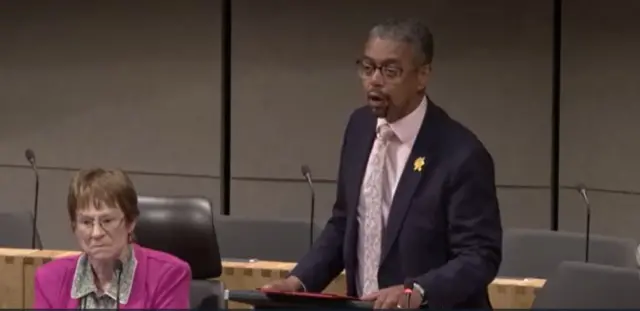 Image source, Senedd Cymru
Vaughan Gething
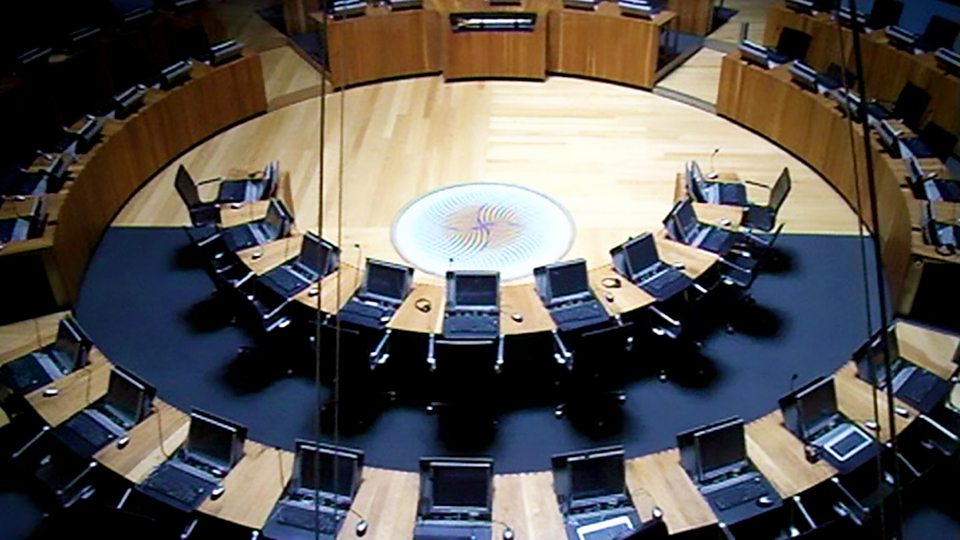
Hello and welcome to our live coverage of the final First Minister's Questions before the dissolution of the Senedd ahead of the election on May 7.
It's Eluned Morgan’s fifty-seventh session of FMQs.
The meeting is held in a hybrid format, with some members in the Siambr and others joining by video-conference.
You can click on the play button above to watch the proceedings from 1.30pm.
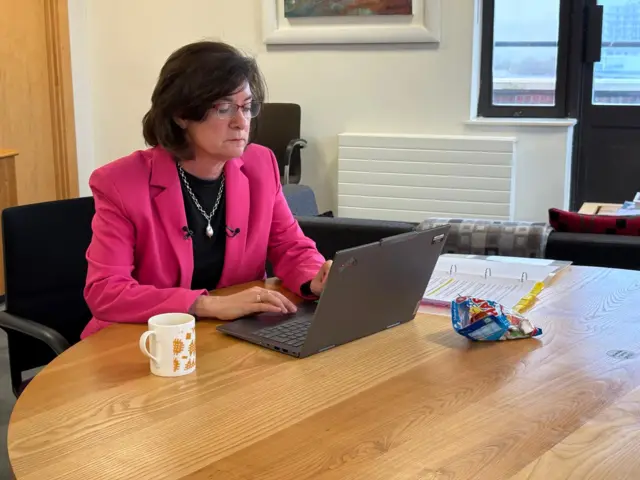
Eluned Morgan preparing this morning for this session