Podcasts from BBC Bitesize and BBC Sounds

Bitesize and BBC Sounds have teamed up to help you revise key GCSE topics wherever you are.
Explore our Bitesize podcasts covering GCSE Biology, GCSE Chemistry and GCSE Physics, as well as GCSE History, GCSE English Language and GCSE English Literature. You can also get tips and advice with our Study Support podcasts to help your revision feel more manageable or explore job ideas with our Careers podcasts.
BBC Sounds is where you can catch the latest music tracks, discover binge-worthy podcasts or listen to live radio, all in one place.
Why not try a revision podcast episode?
Listen to an episode from one of our revision podcasts series here. You can find the full series on BBC Sounds.
Alice and Anouska look at changing approaches to medicine in the Renaissance period.
Alice: Hello, and welcome to the Bitesize GCSE History podcast, where we explore the key events, people, and concepts to help tackle your History GCSE exam. I'm Alice Loxton, author and historian.
Anouska: And I’m Anouska Lewis, history podcaster. In this series, we’re diving into the history of medicine.
Alice: Sometimes you’ll hear actors reading real historical accounts or imagined conversations based on historical evidence.
Anouska: And we’ll end every episode with a quiz to make sure that you’ve caught the key details.
Alice: In the last episode we looked at how people approached disease in medieval England.
Anouska: And in this one we’re looking at what changed, and what stayed the same, as we move across the next 200 years.
Alice: Let’s do it. I recommend grabbing a piece of paper and making some notes as we go.
Anouska: Let’s take ourselves back to Britain between the years 1500 and 1700.
Alice: It’s a period known as the Renaissance - that’s French for ‘rebirth’.
Anouska: Rebirth of what?
Alice: Well, it was a time characterised by new ways of thinking. People were questioning old beliefs and, in medicine, they were exploring new scientific ideas.
Anouska: Crucially, new discoveries were being made about the causes of disease. But why now? Humanism was on the rise during the Renaissance period. It was a philosophy that believed people could, and should, come to their own conclusions about the world around them.
Alice: Instead of accepting the idea that God was responsible for everything, including disease, humanists explored other possibilities.
Anouska: The printing press was also crucial in challenging medieval ideas. Invented in the 15th century - that’s the 1400s - it meant books could be printed en masse, rather than written out by hand, and it took the job of copying books away from the Church.
Alice: So access to books increased, ideas spread more easily, and the Church had less control over what was published. More people than ever were able to read and write too.
Anouska: So now, scientists could publish theories that challenged medieval beliefs.
Alice: Let’s meet some of the scientists exploring these new ideas.
Vesalius: Hi! I’m Andreas Vesalius. I’m an anatomist and, not to brag, but I made some pretty big discoveries about human anatomy.
Alice: During the Renaissance, Vesalius discovered loads about what actually happens inside our bodies. But to do this, he needed to be able to see inside.
Anouska: Inside?
Alice: Yes, he needed to cut people open and look inside their bodies.
Anouska: Rather him than me! While carrying out his dissections he discovered that Galen had got some things wrong.
Alice: And to be fair, Galen had been carrying out his dissections on animals, not humans, so I can see how he might have made some mistakes.
Anouska: Vesalius disproved quite a few of Galen’s claims, including Galen’s theory about how blood flowed through the heart. However, he couldn’t yet explain how blood did move between the heart’s chambers.
Alice: Now I know this is all very sciency, but stay with us, and remember to keep that pen next to you to jot down key terminology.
Anouska: There’s lots more information on the BBC Bitesize website, and you can listen to the rest of this series on BBC Sounds. So, in 1543, Vesalius published his discoveries on human anatomy. His book was called On the Fabric of the Human Body. Who’s next?
Paré: Ambroise Paré, Bonjour! I am a famous Renaissance surgeon and, I don’t want to toot my own horn, but some of my patients do include French kings.
Alice: Paré’s contributions were in the world of surgery. His story starts in the 1530s where he was treating soldiers in the French Army who had gunshot wounds.
Anouska: Traditionally, physicians would use boiling oil to stop bleeding on a wound like that. But one day, Paré ran out of oil, so he came up with an alternative ointment made up of egg white, rose oil, and turpentine. He found that it actually worked better at healing gunshot wounds.
Alice: Sometimes soldiers would have amputated limbs, and Paré began using ligatures for their wounds.
Anouska: What’s a ligature?
Alice: Well ligatures are what we call the pieces of material tightly bound on a patient's limb to seal the blood vessels. And they were effective at stopping the bleeding.
Anouska: But germ theory wasn’t understood yet, so patients had a high chance of infection which often led to death. We’ll learn more about that in the next episode.
Alice: Paré was a pioneer in surgical techniques. He showed that there could be better outcomes when traditional beliefs and methods were challenged.
Harvey: Is it me next?
Anouska: Oh hello William! Go on, introduce yourself.Harvey: My name is William Harvey. You may have heard of one of my patients… King Charles I. I made crucial discoveries about blood circulation.
Alice: William Harvey’s discovery was to do with how blood flowed around the body.
Anouska: At this point, there were various incorrect theories. For example, Galen’s theory was that blood was made in the liver.
Alice: Harvey’s experiments proved that blood is repeatedly circulated around the body and is pumped around by the heart.
Anouska: Major breakthrough! And finally…
Sydenham: Hello! I’m Thomas Sydenham. I’m a doctor who believes in the power of observation.
Alice: Sydenham believed it was important to closely observe a patient’s symptoms to be able to then treat their disease.
Anouska: That would seem pretty obvious to us today but before him, physicians had relied on what they read in medical books. For Sydenham, it was important to observe patients and treat each person on an individual basis.
Alice: Sydenham also believed that every disease was different and that it was really important to work out which illness a patient had before treating them. He worked out that scarlet fever and measles were different, which people didn’t know at the time.
Anouska: He published his ideas in 1676, in a book called Observationes Medicae, which means Medical Observations. Let’s hear an extract from it.
Sydenham: We should have known the cures of many diseases before this time if physicians had not been deceived in their disease and had not mistaken one species for another.
Alice: So, Sydenham is saying that doctors keep muddling up different diseases and making it hard to find proper cures. For him, it was essential to understand exactly which disease a patient had.
Anouska: Some scientists like these were supported by an organisation called The Royal Society.
Alice: Founded in 1660, its motto was ‘Nullius in verba', meaning ‘Take nobody's word for it'. In other words, don’t just believe old ideas - test them yourself!
Anouska: The society was keen to find new scientific theories through experimentation, debating ideas, and sharing discoveries.
Alice: Today, the Society is still going, publishing scientific journals across the world. All of these discoveries were really important in moving medicine forward, away from the classical ideas of people like Galen and Hippocrates.
Anouska: So medical theories were developing, but did anything actually change for everyday people?
Actor: Case study - The Great Plague.
Alice: In the last episode we looked at the Black Death, which reached England in 1348. In your exam you may be asked to demonstrate change and continuity, so it's worth making some notes here on how things changed or continued since then.
Anouska: Plagues came and went in the 300 years after the Black Death and in 1665 there was another outbreak. Again, symptoms included painful, swollen buboes across the body.
Alice: The Great Plague had a devastating impact. It’s estimated about 100,000 people died from it in London alone.
Anouska: Despite the advances in scientific thinking since the Black Death, in practical terms not much had changed. People continued to believe the plague was caused by bad air, or miasma. They thought the air could be cleaned by lighting fires or by carrying nice smelling flowers.
Alice: Religion was still a big factor too - people believed God had sent the plague as a punishment for sin.
Anouska: And people still prioritised prevention. They stayed at home to avoid spreading the disease. In some villages, they soaked their coins in vinegar believing that this would prevent passing the disease on when buying food.
Alice: Not much had changed in the way of treatment either. People would still try to balance the four humours. For example, they may remove excess blood from a patient, known as bloodletting.
Anouska: Herbal remedies were still popular and, similar to the Black Death, quarantine, or isolation, was a feature of the Great Plague.
Alice: The village of Eyam in Derbyshire has been remembered for their strict quarantine measures. When the plague reached them in 1665, villagers decided to stay and not flee. This successfully contained the spread of the disease.
Anouska: So, the key takeaway here is that, although scientific ideas were starting to change, the practice of medicine had not changed much for everyday people. The Great Plague case study is a good example of that.
Alice: Let’s put our knowledge to the test now with a quick quiz.
Anouska: Grab a pen to write down your answers. First up, what was the physician Andreas Vesalius known for? He made key discoveries about human anatomy and disproved old theories like those of the ancient physician Galen.
Alice: Which physician made major discoveries about blood flow in the body? The answer is William Harvey.
Anouska: And finally, in what year did the Great Plague arrive in England? The year was 1665, and it killed over 100,000 people in London alone.
Alice: Thank you for listening to this episode of the Bitesize History podcast.
Anouska: Make sure to head to the BBC Bitesize website. You’ll find loads of resources on other GCSE History topics and subjects like English, science, and maths.
Alice: See you next time!
Anouska: Bye-bye!
Learn how to analyse language, structure and writer's intention.
Jean: Hello, and welcome to the Bitesize English Literature Exam Skills podcast. If you want the skills to tackle those texts when it matters most, this is where it's at.
Carl: So, whether you're determined to ace that essay or perfect your analysis of poetry, we are here with practical advice to help you with your exams.
Jean: I’m Jean Menzies. An ancient historian, author and presenter.
Carl: And I'm Carl Anka, a journalist, author and broadcaster.
Jean: And in this episode, we are delving deeper into analysis so you can explain why writers make the choices they do, whether that's writers from today, the 19th century or way back to Shakespeare.
Carl: We're going to have loads of useful information along the way too, so it's a good idea for you to grab a pen and paper now, in case you want to make notes.
Jean: Let's get started on analysis. We're now moving away from simply describing what happens in a text to investigating why the writer chose specific techniques. This is sometimes called the writer's intention.
Carl: Here's a good starting point, think of every detail in a text as a deliberate choice by the writer, that means everything from a single word to the timing of a major plot event. Writers use language structure and form to guide the reader's thoughts and feelings.
Jean: Before we jump in, let's do some quick definitions.
Carl: So, when we say language, we literally mean word or phrase choices.
Jean: When we say structure, we mean how the text is organised and ordered, such as its punctuation and flashbacks.
Carl: And form is the type of text, whether that's a play, a poem, a gothic novel, whatever it may be.
Jean: Great. To help explain what we mean, we'll use examples from a range of texts starting with Shakespeare's Macbeth. Don't worry if you're not studying this play, the methods we'll show you can be used to analyse any text at all, whether it's a Shakespeare play, a romantic poem or a modern novel.
Carl: And let me give a little context about this play too, because it's one of my favourites.Macbeth is a respected Scottish warrior. Hi Jean…
Jean: Just like me.
Carl: …who after hearing a prophecy that he shall be king hereafter chooses to commit evil deeds to pursue power, and everything collapses as a result of his own choices. So not just like Jean.
Jean: I hope not anyway, but that's a great summary, and crucial point, we're not revising Macbeth here. We're using Macbeth moments as a kind of showcase for how to think like an analyst in a text.
Carl: Excellent. So, let's zoom in on one of Shakespeare's language choices. His recurring imagery of blood. It's not a theme in itself, but Shakespeare uses it again and again to symbolise themes like guilt, violence and fate.
Jean: Yeah. There's a lot of blood in Macbeth,
Carl: A lot of blood, exactly, Shakespeare uses imagery of blood throughout Macbeth. From this point on, we are doing two different things in our analysis, we are going to look at how and why?
‘How’, we'll look at the technique the writer chooses, for example, metaphors, symbols, structural shifts.
Jean: ‘Why’ looks at the effect or purpose this has - what does the writer want us to think about or understand here? So, let's apply those…When Macbeth says, ‘Will all great Neptune's Ocean wash this blood clean from my hand?, the ‘how’ is that Shakespeare is using blood as a metaphorical symbol. The ‘why’ is to show Macbeth's psychological guilt. It's the idea that this sin can't ever be washed away even by the ocean.
Carl: Later on, Macbeth says ‘It will have blood, they say: blood will have blood’. So, the ‘how’ is that Shakespeare deliberately repeats the word blood, building up blood imagery. The ‘why’ is to show how the cycle of violence continues, signalling to the audience that more brutal events are to come - ‘Blood will have blood’.
Jean: So, by connecting the ‘how’, which is the technique, to the ‘why’, which is the effect or intention, you're moving beyond just describing what happens and towards explaining and analysing the writer's craft.
Carl: And it's not just language that you can analyse, writers also make structural choices for a reason.For example, ending a chapter on a cliffhanger is a choice.
Why does the writer do this? To build suspense and to keep the reader hooked, so they want to turn the page.
Jean: Or in poetry, if the rhythm or imagery shifts halfway through, that’s a choice. ‘Why’ is often to mirror a change in the speaker's emotions or understanding and that change affects how we respond as readers.
Carl: Now we are going to see how this works in practice. Okay Jean, I'm going to invite you to take off your host hat for a moment so we can tackle this as two writers. We're going to hear two different quotes, one from Macbeth and then one from A Christmas Carol. Both of these are GCSE texts.And once you've heard these quotes, we are going to try and work out what the writer is doing and why, and you can join in too.
Okay, so let's look at a couple of quotes. One from Macbeth and one from A Christmas Carol and then let's look at the language.
‘Stars, hide your fires; Let not light see my black and deep desires.’
Jean: This is one of my favourite quotes, it's beautiful, but also dark.
Carl: Tell me more.
Jean: Contrast. You know, it's very poetic, but we're actually learning about someone doing something quite horrific. So, Macbeth at this point, we know wants to be king. He thinks he should be king, but in order to be king, other people have to die.So, you know, his brain's working away and he's coming up with some plans, and he realises that there is perhaps something to be ashamed of, so he doesn't want the universe, the stars, to observe him.
Carl: Yes. It's this idea that he has evil intentions, but he doesn't want to reveal them to the world yet. And also it sounds like he's afraid of them, just a little bit.
Jean: He recognises in himself there is something wrong here, even if he's letting it drive him.
Carl: Mm. And now for A Christmas Carol. This is a quote describing Scrooge…‘secret and self-contained and solitary as an oyster.’I love that one because it’s Dickens doing something that I'm especially fond of, which is loads of alliteration - ‘secret’, ‘self-contained’ and ‘solitary’. Triple ‘s’.A very good way of getting people to remember anything is if you just keep repeating the same letters or noises. If you are listening to this and you are a fan of hip hop music, loads of rappers do this too.And then also, ‘as solitary as an oyster’. Simile is slightly different from metaphor, if it's ‘as’ something, that's a simile.So you use the triple ‘s’ - ‘secret’, ‘self-contained’ and ‘solitary’ to help create a very, very vivid picture and help it root in your mind and in ‘solitary as an oyster’, if you've ever encountered an oyster or you’ve ever seen an oyster, be it in real life or in a TV show or anything, you know, oysters live very lonely lives and the only rarely ever really open up, well they’re not really supposed to open up.
Jean: No and they’ve got a hard shell that protects them but also isolates them.
Carl: There you go. That is good language. I hope it was useful to hear us change our thinking about what writers do to why writers do it. Did you join in too and think about why the writers were using those words and those ways? You could try analysing quotes with a friend. It's good practice.
Jean: ‘Stars, hide your fires, let not light see my black and deep desires’, I have said that quote so many times and it never gets old. You can find out more analytical tips for Shakespeare, Dickens, and other set texts at the Bitesize website.
But right now, let's take a look at some techniques you can use to deepen your analytical response.
Carl: Right then, a very effective place to start is close and purposeful reading, where you carefully work through a passage to see how the words, phrases, sentences and any other choices add to the overall meaning.
Jean: Don't forget to also look at the writer's structural choices when doing this. For instance, who is narrating the text? When is certain information revealed, delayed or withheld? Because those choices shape how the reader sees things and what the text means.
Carl: So, here is a simple three step process that you can actually use. Number one, identify the technique. What is the writer doing? For example, are they using imagery? Are they using repetition or sentence length?
Jean: Number two, explain the effect. What impact does that choice have on the reader or audience?
Carl: And thirdly, explore the writer's intention. Why has the writer made that choice? What message or emotion are they trying to create?
Jean: Let's try that process with an example. For some context, An Inspector Calls is a play by JB Priestley and is about the wealthy Birling family whose dinner is interrupted by Inspector Goole. He reveals that each of them has played a part in a young woman's death.
Let's look at a quote from An Inspector Calls when Mr. Birling confidently calls the Titanic ‘unsinkable, absolutely unsinkable’.
Carl: Now, here Priestley is using dramatic irony. We, as the audience know that the Titanic sank, so the effect here is that Mr. Birling immediately loses credibility. You're not supposed to trust his judgment.
Jean: And the writer's intention is to make the audience question the values and opinions of the older generation. Priestley wants us to think more socially and take more responsibility for others.
Carl: And did you notice how we both use the writer's name when we explained our points?That's a really powerful habit. If you start your sentences with ‘Priestley shows’ or ‘Priestley chooses’ or swap in the name of the writer whose text you're studying, your analysis becomes more purposeful because you're keeping the focus on the writer and their intention.
Jean: And often there's more than one technique happening in one small quotation. That's why there can be more than one valid interpretation and that's actually a strength to demonstrate, it shows your thinking.
Carl: Exactly. So, let's lock in this big message. Every single thing that a writer does in a text has a purpose. Our job is to draw a clear line between the evidence we select and the writer's purpose behind it.
Jean: So, whenever you quote, zoom in on a keyword phrase or structural choice, and explain what ideas or feelings it suggests, how that shapes the reader's perspective and why the writer might want that effect.
Carl: Alright then, I think our analytical brains have been switched firmly on. Now, let's move on.
Jean: Now we're going to show how that same three step approach we just used, technique, effect and the writer's intention, works with any GCSE text.
Carl: As we've seen by taking evidence from a text and analysing the language structure and form that writer uses, we can explore the effect on the reader and the writer's reasons for doing this.And it's true, you can take these elements and apply them to any written work.
Jean: In a play, you might look at where scenes are placed and how the writer uses moments like entrances and exits to guide the audience's understanding.
Carl: In a poem, you might analyse why the lines are a specific length or a number of syllables.
Jean: And in a novel you might look at how the focus shifts in the story or how we see the plot from a particular character's perspective.Writers do everything for a reason, and your job in analysis is to connect a specific choice you can see in the text, to the effect it creates and the writer's likely intention.
Carl: One important factor for the writer - now, this is one we really want you to note down - is the context of the work. Context essentially means what was happening in the world when the text was written and why this is relevant.
Jean: An easy way to do this is, you can ask yourself three quick questions. When was the text written? What was happening socially, politically, and historically at that time? And how might that have influenced the writer's message or purpose?
Carl: Let's apply those questions to An Inspector Calls. Priestley wrote this in 1945, just after the Second World War had ended. At the time, Britain was questioning old social attitudes and there was a new push towards fairness and rebuilding society.
Jean: So, Priestley uses the play to criticise selfishness and class inequality. His intention is to get the audience to think differently about responsibility, especially shared responsibility.
Carl: So, context isn't just extra knowledge, it helps you explain why a writer believed what they believed and why they wanted their audience to think or feel in a certain way. Each writer responds to the world around them and uses their work to reflect or critique the society they inhabit. It's also important to know what was going on in the writer's life as they were reading it.It should also bear in mind who the writer is. If we're talking about social changes, and it's written by a woman, that might be interpreted differently than that compared to a male author.
Isn't that right, Jean?
Jean: Yeah, absolutely. Who they are, where they lived, what they did, their experiences in life are all going to impact the writing they produce.Let's finish with a couple of quick-fire questions. You can answer along with us.
Carl: Okay then, question number one. What do we mean when we say writer's intention?
Jean: It means what the writer wants a reader to think or feel.
Carl: Exactly.
Jean: Next one. When analysing a quotation, what should you always do?
Carl: You should explain how it supports your argument. Don't just drop it in.
Jean: And here's another: Fill in the blank - Writers use language form and … to create meaning.
Carl: Ah, I know that one - structure - the trio creates meaning!And I'll give you the last one Jean, what does context refer to in text analysis?
Jean: Context refers to the time and circumstances in which a text was written and how that influences the writer's message.
Carl: Nice. A bit of fun to test ourselves as we round things up. So listener, how did you get on?
Jean: Thanks so much for listening to the Bitesize English Literature Exam Skills podcast.
Carl: And remember, you can find the rest of this series right now on BBC Sounds.
Dr Sunayana Bhargava and Tulela Pea look at the history of the atomic model.
SUNAYANA: I’m Dr Sunayana Bhargava, a scientist and poet.
TULELA: And I’m Tulela Pea, a science communicator and podcaster.
SUNAYANA: And this is Bitesize Chemistry. This is the second episode in an eight-part series on atomic structure and the periodic table. In this episode, we’re going to look at the history of the atom and how that model has developed over the centuries.
TULELA: We’ll look at how this led to our understanding that atoms are made up from protons, neutrons and electrons.
SUNAYANA: And we’ll end with a quick summary of the main important facts for you to take away because life is just so darn busy these days.
TULELA: But also because that’s why we’re here after all - to help revise GCSE chemistry and combined science.
SUNAYANA: Our chat bot NNICK is with us again.
NNICK: Oh, I love Chemistry, I adore it, divine chemistry!
SUNAYANA: Before we unleash NNICK, what I like about the history of the structure of the atom is that it’s a really good example of how science works. You come up with a new idea or hypothesis, devise an experiment to test the hypothesis and if the evidence backs up your predictions then it becomes a better theory. And our understanding is a little better than it was before. And this is exactly true with how the model of the atom has developed throughout history.
TULELA: Totally! So if we begin say only 200 years ago, back then what we thought an atom looked like was actually quite basic, tiny.
SUNAYANA: Very, very tiny.
TULELA: Very, very, tiny spheres that can’t be divided. This idea was proposed by a scientist from Manchester called John Dalton in 1804.
SUNAYANA: Actually, it kinda goes all the way back to the ancient Greeks and the word atom comes from the Greek ‘atomos’ – which means uncuttable.
TULELA: Nice trivia, Sunayana! But since then, we now know that atoms are composed of electrons, protons and neutrons arranged in a particular way.
SUNAYANA: So how did we get from there to our understanding today? NNICK, can you give us a quick history of the structure of the atom?
NNICK: The history of ideas about atoms. The most sensible, mature and adult way to discuss the history of ideas about atoms is through the medium of song.
SONG
Mr John Dalton imagined that atoms
Were miniature spheres that you cannot divide
And then JJ Thomson, who probably liked snacking
Described them as a plum pudding with electrons inside
Rutherford, who was Ernest, suggested a nucleus
Which no one had ever considered before
And around that were shells filled with orbiting electrons
According to that fascinating fellow Niels Bohr
Experiments suggested the existence of protons
Which contribute to the nucleus in a positive way
Add to those the neutrons discovered by Chadwick
And that's the atomic model which we still use today, OK!
SUNAYANA: Thanks, NNICK! Lots to unpack there but sounds like there are some key moments in this history of the atom that we should explore a little. And each one has progressed our understanding. First up, JJ Thomson. From his experiments, he concluded that atoms weren’t solid spheres and he proposed that they looked more like a plum pudding.
TULELA: Who even eats plum pudding these days?
SUNAYANA: Sounds like the kind of dessert they’d have had in 1904 when JJ Thomson came up with the idea. His plum pudding model could be thought of as a positively charged dough spread out evenly in which negatively charged electrons…
TULELA: …the plums…
SUNAYANA: …were embedded. Quite simple, but an advance from the solid spheres model.
TULELA: Anyway, JJ Thomson’s plum pudding model of the atom didn’t last very long because only about a decade later, along comes Ernest Rutherford who tested Thomson’s theory and proved that the plum pudding was way past its sell-by date. And he did this by showing that the positive charge in the atom wasn’t spread out evenly and was in fact concentrated in the centre – the nucleus – where most of the mass of the atom is. And his evidence came from firing positively charged alpha-particles at a very thin sheet of gold foil.
SUNAYANA: Which I shall now demonstrate in the Bitesize studio purely by the magic of sound effects! If Thomson’s plum pudding model was correct then when I fire some alpha particles at the gold foil…
TULELA: Whoa! Careful with that sound effect, Sunayana!
SUNAYANA: Because the positive charges in the gold atoms were thought to be evenly spread out, all the alpha-particle bullets would simply pass straight through – or deflected just a tiny amount if they travelled close to an electron in the plum pudding.
But what they found is that although, yes, most of the alpha particle bullets did indeed pass straight through the foil undeflected, that a few alpha particles were deflected by extreme angles or even reflected backwards as if ricocheting from something.
TULELA: Whoa! Be careful!
SUNAYANA: And this could not have happened with the Thomson plum pudding model.
TULELA: Nice shooting, Sunayana. So, from this experiment, the new model of the atom was now one of mostly empty space where a positively charged mass or nucleus is concentrated at the centre and around this are the electrons. End of story?
SUNAYANA: Not quite yet! Because Rutherford’s model only answered some questions but not all. It didn’t tell us anything more about the electrons. To resolve those questions, we had to wait until Niels Bohr. We had to wait ‘til he proposed a new development of the previous model of the atom. In this, the electrons orbit in particular shells – or energy levels to give them their correct name – which are precisely fixed distance from the nucleus. Again, his experimental observations agreed with his theorical calculations, updating the science and our ideas.
TULELA: So what does that mean, orbiting electrons in shells of a precise distance?
SUNAYANA: I like to think of them as if I were a gymnast twirling a baton over my head and I could choose a different length baton. The electrons are in the ends of the baton spinning around as I dance. They can’t get any closer or further unless I change the baton size – which is like being in a different shell.
TULELA: Baton twirling and alpha particle sharp-shooter – you’d be so talented.
SUNAYANA: Thanks! But we’re not finished yet – because even Niels Bohr’s model needed refining and later experiments from Rutherford again led to the idea that the positively charged nucleus in the atom could be subdivided into a whole number of smaller particles called protons, with each proton having the same amount of positive charge.
TULELA: The end?
SUNAYANA: Not quite – because finally about 20 years after Rutherford’s nuclear model, in 1932 James Chadwick put the final (for the moment) missing pieces into our model of the atom when he proved the existence of neutrons – chargeless particles, also within the atom’s nucleus.
TULELA: And that is the model we use to visualise the atom today. A nucleus of protons and neutrons, with orbiting electrons at specific distances from the nucleus.
SUNAYANA: And if you decide to study chemistry or physics at a higher level, you’ll see how even that model becomes more exciting and extraordinary.
TULELA: And an exciting and extraordinary career in science awaits everyone – every nationality, every gender, every background.
SUNAYANA: I couldn’t agree more.
SUNAYANA: Time for a quick interactive quiz. Three questions, 5 seconds each – here goes…
TULELA: Question 1. Who came up with the plum pudding model of the atom?
SUNAYANA: Answer - JJ Thomson.
TULELA: Question 2. Who showed that this plum pudding wasn’t correct and what was the experiment that proved this?
SUNAYANA: It was Ernest Rutherford who fired alpha particles at gold foil and updated the atom with his nuclear model.
TULELA: And Question 3. How did Niels Bohr’s model update the nuclear model further?
SUNAYANA: He brought in the idea of electrons orbiting the nucleus in energy shells.
TULELA: OK, Sunayana, quick summary?
SUNAYANA: Sure thing.
TULELA: Let’s go. From the ancient Greeks until about 200 years ago, the atom was thought of as tiny solid spheres.
SUNAYANA: Then JJ Thomson comes up with his plum pudding model.
TULELA: Rutherford fires alpha particles at gold foil and shows JJ Thomson was wrong. His nuclear model is one with a positive nucleus.
SUNAYANA: Bohr’s orbiting electron shells helps modify Rutherford’s model.
TULELA: Protons are discovered by Rutherford. Neutrons are discovered by Chadwick and the current model of the atom is in place.
SUNAYANA: And all these developments are a really good example of how science progresses though theory, experiment and evidence.
TULELA: And now I’m hungry. Plum pudding, anyone?
SUNAYANA: In episode three of this series, we’ll be looking at the structure of the atom in more detail its size – its parts, charge and its mass.
I’m Dr Sunayana Bhargava.
TULELA: And I’m Tulela Pea.
SUNAYANA: To hear more, search ‘Bitesize chemistry’ on BBC Sounds.
TULELA: Say bye, Sunayana.
SUNAYANA: Bye Sunayana.
TULELA: Thanks for listening.
LIsten to a podcast on the impact of the First World War on Germany.
Announcer: BBC Sounds, music, radio, podcasts.
Katie: I'm history podcaster, Katie Charlwood.
Datshiane: And I'm history graduate and TV and radio presenter, Datshiane Navanayagam.
Katie: And this is Bitesize GCSE history.
Datshiane: This is the first episode in a nine part serious on 20th century Germany. In this episode, we'll begin with the First World War, looking specifically at German imperialism, the armistice, and the impact of the Treaty of Versailles.
Katie: Along the way on our journey, we'll be sharing revision hints and tips on how to remember those key facts, and there'll be exam tips, a test on your knowledge and we'll end with a summary of everything we're about to look at.
Datshiane: We'll also be introducing our Bitesize time-travelling reporters, who we'll be sending back in time to report from some key moments in history.
Katie: And remember that it might help if you have something to make notes on and do feel free to press stop and rewind whenever you need to.
Datshiane: Okay, 20th-century Germany and the road to the First World War. Katie, give us the basic who, what, where and when please.
Katie: At the beginning of the 20th century, Germany was a fairly newly formed nation. All its twenty-five previously independent states had been unified in 1871. The King of Prussia, its most powerful state, became the ruler, or Kaiser, in 1888. He was Wilhelm the Second. Having spent most of his youth in the army, he was keen to build a powerful army and navy. More on this later.
Datshiane: Under the Kaiser, was the chancellor, or chief minister, who was hired and fired by the Kaiser. He was his advisor with the help of other ministers.
Katie: Advisor to the Kaiser! Kinda important that the chancellor got on with his Kaiser then.
Datshiane: Then there was the Bundesrat, who were 58 representatives from each of the 25 states who could introduce law.
Katie: And the Reichstag would vote on these laws; there were 397 members, or deputies, who had to be voted in by the public.
Datshiane: So, you have the Kaiser, chancellor, Bundesrat and Reichstag, it's always good to get to grips with the political system. You might want to make notes as to what powers each of those tiers had and some of the weaknesses of the system - which were, Katie?
Katie: Well, the Kaiser was pretty powerful, to say the least; he was an autocrat, he was unelected and could completely ignore all the advice from his chancellor - the advisor to the Kaiser. And the chancellor could also ignore the Bundesrat and Reichstag and just make his own decisions. He also made all the military and foreign policy decisions.
Datshiane: Which created more problems, because, Katie?
Katie: Because, Datshiane, the largest state was Prussia and this was where the Kaiser was from. Being the richest and most powerful of the 25 states, it also had a much greater influence after German unification. Prussia provided 17 of the 58 votes in the Bundesrat, and since a law could be stopped with just 14 votes, it could simply veto ones not to its approval even if all the other states voted for them.
Datshiane: So you can see, there were some political problems already, but there were the beginnings of economic and social ones too, and in the next section, we're going to look at those.
Datshiane: Okay, the Kaiser wanted Germany to be a global power, an idea called Weltpolitik, or world policy; and Wilhelm wanted Germany to compete with Britain and France for overseas territories and trade dominance. This included a series of navy laws, which increased the size of both the navy and the army, which heightened tensions with Britain.
Katie: And how was this funded? By taxes. More and more money was ploughed into the navy and the army and new German colonies.
Datshiane: And the happier the Kaiser and his patriotic supporters became.
Katie: Yes, but more and more debt was being piled up by the German government and the economy went into deficit as the national debt spiralled.
Datshiane: Whoops. At the same time, the growth in German industrialisation led to huge social change. Many German workers were unhappy with low wages and poor working conditions, and they turned to the new socialist political party, the Social Democratic Party or SPD, which became more and more popular. By 1914, over three million German workers had joined trade unions, and some even wanted to overthrow the Kaiser and start a revolution. It's time to call up our time-travelling reporter to find out more. Jordan, where and when are you?
Jordan: Hi, Jordan here, reporting from the streets of industrial Germany, 1912. The air is thick with tension and noise. Just behind me, the gates of the steel factory are locked tight; workers are out on strike, organised by the local trade union, and I'm here to figure out what's going on. I've just spoken to a worker who's been in a factory since he was a young teenager; he told me that life in the factories is hard, too many hours for too little pay. He hasn't seen a wage increase in years, despite the company profits going up. In the distance, you can hear the clanging of machinery inside, but there are chants of Gerechtigkeit - justice! - coming from the strikes outside. One thing I keep hearing is that the workers are tired of being ignored. They say the Kaiser and the factory owners seem to care more about expanding Germany's military and empire than improving conditions for the millions of industrial workers making the country's wealth. With no rights, no power, and no end to the exploitation in sight, they're looking for new ideas. The younger generation especially, see socialism as a way to have a voice in a system that's been stacked against them. It's no wonder workers are demanding better conditions, shorter hours and higher wages. The socialist party, the SPD, has grown rapidly to become the largest party in the Reichstag, and earlier today, I heard a speech by August Bebel, one of the founders of the SPD who said, "We stand here for the exploited and the oppressed. We demand social justice in a world where the capital thrives on the misery of the working class." This promise to fight for workers' rights is why so many are turning to them right now. This is Jordan, reporting for Bitesize GCSE History, back to the studio.
Katie: So, trouble was brewing at home, and trouble was brewing overseas too as Germany's rise as a military and industrial power, coupled with its aggressive foreign policy, created an atmosphere of distrust amongst European nations, who divided Europe into two armed camps.
On one side, we had the Triple Alliance: Germany, Austria-Hungary and Italy, and on the other side we had the Triple Entente: France, Russia, Britain. And the distrust between them eventually led to a war, because, Datshiane?
Datshiane: Because Austria-Hungary was in conflict with Serbia following the assassination of Archduke Franz Ferdinand in 1914. Germany supported Austria-Hungary and this was a key factor in the escalation of the crisis that led to World War One.
Katie: Fast forward four long drawn out bloody years that devastated the continent and Germany’s eventual defeat in late 1918.
Datshiane: Yes, by this time, Germany's population had become increasingly disillusioned with the war effort and the country was now facing collapse from food shortages. On top of that, the German economy was getting worse with inflation and debt spiralling. On November the 9th, in the face of revolutionary unrest and pressure from military leaders, the Kaiser abdicated - this was a huge turning point for Germany politically. Two days later, on November the 11th, Germany signed the armistice with the allies, ending the fighting.
Datshiane: War over, Germany defeated; what were the immediate impacts on life, Katie?
Katie: Well, it wasn't great for many Germans. Germany was virtually bankrupt due to the vast sums of money that had been borrowed to pay for the war. Society was divided even further; some factory owners had done very well whilst the workers' wages had been frozen.
And the country was rapidly becoming politically unstable with mutiny and talk of revolution across the nation. Many people also felt a sense of betrayal by the German surrender. All this social unrest became worse thanks to the Treaty of Versailles - the peace settlement that the victorious allies had drawn up.
Datshiane: This knowledge might help an exam question which asks you to write about the ways that the First World War impacted the lives of German people. You might want to pause here and summarise some of the ways that their work and society was affected by the war.
Katie: Remember to use those words beginning with C: Cause, consequence, change and continuity, that we look at in the Exam Skill series, have another listen if you need a reminder.
Datshiane: The Treaty of Versailles imposed harsh conditions on the country. Katie, I know you like your mnemonics, what have got for us?
Katie: A good way to remember conditions of the Versailles treaty are by the word "BRAT" B-R-A-T. B is for blame - the infamous 'war guilt' clause, Article 231. R is for reparations - a massive 6.6 billion pounds to be paid to Britain and France. A is for armed forces, which were to be hugely reduced. German land was taken away to form new European countries, like Czechoslovakia, and recreating others, like Poland. And its overseas colonies were handed over to the allies. Remember B-R-A-T, BRAT, if you're asked to write about the Treaty of Versailles.
Datshiane: And not surprisingly, the Treaty of Versailles caused deep resentment amongst Germans; economically, the reparations crippled Germany's post-war recovery, leading to hyperinflation and widespread social unrest. Politically, the treaty fuelled nationalist anger, paving the way for extremist movements, including the rise of Adolf Hitler and the Nazi Party; and in turn, World War Two.
Katie: But that is all to come in the following episodes in this series.
Datshiane: Of course. But for now, how about a quick test based on this episode? Three questions, five seconds to answer, or hit pause if you need to have a little more time. Here we go. What were the four layers of the German government prior to World War One?
Katie: The Kaiser, the Chancellor, the Bundesrat and the Reichstag.
[correct bell sound]
Datshiane: What was the name given to the Kaiser’s plan for Germany to become a global power?
Katie: That would be Weltpolitik, or world policy.
[correct bell sound]
Datshiane: And what were the broad terms of the Treaty of Versailles?
Katie: BRAT! B for blame, R for reparations, A for armed force reduction, and loss of T - territory.
[correct bell sound]
Datshiane: Great! I'm sure you did brilliantly.
Katie: Quick summary, Datshiane?
Datshiane: Yes, please.
Katie: Okay, so during this period there were factors that contributed to Germany's growth as a world power, but also factors that contributed to political and social problems.
Datshiane: The parliamentary government was headed by the powerful Kaiser, Wilhelm the Second.
Katie: German industrialisation, growth of its military and empire expansion, fed into his Weltpolitik, which created an atmosphere of distrust and rivalry amongst Britain and its European allies.
Datshiane: And don't forget, low wages and working conditions resulted in many Germans turning to the Socialist Democratic Party.
Katie: After the loss of World War One and the Kaiser’s abdication, Germany was made to sign the Treaty of Versailles.
Datshiane: Remember BRAT? Blame, reparations, army and territory.
Katie: There's more background on this subject and quizzes to test you on the Bitesize website.
Datshiane: And in the next episode, we'll look at the strengths and weaknesses of the Weimar Republic.
Katie: Thanks for listening.
Listen to a podcast on Elizabeth I's journey to the throne.
Announcer: BBC Sounds, music, radio, podcasts.
Anouska: Hello, and welcome to the Bitesize GCSE History podcast.
Alice: This is the series designed to help you tackle your History GCSE. I'm Alice Loxton, author and historian.
Anouska: And I'm Anouska Lewis, history podcaster.
Alice: We’re here to help you dive a little deeper into Elizabeth I.
Anouska: Every episode, we’ll explore the key events, people and concepts for your exam, as well as some exam skills. We’ll be using actors to read historical sources and imagined conversations between historical figures.
Alice: And at the end of every episode we’ll do a quick quiz to make sure you’ve caught all the key details.
Anouska: Oooh, I’m excited for that.
Alice: Me too.
Anouska: There’s absolutely loads to get stuck into. The Elizabethan period was a busy time.
Alice: It sure was. And if you want to hear all the episodes in this podcast, and the other History series, make sure you download the BBC Sounds app. So, before we can get really stuck into Elizabeth I, we need to look at what led her to the throne. Her Dad was a pretty well known and powerful guy.
Anouska: Oh that guy… in the big sleeves… and the six wives.
Alice: That’s the one - Henry VIII! His first wife was Katherine of Aragon and they had a daughter Mary in the year 1516. But at that time, like a lot of people, Henry believed it was unnatural for a woman to reign and so a male heir would be a stronger successor to his throne.
Anouska: So, a little bit of context here…in the previous century, England had been ravaged by a series of civil wars called The Wars of The Roses. So Henry really wanted the crown to be in good and stable hands when he died.
Alice: And he thought the key to this was having a male heir. So, the big question is - did Katherine have a son?
Anouska: Well, Katherine had six children, but only Mary, their daughter, survived. Henry wanted to find another wife to have a son with.
Alice: But in order to end his marriage to Katherine, Henry needed permission from the Catholic Pope to divorce her.
Anouska: He did indeed, but the Pope refused to give permission. So Henry did something pretty radical.
Alice: Yes…he broke with Rome, took over the Church in England, called himself the Supreme Head and granted himself a divorce.
Anouska: Problem solved I guess? So what happened next Alice?
Alice: Well, next, he marries Anne Boleyn. Together they have a daughter, Elizabeth.
Anouska: I bet Henry wasn’t exactly happy about that.
Alice: Hmmm… not really….he still didn’t have a son, which he desperately wanted. So, Anne had to go as well.
Anouska: Anne was accused of high treason and beheaded. Henry then married Jane Seymour and they had a son together, Edward.
Alice: So finally he got what he wanted, a son!
Anouska: When Henry VIII died, he became King, making him King Edward VI. But, Edward died after just six years on the throne. He was only 14.
Alice: He was replaced by his half sister Mary I, and when she died Elizabeth became Queen. The year was 1558 and Elizabeth was 25 years old.
Anouska: 25? That’s basically my age! Being Queen now would be so hard, I can hardly do my own laundry.
Alice: I know, but Elizabeth was ready! She’d spent 25 years preparing and a lot of people saw Elizabeth’s reign as a fresh start. She was young…
Anouska: oooooh.
Alice: She was single…
Anouska: yaaaaaaas.
Alice: …and unlike her half-sister Mary, who’s mother was Spanish, both Elizabeth’s parents were English. It was felt she’d be loyal to the English people, not to foreign powers.
Anouska: She was also really clever! Let’s hear a primary source from Elizabeth’s tutor, Roger Ascham, published in 1570. This is a real source read by an actor.
Roger: Apart from her abilities in Latin, Italian, French and Spanish, she also reads more Greek every day than some churchmen read Latin in a whole week. Most impressively, working within her own private chambers she has developed the same ability to learn, understand, speak and write that which only one or two university students could achieve in many years.
Anouska: Wow, pretty impressive… We can infer from that, that she was a well-educated monarch. And we know Elizabeth had some fans early on. But…not everyone was happy.
Alice: No they weren’t. Many Catholics believed that her parent’s marriage was illegal because Henry had divorced his first wife to marry her mum. So therefore they thought that Elizabeth was illegitimate and that she had no claim to the throne.
Anouska: That is not exactly ideal for her.
Alice: Going to cause a few problems certainly.
Anouska: Okay you might want to write this next bit down…grab a pen and a piece of paper… Elizabeth had been raised a Protestant. Her half-sister Mary I, who had been Queen before her, was extremely Catholic and had made England a Catholic country again.
Alice: And during Mary’s reign, there were concerns that Elizabeth would be used as a figurehead for Protestant rebellions.
Anouska: So Elizabeth was imprisoned by her own sister before she became Queen herself.
Alice: So as you are beginning to see, religious tensions were a theme throughout this period and we’ll talk a bit more about that in a later episode. But Anouska, what other problems faced Elizabeth once she became Queen?
Anouska: Well….some people were worried about her ability to rule because she was a woman.
Alice: The Christian religion taught that women should be under the authority of men. The word ‘Queen’ actually comes from the Anglo-Saxon ‘wife of a King. So basically, women were only thought of in relation to men.
Anouska: Some people thought Elizabeth couldn’t be a strong, effective monarch by herself, and would make England look weak.
Alice: Hang on a sec… Mary I had come before her so weren’t people used to a female ruler?
Anouska: You’re right, but things didn't exactly go very well for Mary. England was pretty unstable and as a consequence, people associated poor ruling with female rulers. So with that in mind, some Members of Parliament wanted Elizabeth to get married and produce an heir.
Alice: Ok, well let’s hear from Elizabeth I herself on this one. This is what she had to say to Parliament in 1566. It’s read by an actor.
Elizabeth: At present it is not convenient; nor never shall be without some peril unto you and certain danger unto me.
Anouska: So, although Queen Elizabeth was single, she was clearly not ready to mingle.
Alice: No she wasn’t. She was very clear that this was her private business and she would only marry when and if it was convenient.
Anouska: She was basically telling Parliament to back off and stop asking her about marriage, which I think is fair enough.
Alice: Me too. Elizabeth is the only English queen who never married and that’s why she earnt the name ‘The Virgin Queen’. She never shared exactly why she didn’t want to marry but some historians think it was to protect England’s security; if she had a foreign husband, perhaps a King from France or Spain, he would then have power in England.
Anouska: Equally, if Elizabeth were to marry an English nobleman, it could cause arguments amongst the rest of England’s nobility.
Alice: Hmm… I can see why that could be tricky.
Anouska: But… that doesn’t mean she was short of admirers.
Alice: Absolutely not, she had plenty of men lining up for a chance to marry her…from English noblemen to foreign royalty.
Anouska: And by not choosing anyone, she kept her options open. If they all thought they had a chance, she could even play countries off against each other.
Alice: Clever, now let’s whistle through her potential suitors. It might be a good idea to grab a notebook and write these ones down.
Anouska: Welcome to Keen for a Queen! It’s the brand new dating show where noblemen and foreign royalty fight for a chance to marry The English Queen!
Alice: Bachelor number 1 is entering the castle. It’s the very dashing, the very charming Robert Dudley!
Anouska: Woo.
Alice: Robert Dudley, The Earl of Leicester is an ambitious, good looking guy and there are rumours that he and Elizabeth are in love, but there’s a catch… he’s already married.
Anouska: Booo.
Alice: And scandal strikes when his wife is found dead.
Anouska: Did he do it?
Alice: Well people suspect he might have, so that he could be with Elizabeth. But that’s not the kind of attention the Queen wants and so she pulls away from him to protect her reputation.
Anouska: Next up, we have Bachelor number 2, King Philip of Spain!
Alice: The guy with a lovely moustache… and what’s more… he’s a King!
Anouska: A King for a Queen…What could go wrong?
Alice: Well there is a slight hitch… first up, he’s a Catholic, but secondly he’s been married before.
Anouska: Okay, who was he married to?
Alice: Well…it was actually Mary I, Elizabeth’s sister.
Anouska: Her sister!
Alice: Her sister. So it’s no surprise people thought that this was a bit of a dodgy option and politically it was a problem too. MPs were not a fan. They didn’t want to encourage any more religious tensions by having a Catholic King in England, and they didn’t want Spain to have influence within England’s government. So, Elizabeth played hard to get, she kept him waiting and then cautiously rejected his offer.
Anouska: Finally getting down on one knee it’s Bachelor number 3.
Alice: Francis Duke of Alencon was the heir to the French throne. Elizabeth strung him along for nearly a decade but there were positives to marrying him.
Anouska: Well yes, she’d have influence in France, but Francis was Catholic, and it was too risky to have French influence in England. So they never ended up tying the knot.
Alice: A string of rejected proposals later, and Elizabeth had made it clear she would never marry. If you’d like to get to know Elizabeth’s suitors, or see what they looked like make sure to head to the BBC Bitesize website.
Alice: OK Anouska, shall we finish up with a quiz?
Anouska: Yes, let’s do it. Feel free to grab a pen to write down your answers.
Alice: First question. Who broke with Rome and took control of the Church in England? The answer is Elizabeth’s father, Henry VIII. He did this to grant himself permission to divorce his first wife, Katherine of Aragon.
Anouska: Next question. Elizabeth had two siblings who ruled before her, who were they? It’s her half brother Edward VI and her half sister Mary I. Edward died young, and Mary imprisoned Elizabeth for her Protestant beliefs.
Alice: Hmmm… lovely sisterly behaviour…Okay, next one. What is Elizabeth’s nickname… a little hint, it has something to do with her decision around marriage. The answer is The Virgin Queen. Elizabeth decided not to marry and she didn’t have any children, so that’s where that name comes from.
Anouska: Last question. Which King’s proposal did Elizabeth reject? It was King Phillip of Spain. Remember Phillip was married to Elizabeth’s half sister Mary before she died and he was keen to marry Elizabeth too, buuuut… she wasn’t interested.
Alice: Thank you for listening to episode one of the Bitesize History podcast and for joining us as we explored Elizabeth’s journey to the throne.
Anouska: There’s lots more information on the BBC Bitesize website and you can listen to the rest of the episodes on BBC Sounds.
Alice: Next time, we'll be looking at Elizabeth I’s government and meeting some of the key members of her Royal Court.
Anouska: And because you’ve listened to this entire episode, you are now part of our Lizzie Legends crew.
Alice: Yes, we are all Lizzie Legends here. See you next time!
Anouska: Bye.
Jean and Carl explore the themes of Shakespeare's Macbeth.
Carl: Hello, and welcome to the Bitesize English literature podcast.
Jean: I'm Jean Menzies, author and ancient historian.
Carl: I'm Carl Anka, journalist and author.
Jean: We're here today to help you dive a little deeper into some of the texts in GCSE English literature.
Carl: It's worth noting that there will be spoilers in this as we look into each text as a whole. So if you're not quite finished reading, or you're not quite ready for spoilers, just come back later.
Jean: There's plenty here to get your teeth stuck into.
Carl: Now, you've clearly done something right, because you've made it here. If you want to hear all the episodes in this podcast, make sure you download the BBC sounds app.
Jean: And don't forget that whilst you're in the BBC sounds app, there's loads of other things you can use to help you with your revision – full versions of some of the texts you might be studying, revision playlists, and other Bitesize podcast series to help with different subjects. In this series, we'll be covering some of the key things you need to know about Macbeth: the plot, the characters, the themes, and the language Shakespeare uses.
Carl: In this episode, we're going to look at the plot of Macbeth and I'm going to tell you something now Jean - Macbeth is my text. This is one of my favourites and I'm very excited to take a closer look at some of these key moments. Is it weird to say Macbeth is one of my favourites?
Jean: Absolutely not - there is so much to keep you hooked in this play. I completely get it.
Carl: Let's get into this one then.
EXTRACT
Macbeth: Speak, if you can: what are you?
First Witch: All hail, Macbeth, hail to thee Thane of Glamis.
Second Witch: All hail, Macbeth, hail to thee Thane of Cawdor.
Third Witch: All hail, Macbeth, that shalt be King hereafter.
Banquo: Good sir, why do you start, and seem to fear things that do sound so fair?
Carl: Right, we've stepped inside the story. And straight into Act 1 scene 3, where Macbeth has encountered three witches for the very first time. Now, Macbeth is the Thane of Glamis. And I should probably say at this point in time that a thane is a nobleman who owns land that's been given to him by the king in exchange for his military services. Macbeth is on his way home from a battle with his best friend Banquo, where they've been successful against the Norwegians. Macbeth in particular has played a huge role in that success. He’s killed someone. He chopped him from his chin down to his belly button. So yeah, very early on, we find out Macbeth is a good fighter - big, strong lad. And on the way back with him and Banquo they meet the three witches who predict a number of things, including that Macbeth will one day become the King of Scotland.
Jean: I mean, seriously, what would you do? You're heading home today and three witches stop you and tell you that one of your greatest dreams is going to come true. I mean, you think they were trying to wind you up, wouldn't you?
Carl: Yeah, it would be my first thing. But then the witches tell them a number of things. They first greet him as the Thane of Glamis, which is what he already is. And then they predict he's going to be the Thane of Cawdor, and then they say he’s gonna be the King of Scotland afterwards. They also tell him that the sons of Banquo will be king one day as well, which is interesting. He doesn't think any of these predictions will come true. The first one comes true, like that - pretty much the moment he gets home, he finds that he's gonna be made the Thane of Cawdor when King Duncan awards it to him for his victory in the battle. So then Macbeth, the cogs start turning, Macbeth begins to wonder if the other predictions will become true.
Jean: And Macbeth is an ambitious man. So for this to feel like a possibility must be really exciting for him.
Carl: Macbeth’s wife, who is referred to as Lady Macbeth, is even more ambitious and ruthless than Macbeth is. So, once when Macbeth tells her about the witches’ prophecy, Lady Macbeth is fully on board with the plan for Macbeth to become king, which also includes a little spot of murder. She says, you know, maybe you should murder Duncan, when Duncan comes around to visit Macbeth in Macbeth’s castle.
EXTRACT
Macbeth: Is this a dagger which I see before me, the handle toward my hand? Come, let me clutch thee. I have thee not, and yet I see thee still.
Jean: You can’t discuss the plot of Macbeth without hearing this line - “Is this a dagger which I see before me”, one of the most famous lines of the play, and of Shakespeare's actually.
Carl: This is just at the point where Macbeth is on his way to do the deed and murder Duncan, when he sees a dagger pointing him in the direction of the king. We don't know if it's a hallucination, but moments after saying this Macbeth takes his own dagger from his belt and commits the deed. He murders Duncan. He hesitates just before he does it, but Lady Macbeth is very encouraging saying they have to go through with their plan.
Jean: Such a supportive spouse.
Carl: Of sorts…
Jean: So it's Macduff who finds Duncan murdered but Macbeth and Lady Macbeth are able to use the king's guard as a cover for their crime. Meanwhile, Duncan’s sons disappear as they're scared for their lives, which means…
Carl: Dun dun dun dun dun. Macbeth becomes the King of Scotland, just like the witches said he would.
EXTRACT
Banquo: Thou hast it now: King, Cawdor, Glamis, all,
As the weird women promised, and I fear
Thou play'dst most foully for 't.
Carl: That extract that we just heard there - that is Banquo, Macbeth's best mate. He was there the day the witches told Macbeth about the prophecy, and he knows that everything isn't as what it seems.
EXTRACT
Banquo: And I fear Thou play'dst most foully for 't.
Carl: Now, what does that mean? You may have heard the term foul play. That is a sentence that is all about violence and murder in certain crimes. Banquo is suggesting that he's suspicious about Macbeth’s involvement in the death of King Duncan. Now, we, the audience and the reader, know that Banquo's suspicions are correct. Macbeth did do a murder - Banquo's not totally sure. And then Macbeth decides something needs to be done about it.
Jean: He does another murder, obviously, because killing people is clearly what he does now.
Carl: Yeah. The first Macbeth that you meet when the play starts, Macbeth did murders but he was doing it in service of his king in battle. And this was described as noble, and to help his country of Scotland. But now, as things progress and Duncan has been murdered, and now that Banquo has been murdered, Macbeth is entirely self-serving. He's using violence and murder to push himself forward and to put others down. The whole play of Macbeth is about how ambition and the love of power can destroy someone and those around him. Right? This is something we're hearing unfolding every single scene. Banquo was Macbeth’s best friend. But Macbeth turns against him, because Macbeth’s need for power and the need to protect his own power warps him. And there's also Lady Macbeth, who helps convince him again and again that these deadly decisions are the right things to do.
Jean: And he has changed and started committing these acts of absolute evil since he heard the witches’ prophecy. But there's reasons to think that there could be guilt there, too. I mean, one of the interpretations is that he feels so guilty that he actually sees the ghost of Banquo later on. And because he's the only one who can see him, those around him start to wonder if he's imagining it, including Lady Macbeth.
Carl: There's a decent argument to be made that he doesn't actually feel guilty at all. And that he’s driven as a consequence of his sin of killing the king. People in the Jacobean era, which is the era between 1603 and 1625, believe that what behaviour was going on was punishment for Macbeth’s sin.
Jean: Either way, the witches have a lot to answer for, but Macbeth wants to know more from them.
EXTRACT
Witches: Double, double toil and trouble. Fire burn and caldron bubble.
Carl: And there's the other famous line: “Double, double toil and trouble, fire burn and cauldron bubble.” I love this line, so so much. It's the one that a lot of people quote when you say, “Oh, I'm studying Macbeth.”
Jean: I'm not even sure everyone remembers it's from Macbeth. I mean, why would you, it's in so many other pieces of pop culture as well, but that is where it comes from. It's just a really popular line now that's synonymous with witches and spells. So Macbeth has come back to see the witches here, and they tell him three things. Beware Macduff, the Thane of Fife. None of woman born shall harm Macbeth. And Macbeth shall never vanquished be, until Great Birnam wood to high Dunsinane hill shall come against him.
Carl: Now these are slightly more complex prophecies than the first batch. Especially because two and three are supposed to be logically and physically impossible. None of woman born can harm him and a forest physically moving location, so it can hurt Macbeth makes Macbeth feel safe. Well, those things certainly can’t happen. I'm absolutely cushty. But it's the first prophecy. Beware Macduff - that comes true quite quickly, because Macbeth finds out that Macduff, Thane of Fife, has gone to join Malcolm who is Duncan’s son, in England. So what'd you think Macbeth is gonna do about this prophecy?
Jean: Yep, you've got it. He does a murder. He seizes Macduff’s castle and has his wife and children killed. This in particular feels as if it's the most brutal murder up until this point in the play. But that does not prove to be a smart move, because Macduff is quite obviously devastated, and therefore vows to have revenge.
Carl: That's the thing about Macbeth. There is so much going on all the time.
Jean: Yeah, it really all is happening. And there's still a lot more to come. Because we haven't heard from Lady Macbeth for a while. That's because her own guilt has actually started to take its toll on her and she's sleepwalking around the castle, remembering all the evil things she's done.
Carl: Although that's the same thing we said about Macbeth. Some Jacobeans will believe that guilt is happening to Lady Macbeth. And some believe that this is insanity happening to Lady Macbeth as well.
EXTRACT
Lady Macbeth: Out, damned spot; out, I say!
Carl: So that we just heard now, “Out, damned spot” - that is one of the most famous speeches from Lady Macbeth. It's Lady Macbeth referring to imaginary blood that she can see on her hands. She can't get away from the guilt and responsibility for all the deaths that have occurred, and she's having a breakdown. In Act 5, the final act of the play, Macbeth finds out that Lady Macbeth has died. It’s never fully explained how or why Lady Macbeth died. And Macbeth himself seems pretty resigned, uninterested. There is a small suggestion that Lady Macbeth may have taken her own life. And it's also some suggestion that basically, Macbeth doesn't care anymore. It is the tragic downfall, so we began this play with so much determination. But we know that Macbeth is all about ambition. And we know how love of power that motivated Macbeth and Lady Macbeth in the beginning is detrimental to both of them in the end.
Jean: Act 5 scene 6 - Malcolm and Macduff’s invasion has begun. At this point, Macbeth still thinks he's protected by the witches' predictions, but he's wrong. When the invading army cut down the trees in Birnam wood to use as camouflage as they move to Macbeth's castle in Dunsinane, it seems as though the trees themselves are moving, and thus making the third of the witches’ latest prophecies come true.
Carl: So they said that Macbeth will never be beaten until the woods moved, and here they are. Right?
Jean: Exactly. It's such a clever way to make that come about. I absolutely love that revelation in that moment in the play.
EXTRACT
Macbeth: I bear a charmed life, which must not yield,
To one of woman born.
Macduff: Despair thy charm;
And let the angel whom thou still hast served
Tell thee, Macduff was from his mother's womb
Untimely ripp'd.
Carl: It's one of the greatest twists ever written I think, this one, because when you read it, that he can't be harmed by someone born of woman, you have no idea where Shakespeare is going with that. Are the witches lying? Are they trying to bring him down? And then Macduff answers them easily. He was from his mother's womb untimely ripped.
Jean: I know, another seriously clever way to spin that that I never could have come up with. I remember the first time I read that. And you're right. It's that moment, like when you're watching a great thriller, and it takes an unexpected turn that has you shouting at the TV. So Macduff was untimely ripped from his mother's womb. So we can assume, delivered by Caesarean rather than born of woman in the traditional sense. So he's able to kill and behead Macbeth. Malcolm becomes the new King of Scotland and we hear how accepting the witches' prophecies leads directly to Macbeth's downfall.
Carl: So, thank you for listening to Episode One of the Bitesize English literature podcast. And joining us as we explored the plot of Macbeth.
Jean: Well, there's actually still a lot more to learn. So take a listen to the rest of the episodes of the Bitesize English literature podcast on BBC Sounds to find out more. In Episode Two we'll be taking a look at some of the characters from Macbeth, particularly Macbeth and Lady Macbeth.
James and Ellie talk through the topic of gravity.
ELLIE: Hello and welcome to the BBC Bitesize Physics podcast.
JAMES: The series designed to help you tackle your GCSE in physics and combined science. I'm James Stewart, I'm a climate science expert and TV presenter.
ELLIE: And I'm Ellie Hurer, a bioscience PhD researcher. We're covering lots of different aspects of forces in this series, so make sure to listen to the rest of the episodes too.
JAMES: Yeah, and they're really good. Okay, let's get started because today, I thought so, because today we're talking all about the force that keeps our feet on the ground, gravity.
ELLIE: While we often think about space and astronauts when we talk about gravity, gravity actually acts all around us every single day. Because the definition of gravity is a force of attraction between two objects.
JAMES: The gravitational field is the area around an object where another object will feel a force of gravitational attraction from it.
Gravitational field strength is measured in newtons per kilogram, written out as ‘n’ forward slash ‘kg’.
ELLIE: And the size of the gravitational field strength affects the force of gravity acting on an object in that gravitational field. The other thing that affects the size of gravity is the object's mass. The bigger the mass, the greater the force of gravity.
JAMES: So one key thing to know that a lot of people misunderstand is that weight and mass are actually two different things.
ELLIE: Yeah, so when we say, oh, this loaf of bread weighs 400 grams, we're actually saying that the mass of the loaf of bread is 400 grams.
JAMES: Because mass is about the amount of matter, whereas weight is a force and is the heaviness due to gravity.
ELLIE: Exactly. So let me tell you about the equation you need to calculate the force of weight of an object.
JAMES: Yeah, I'm gonna get my pen and paper out for this one, so if you're listening, please feel free to do the same thing and write along as we go through this.
ELLIE: So, weight equals mass multiplied by the gravitational field strength.
JAMES: Weight is measured in newtons. Mass is measured in kilograms and gravitational field strength is measured in newtons per kilogram.
ELLIE: So to calculate the weight of an object in newtons, you multiply its mass in kilograms by the strength of the gravitational field in newtons per kilogram.
JAMES: That was a lot. Don't panic. Let's just hear that again.
ELLIE: So weight equals mass multiplied by the gravitational field strength.
JAMES: Weight is measured in newtons, mass is measured in kilograms, and gravitational field strength is measured in newtons per kilogram.
ELLIE: So, to calculate the weight of an object in Newtons, you multiply its mass in kilograms by the strength of the gravitational field in Newtons per kilogram.
JAMES: Right, let's try out some examples then. And if you don't have your pen and paper just yet, now would be the perfect time to grab them and you can write down these calculations with us as we go along.
ELLIE: Let's say we want to find out the force of gravity, their weight, acting on your physics teacher as they stand at the front of the classroom.
JAMES: Good image. Now first, you would need to find out their mass. Now let's say it's 80 kilograms, then you need to know the gravitational field strength of the planet they're standing on, which for the planet of Earth is 9.8 newtons per kilogram.
ELLIE: So to measure the force of weight acting on them, you would write down their mass of 80 kilograms and then multiply it by the Earth's gravitational field strength of 9.8 newtons per kilogram to get the answer 784.
JAMES: And because weight is measured in newtons, their weight would be 784 newtons downward. We always have to include those units. And because weight is a force, which is a vector quantity (more about that in episode one), we also have to say the direction it is in, which in this case is downwards.
ELLIE: In those instances, the weight of an object and its mass are directly proportional. So let's say if something had a bigger mass, its weight would be higher. And if something had a smaller mass, its weight would be lower.
JAMES: Exactly. And when we're measuring weight in terms of gravity, we don't use regular kitchen scales. We use something called a newton meter, also known as a calibrated spring balance.
ELLIE: And when we do that, we say that the weight of an object, or in this case, person, acts at a single point. The object or person's centre of mass. The force of gravity, weight, always acts from the middle of an object, straight down.
JAMES: Okay, that was a lot, but I hope that helped you understand gravity a little bit more.
ELLIE: So, let's recap the three main points.
Firstly, gravity is a force of attraction between two objects. The next point is, mass is the amount of matter in an object. However, weight is the force of gravity acting from the middle of the object straight down.
And finally, the equation to find out an object's weight is mass multiplied by gravitational field strength equals weight.
There's your key points about gravity. In the next episode of Bitesize Physics, we're going to dig into work done and energy transfer, and I cannot wait.
JAMES: I believe you. Thank you for listening to BBC Physics. If you found this helpful, and hopefully you did, please do go back and listen, make some notes, so you can come back here and always have this as your point to revise from.
JAMES: Thank you, bye!
ELLIE: Bye!
Dr Alex Lathbridge explores the structure of cells.
Hello, I’m Dr Alex Lathbridge and this is Bitesize Biology.
In this podcast I’m going to take you through the main things you need to know for your GCSE Biology exam.
I’m going to be talking about things as small as cells, as big as rainforests and everything in-between.
There’s going to be a lot for you to remember. And as we go through all of the topics, there will be a few key terms that you’re going to need to learn off by heart. But don’t worry, I did it, you can do it too.
This is the first episode of a nine-part series on the cell, let’s go.
All living things are made of cells, which is why they’re called the building blocks of life.
Plants are made of cells, animals are made of cells, humans are animals so even you, yes you, are made of cells.
In fact, right now, you are a giant, complex container made out of trillions of cells all working together, to learn about cells.
Anyway, today we’re going to take it back to basics and find out about the structure of the cell and the two main types that you are going to need to know.
The thing about cells is that they are small, like really, really small.
Anything between 0.01 and 0.1mm across.
This means they are too small to see with the naked eye. In order to study them properly, scientists first had to invent really powerful microscopes in order to see what’s inside them.
If this is all new to you, don’t worry, scientists like me are learning stuff all the time too.
Nearly all cells have four key things in common:
They have a membrane. This holds the cell together, keeps its contents inside and controls what can enter and exit the cell. Think of it like a balloon that can let things in and out.
They have a cytoplasm, which is kind of like a really useful jelly. It’s where all the chemical reactions take place in the cell. Think of it like water inside that balloon.
They have DNA. DNA is genetic material. And it contains all the information that tells the cell what to do, your cells following all these instructions is how you develop and grow.
They have ribosomes. These are sort of like mini-robots which make proteins based on the instructions found in DNA.
So, you could say that a simple cell is just a tiny water balloon, filled with instructions and little protein-making robots.
Or, if you want to pass your exams, you could say that a cell is between 0.01 and 0.1mm across and made of a cell membrane containing cytoplasm, DNA and ribosomes.
Now, there are two types of cells you’ll need to know about:
Eukaryotic and prokaryotic cells.
You are a eukaryotic organism. This means that you are made up of lots of different types of cells, most of which have a nucleus.
These kinds of cells, the ones that work together with lots of other kinds of cells to make up a plant or animal or human, are called eukaryotic. Easy to remember: because you are eukaryotic.
Let’s think about most eukaryotic animal cells. As well as the stuff we’ve just talked about (that water balloon) most eukaryotic cells also have a nucleus.
Remember that cells always contain DNA? Well, in eukaryotic cells, the genetic material is kept inside a nucleus. Think of it like a little folder.
And they have Mitochondria. This is where cells release the energy they need, that’s where respiration takes place. Think of them like little batteries.
So, when it comes to most eukaryotic animal cells, we’ve got our water balloon (a membrane filled with cytoplasm), containing instructions to make proteins inside a little folder (DNA inside a nucleus), robots to synthesise the proteins (ribosomes) and batteries to power the whole thing (or mitochondria).
And just because things are never that simple, in animals red blood cells are the exception because they don’t have a nucleus.
It’s worth drawing it out, I've always found it useful, even just a quick doodle. Remember, there are lots of diagrams on the Bitesize website. It might be useful to look at those while you listen.
Now, although you might think you are a little bit more interesting than a lettuce, most eukaryotic cells in plants have some extra stuff on top of all that. So, plant cells have a membrane, cytoplasm, DNA, a nucleus and mitochondria and:
They have an extra layer outside of the cell membrane called the cell wall. Plants need a cell wall because they need to stand up straight, but they don’t have a skeleton, and this is where the cell wall comes in, it helps keep plants upright.
Green cells in plants’ stems and leaves have chloroplasts, which contain chlorophyll and the enzymes needed for photosynthesis. Photosynthesis is really important and we’re going to come back to it later in the series, but for now what you need to know is that chloroplasts contain the stuff that plant cells use to store energy from sunlight. Think of it like a little solar panel.
They also have a permanent vacuole. You can basically think of it like a little pocket inside of the cell, filled with something called cell sap that helps to keep the cell in shape.
And remember how red blood cells don’t have a nucleus? Most plant root cells don’t have chloroplasts, so they’re white not green.
Ok, so that was eukaryotic cells. Now let’s look at prokaryotic cells.
Prokaryotic cells are always single-celled organisms.
Like bacteria. The whole organism is just one tiny cell that does it all.
But just because it’s small doesn’t mean it’s not important. We need bacteria in our guts, to help us break down food and the environment is the same, the life cycle of things dying, and their nutrients being returned to the earth depends on bacteria.
This is why you should be very pro prokaryotic cells.
Like all cells, prokaryotes have a cell membrane, cytoplasm, DNA, and ribosomes.
However, there are two main differences:
Firstly, the DNA isn’t inside a nucleus, instead it floats free inside the cytoplasm in a single circular loop of DNA, with some extra little bits of circular DNA called plasmids.
Secondly, prokaryotes also have a cell wall, outside of the membrane.
And yeah, all cells are microscopic but there’s a big difference between eukaryotic cells and prokaryotic cells.
So eukaryotic cells, plant cells and animal cells, can be anything from 10 to 100x larger than prokaryotic cells, found in single-celled organisms like bacteria.
I’m Dr Alex Lathbridge and this is Bitesize Biology. To hear more, search Bitesize Biology on BBC Sounds.
Listen to a podcast on Elizabeth I's journey to the throne.
Announcer: BBC Sounds, music, radio, podcasts.
Anouska: Hello, and welcome to the Bitesize GCSE History podcast.
Alice: This is the series designed to help you tackle your History GCSE. I'm Alice Loxton, author and historian.
Anouska: And I'm Anouska Lewis, history podcaster.
Alice: We’re here to help you dive a little deeper into Elizabeth I.
Anouska: Every episode, we’ll explore the key events, people and concepts for your exam, as well as some exam skills. We’ll be using actors to read historical sources and imagined conversations between historical figures.
Alice: And at the end of every episode we’ll do a quick quiz to make sure you’ve caught all the key details.
Anouska: Oooh, I’m excited for that.
Alice: Me too.
Anouska: There’s absolutely loads to get stuck into. The Elizabethan period was a busy time.
Alice: It sure was. And if you want to hear all the episodes in this podcast, and the other History series, make sure you download the BBC Sounds app. So, before we can get really stuck into Elizabeth I, we need to look at what led her to the throne. Her Dad was a pretty well known and powerful guy.
Anouska: Oh that guy… in the big sleeves… and the six wives.
Alice: That’s the one - Henry VIII! His first wife was Katherine of Aragon and they had a daughter Mary in the year 1516. But at that time, like a lot of people, Henry believed it was unnatural for a woman to reign and so a male heir would be a stronger successor to his throne.
Anouska: So, a little bit of context here…in the previous century, England had been ravaged by a series of civil wars called The Wars of The Roses. So Henry really wanted the crown to be in good and stable hands when he died.
Alice: And he thought the key to this was having a male heir. So, the big question is - did Katherine have a son?
Anouska: Well, Katherine had six children, but only Mary, their daughter, survived. Henry wanted to find another wife to have a son with.
Alice: But in order to end his marriage to Katherine, Henry needed permission from the Catholic Pope to divorce her.
Anouska: He did indeed, but the Pope refused to give permission. So Henry did something pretty radical.
Alice: Yes…he broke with Rome, took over the Church in England, called himself the Supreme Head and granted himself a divorce.
Anouska: Problem solved I guess? So what happened next Alice?
Alice: Well, next, he marries Anne Boleyn. Together they have a daughter, Elizabeth.
Anouska: I bet Henry wasn’t exactly happy about that.
Alice: Hmmm… not really….he still didn’t have a son, which he desperately wanted. So, Anne had to go as well.
Anouska: Anne was accused of high treason and beheaded. Henry then married Jane Seymour and they had a son together, Edward.
Alice: So finally he got what he wanted, a son!
Anouska: When Henry VIII died, he became King, making him King Edward VI. But, Edward died after just six years on the throne. He was only 14.
Alice: He was replaced by his half sister Mary I, and when she died Elizabeth became Queen. The year was 1558 and Elizabeth was 25 years old.
Anouska: 25? That’s basically my age! Being Queen now would be so hard, I can hardly do my own laundry.
Alice: I know, but Elizabeth was ready! She’d spent 25 years preparing and a lot of people saw Elizabeth’s reign as a fresh start. She was young…
Anouska: oooooh.
Alice: She was single…
Anouska: yaaaaaaas.
Alice: …and unlike her half-sister Mary, who’s mother was Spanish, both Elizabeth’s parents were English. It was felt she’d be loyal to the English people, not to foreign powers.
Anouska: She was also really clever! Let’s hear a primary source from Elizabeth’s tutor, Roger Ascham, published in 1570. This is a real source read by an actor.
Roger: Apart from her abilities in Latin, Italian, French and Spanish, she also reads more Greek every day than some churchmen read Latin in a whole week. Most impressively, working within her own private chambers she has developed the same ability to learn, understand, speak and write that which only one or two university students could achieve in many years.
Anouska: Wow, pretty impressive… We can infer from that, that she was a well-educated monarch. And we know Elizabeth had some fans early on. But…not everyone was happy.
Alice: No they weren’t. Many Catholics believed that her parent’s marriage was illegal because Henry had divorced his first wife to marry her mum. So therefore they thought that Elizabeth was illegitimate and that she had no claim to the throne.
Anouska: That is not exactly ideal for her.
Alice: Going to cause a few problems certainly.
Anouska: Okay you might want to write this next bit down…grab a pen and a piece of paper… Elizabeth had been raised a Protestant. Her half-sister Mary I, who had been Queen before her, was extremely Catholic and had made England a Catholic country again.
Alice: And during Mary’s reign, there were concerns that Elizabeth would be used as a figurehead for Protestant rebellions.
Anouska: So Elizabeth was imprisoned by her own sister before she became Queen herself.
Alice: So as you are beginning to see, religious tensions were a theme throughout this period and we’ll talk a bit more about that in a later episode. But Anouska, what other problems faced Elizabeth once she became Queen?
Anouska: Well….some people were worried about her ability to rule because she was a woman.
Alice: The Christian religion taught that women should be under the authority of men. The word ‘Queen’ actually comes from the Anglo-Saxon ‘wife of a King. So basically, women were only thought of in relation to men.
Anouska: Some people thought Elizabeth couldn’t be a strong, effective monarch by herself, and would make England look weak.
Alice: Hang on a sec… Mary I had come before her so weren’t people used to a female ruler?
Anouska: You’re right, but things didn't exactly go very well for Mary. England was pretty unstable and as a consequence, people associated poor ruling with female rulers. So with that in mind, some Members of Parliament wanted Elizabeth to get married and produce an heir.
Alice: Ok, well let’s hear from Elizabeth I herself on this one. This is what she had to say to Parliament in 1566. It’s read by an actor.
Elizabeth: At present it is not convenient; nor never shall be without some peril unto you and certain danger unto me.
Anouska: So, although Queen Elizabeth was single, she was clearly not ready to mingle.
Alice: No she wasn’t. She was very clear that this was her private business and she would only marry when and if it was convenient.
Anouska: She was basically telling Parliament to back off and stop asking her about marriage, which I think is fair enough.
Alice: Me too. Elizabeth is the only English queen who never married and that’s why she earnt the name ‘The Virgin Queen’. She never shared exactly why she didn’t want to marry but some historians think it was to protect England’s security; if she had a foreign husband, perhaps a King from France or Spain, he would then have power in England.
Anouska: Equally, if Elizabeth were to marry an English nobleman, it could cause arguments amongst the rest of England’s nobility.
Alice: Hmm… I can see why that could be tricky.
Anouska: But… that doesn’t mean she was short of admirers.
Alice: Absolutely not, she had plenty of men lining up for a chance to marry her…from English noblemen to foreign royalty.
Anouska: And by not choosing anyone, she kept her options open. If they all thought they had a chance, she could even play countries off against each other.
Alice: Clever, now let’s whistle through her potential suitors. It might be a good idea to grab a notebook and write these ones down.
Anouska: Welcome to Keen for a Queen! It’s the brand new dating show where noblemen and foreign royalty fight for a chance to marry The English Queen!
Alice: Bachelor number 1 is entering the castle. It’s the very dashing, the very charming Robert Dudley!
Anouska: Woo.
Alice: Robert Dudley, The Earl of Leicester is an ambitious, good looking guy and there are rumours that he and Elizabeth are in love, but there’s a catch… he’s already married.
Anouska: Booo.
Alice: And scandal strikes when his wife is found dead.
Anouska: Did he do it?
Alice: Well people suspect he might have, so that he could be with Elizabeth. But that’s not the kind of attention the Queen wants and so she pulls away from him to protect her reputation.
Anouska: Next up, we have Bachelor number 2, King Philip of Spain!
Alice: The guy with a lovely moustache… and what’s more… he’s a King!
Anouska: A King for a Queen…What could go wrong?
Alice: Well there is a slight hitch… first up, he’s a Catholic, but secondly he’s been married before.
Anouska: Okay, who was he married to?
Alice: Well…it was actually Mary I, Elizabeth’s sister.
Anouska: Her sister!
Alice: Her sister. So it’s no surprise people thought that this was a bit of a dodgy option and politically it was a problem too. MPs were not a fan. They didn’t want to encourage any more religious tensions by having a Catholic King in England, and they didn’t want Spain to have influence within England’s government. So, Elizabeth played hard to get, she kept him waiting and then cautiously rejected his offer.
Anouska: Finally getting down on one knee it’s Bachelor number 3.
Alice: Francis Duke of Alencon was the heir to the French throne. Elizabeth strung him along for nearly a decade but there were positives to marrying him.
Anouska: Well yes, she’d have influence in France, but Francis was Catholic, and it was too risky to have French influence in England. So they never ended up tying the knot.
Alice: A string of rejected proposals later, and Elizabeth had made it clear she would never marry. If you’d like to get to know Elizabeth’s suitors, or see what they looked like make sure to head to the BBC Bitesize website.
Alice: OK Anouska, shall we finish up with a quiz?
Anouska: Yes, let’s do it. Feel free to grab a pen to write down your answers.
Alice: First question. Who broke with Rome and took control of the Church in England? The answer is Elizabeth’s father, Henry VIII. He did this to grant himself permission to divorce his first wife, Katherine of Aragon.
Anouska: Next question. Elizabeth had two siblings who ruled before her, who were they? It’s her half brother Edward VI and her half sister Mary I. Edward died young, and Mary imprisoned Elizabeth for her Protestant beliefs.
Alice: Hmmm… lovely sisterly behaviour…Okay, next one. What is Elizabeth’s nickname… a little hint, it has something to do with her decision around marriage. The answer is The Virgin Queen. Elizabeth decided not to marry and she didn’t have any children, so that’s where that name comes from.
Anouska: Last question. Which King’s proposal did Elizabeth reject? It was King Phillip of Spain. Remember Phillip was married to Elizabeth’s half sister Mary before she died and he was keen to marry Elizabeth too, buuuut… she wasn’t interested.
Alice: Thank you for listening to episode one of the Bitesize History podcast and for joining us as we explored Elizabeth’s journey to the throne.
Anouska: There’s lots more information on the BBC Bitesize website and you can listen to the rest of the episodes on BBC Sounds.
Alice: Next time, we'll be looking at Elizabeth I’s government and meeting some of the key members of her Royal Court.
Anouska: And because you’ve listened to this entire episode, you are now part of our Lizzie Legends crew.
Alice: Yes, we are all Lizzie Legends here. See you next time!
Anouska: Bye.
GCSE History Revision Podcasts
Join our hosts as they help you to prepare for your GCSE history exam with these revision podcasts by BBC Bitesize and BBC Sounds.
Explore topics including Medicine through time, Elizabeth I and exam skills.
There are quizzes, summaries and ways to help you remember key facts, people and events.
Medicine through time. audio
Hosts Alice and Anouska investigate medicine's change and continuity over time.
Elizabeth I. podcast
Hosts Alice and Anouska examine the life and reign of Elizabeth I.
Germany in the 20th century. podcast
In this series, podcast presenters Datshiane Navanayagam and Katie Charlwood guide you through the history of 20th century Germany.
The Cold War and Vietnam. podcast
In this series, podcast presenters Datshiane Navanayagam and Katie Charlwood guide you through the history of the Cold War and Vietnam.
The USA in the 20th century. podcast
In this series, podcast presenters Datshiane Navanayagam and Katie Charlwood guide you through the history of life in 20th century America.
The British Empire. podcast
In this series, podcast presenters Datshiane Navanayagam and Katie Charlwood guide you through the history of the British Empire.
GCSE English Language Revision Podcasts
Level up your GCSE English Language revision with these podcasts.
You’ll get clear, practical tips on everything from command words and language analysis to planning an essay under pressure.
Listen to all the GCSE English Language podcasts on BBC Sounds.
GCSE English Literature Revision Podcasts
Supercharge your GCSE English literature revision by listening to these podcasts on set texts, as well as episodes to help you develop your exam skills.
Dive into GCSE English set texts, including Macbeth, A Christmas Carol and An Inspector Calls as well as poetry. Explore the plot, themes and characters with key quotes, learn how to analyse poems with confidence, and pick up some top tips for boosting your exam skills.
Listen to all the GCSE English Literature podcasts on BBC Sounds.
Romeo and Juliet. podcast
by William Shakespeare
Blood Brothers. podcast
by Willy Russell
An Inspector Calls. podcast
by JB Priestley
Frankenstein. podcast
by Mary Shelley
Jane Eyre. podcast
by Charlotte Bronte
Anita & Me. podcast
by Meera Syal
GCSE Chemistry Revision Podcasts
Revise core GCSE Chemistry topics with science experts Tulela Pea and Dr Sunayana Bhargava.
Episodes within the series explain the key points on you need to know for your GCSE in Chemistry or Combined Science - including atomic structure, bonding and chemical changes. Listen to all the GCSE Chemistry podcasts on BBC Sounds.
Atomic structure and the periodic table. podcast
GCSE CHEMISTRY PODCASTS
Bonding, structure and properties. podcast
GCSE CHEMISTRY PODCASTS
Chemical changes. podcast
GCSE CHEMISTRY PODCASTS

GCSE Physics Revision Podcasts
Revise core GCSE Physics topics with hosts James Stewart and Ellie Hurer in this series of podcasts.
Episodes within the series explain the key points on Physics topics including forces, electricity and energy. Listen to all the GCSE Physics podcasts on BBC Sounds.
Forces. podcast
GCSE PHYSICS PODCASTS

Electricity. podcast
GCSE PHYSICS PODCASTS

Energy. podcast
GCSE PHYSICS PODCASTS

GCSE Biology Revision Podcasts
Take a deep dive and revise core GCSE Biology topics with host Dr Alex Lathbridge in this series of podcasts.
The podcast episodes explain the key points on biology topics including cell biology, photosynthesis and homeostasis and get top tips for your science exams. Listen to all the GCSE Biology podcasts on BBC Sounds.
The cell. podcast
GCSE BIOLOGY PODCASTS
The organisation of plants and animals. podcast
GCSE BIOLOGY PODCASTS
Infection and response. podcast
GCSE BIOLOGY PODCASTS

Homeostasis. podcast
GCSE BIOLOGY PODCASTS
Inheritance, variation and evolution podcast
GCSE BIOLOGY PODCASTS
Ecology. podcast
GCSE BIOLOGY PODCASTS
GCSE Revision Study Support Podcasts
Influencer Ibz Mo shares tips and tricks to help your exam revision in Bitesize Study Smart. Dr Radha and guests help you keep calm and study on in Bitesize Exam Survivors.
Study Smart. podcast
STUDY SUPPORT PODCASTS

Exam Survivors. podcast
STUDY SUPPORT PODCASTS

Listen to all the Study Support podcasts on BBC Sounds.
More from Bitesize
The Bitesize Careers Podcast: Where can my subjects take me? video
Katie Thistleton and special guests chat about your career options.
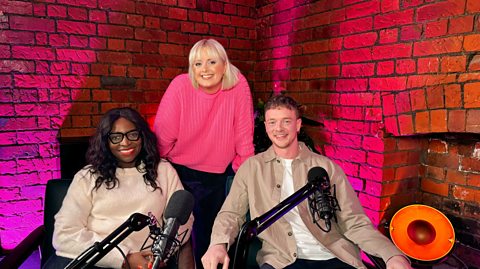
GCSE exam-style quizzes
Improve your exam skills

Revision: Top revision tips
Smart revision advice from those who've been there.