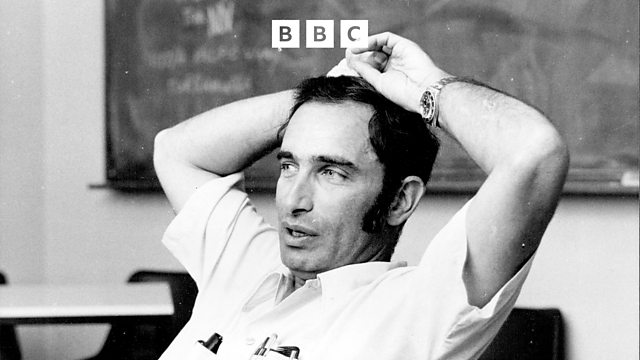
Paul Ehrlich: The man who bet England wouldn’t exist by the year 2000
Why Paul Ehrlich’s dire predictions about a population collapse failed to materialise
Paul Ehrlich’s bestselling book The Population Bomb opens with an apocalyptic paragraph.
“The battle to feed all of humanity is over,” it states. “In the 1970s and 1980s hundreds of millions of people will starve to death in spite of any crash programs embarked upon now. At this late date nothing can prevent a substantial increase in the world death rate.”
Professor Ehrlich, who died last week, made a simple argument. The global population was outrunning our capacity to produce enough food to feed everyone. Famine, disease and nuclear Armageddon would follow if the population was not controlled.
The book made him a celebrity, and he regularly spoke in public, warning of the imminent threat to humanity.
Sometimes his warnings were quite vague in terms of the timescale, but other times not - he was reported as saying in 1968 that if current trends continued, by the year 2000, the UK would be a “small group of impoverished islands, inhabited by some 70 million hungry people".
"If I were a gambler," he was quoted as saying, "I would take even money that England will not exist in the year 2000".
But the UK did not collapse, the global death rate did not increase, and we have more food per person now than when he wrote the book.
So, what went wrong with Paul Ehrlich's predictions of a population apocalypse?
If you’ve seen a number or claim that you think More or Less should look at, email moreorless@bbc.co.uk
CONTRIBUTORS
Vincent Geloso, Assistant Professor of economics at George Mason University
Darrell Bricker, global CEO of Ipsos Public Affairs and co-author of Empty Planet, the Shock of Global Population Decline
Peter Alexander, Professor of Global Food Systems at the University of Edinburgh
CREDITS:
Presenter: Charlotte McDonald
Series producer: Tom Colls
Production co-ordinator: Brenda Brown
Sound mix: Dave O’Neil
Editor: Richard Vadon
Last on

Broadcasts
- Saturday05:50GMTBBC World Service except Australasia, East and Southern Africa, East Asia & South Asia
- Yesterday05:50GMTBBC World Service East and Southern Africa
- Yesterday09:50GMTBBC World Service Europe and the Middle East & West and Central Africa only
- Yesterday11:50GMTBBC World Service except East and Southern Africa, Europe and the Middle East & West and Central Africa
Download this programme

Subscribe to this programme or download individual episodes.