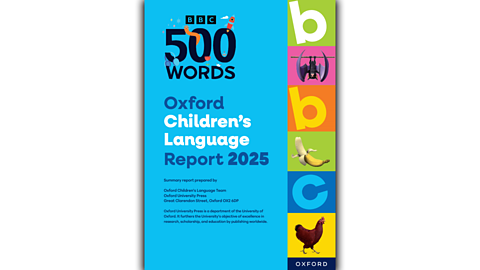
Each year, 500 Words’ partner, Oxford University Press, publishes a report exploring the words and themes that emerge from the competition’s entries.
In autumn 2025, more than 46,500 stories were analysed by lexicographers, researchers and teachers. Their findings are added to the Oxford Children’s Corpus - the largest database of writing by children and for children in English, with over half a billion words.
This one-of-a-kind report offers a fascinating glimpse into the imaginations, creativity, use of words and interests of 5–11-year-olds across the UK.
This year, some of the key findings include:
- Mentions of AI have risen by 50%, with many children increasingly personifying the technology in their stories.
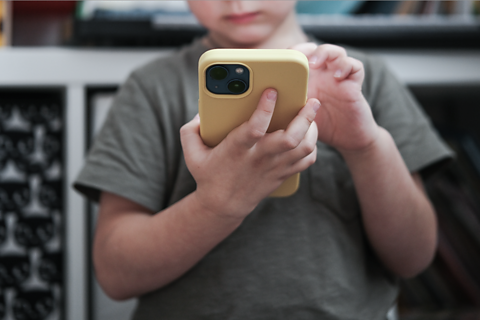
- ‘Doomscrolling’ appears in stories for the first time, showing growing anxieties about spending too much time on mobile phones.
- Library mentions are up 100% in last decade.
- Mentions of rugby are up 50% as stories by girls challenge assumption it’s a boy's game.
- Lego remains a top referenced toy and TV show Traitors sees jump in mentions
Explore the headlines to discover the trends shaping children’s writing in 2025.
Children’s views on technology are evolving
In 2025, AI has become a more visible part of everyday life, with ChatGPT appearing as a character or narrator in some stories. While concerns about AI remain, this marks a clear shift from 2023, when it was more commonly portrayed as a “dangerous entity”.
The term ‘doomscrolling’ – referring to endlessly scrolling on social media – also appears in the report for the first time, reflecting its growing place in children’s awareness and vocabulary.

Libraries capture children’s imagination
Libraries continue to play a significant role in children’s imaginations. Mentions of ‘library’ have doubled over the past decade (+100%), while ‘librarian’ has increased by 80%.
References to ‘book’ (+25%), ‘comic’ (+16%) and ‘novel’ (+15%) have also risen notably, with most linked to printed formats. In contrast, digital reading appears to be declining, with mentions of ‘Kindle’ dropping by more than 70% over the same period.

Sport and culture
For the first time in five years, references to ‘football’ fell by 25%. However, mentions of ‘rugby’ have risen sharply – up 50% since 2024. The report also highlights that stories written by girls challenge the perception of football as a boys’ game.
Lego remains one of the most frequently mentioned toys, while ‘Labubu’ appears in stories for the first time.
For famous people, the largest gains in relative frequency this year are for the racing drivers Lando Norris and Lewis Hamilton.

Gaming influencing change in vocabulary
Gaming and social media influenced vocabulary with mentions of dandy increasing by over seven times inspired by the Roblox virtual universe and viral trend six-seven appears in stories, with the numbers occurring in their various forms, more than 400 times.
10 year snapshot: 2015 vs. 2025
Despite a trend towards the digital, classic toys continue to appear often, and reading remains a popular and visible habit. Frequency of political terms have fluctuated in the stories, but children show increased concern about environmental damage in their writing. The evergreen themes of sport and space both see a growth in popularity over the decade.
Cerys Griffiths, Head of BBC Bitesize, said: “By hearing directly from our audience by reading their stories, it helps us to gain a clearer understanding of their world. We support the education of millions of children each week, and it’s this analysis that truly helps us learn who they are and what matters to them.”
Further details on the Oxford University Press website.
Read the Oxford Children's Language Report 2025. External Link
Catch up on the fascinating new trends in children's writing, using research taken from 500 Words' stories.