The weather isn’t just a hot topic of conversation for adults.
As well as it being a huge amount of hands-on fun (who doesn’t love jumping in puddles and building snowpeople?) chatting about the weather can also help boost your child’s communication skills, says Specialist Speech and Language Therapist Alys Mathers“Weather is part of our everyday world. It also uses three of our senses – you see it, hear it and feel it – and because we learn language by using our senses to understand the world, it’s a great focus for chat with children.”
Start exploring weather sounds
“One of the ways that children learn language is through the noises of what’s around them. That’s why children tend to learn transport noises like ‘brum, brum’ for car or ‘woof, woof’ for dog quite early on,” explains Alys.
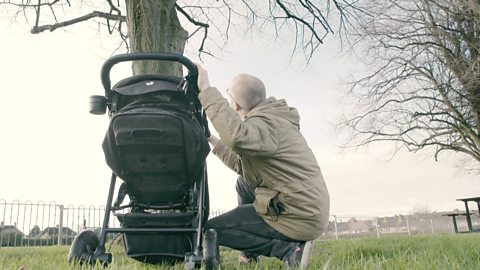
“There are loads of noises that are linked to weather like ‘splash’, ‘drip’ and ‘brrrrr’. So, a great activity with babies is to use lots of noises to represent the weather – have fun playing with them to help them understand the weather and learn to talk. Use lots of noises when you’re out and about, like ‘whoosh’ when you go through a puddle with the buggy or ‘drip, drip’ when it rains on their buggy cover.”
You could also try taking an umbrella out with you on a walk. Babies are endlessly fascinated by umbrellas, so next time you’re out on a rainy day, talk to them about the pit-a-pat of the rain on the fabric. Or take it out on a sunny day and watch the shadows it casts together.
Make a simple weather station
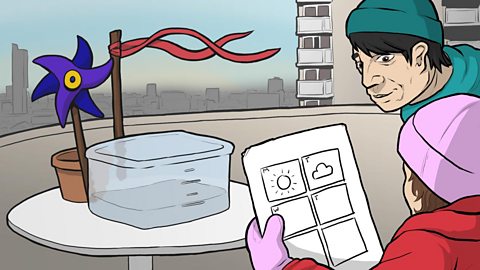
Weather stations are great to set up on balconies and windowsills if you don’t have access to a garden. Just remember to keep it simple, recommends Alys. “It could just be a plastic container that you watch to see how much water it collects. Or hang out ribbon or strips of a plastic bag to watch the wind. Chat about what’s going on in the station and encourage your little one to describe the weather: for example, ‘It’s windy, I can see the ribbon moving’ or ‘It’s rainy, I can see the splashes’,” says Alys. For extra talking opportunities, keep a weather chart to log what’s happened as the days go on.
Make a rainstick
If you’re feeling crafty, you could create your own rain and wave sounds with a DIY rainstick. Chat about the weather sounds as you play with your little one and try taking turns to turn or shake the tube.
Dress for the weather
Weather learning can start even before you’ve left home. Asking your child to check what’s going on with the weather and decide what they will wear will help them expand their communication and understand past, present and future. Help them by asking lots of questions such as ‘Is it rainy enough for wellies?’ or ‘What did you wear the last time it was sunny?’.
Try shadow drawing

A fantastic activity for sunny days. “Draw around shadows using chalk and encourage your child to guess what the drawings are,” says Alys. “Or you could draw around your own shadow or your child’s and talk about different parts of the body.”
Make a rainbow
“They’ve been very topical during the coronavirus pandemic – but that aside, every child loves a rainbow, so why not make your own?” says Alys. Try hand or finger prints or simply grab some objects around the house and build one. As you make your rainbow, talk about colours and ask your child to describe what they are doing.
Spot clouds together

Clouds are a great way to spark children’s imagination and you can alter the activity according to their age. “For older children, talk about what they look like and about their different parts to help your little one build a richer vocabulary,” explains Alys. “So, for example ‘I think this looks like an elephant, it has a long nose and it’s called a trunk’. Or ‘I think that looks like a car, because those two bits could be wheels’.” You could recreate what you saw by making textured cloud pictures at home, adds Alys. “Ask them what their picture is going to look like – it’ll give you another chance to talk about shapes and the different parts of things.”
Crafty fun
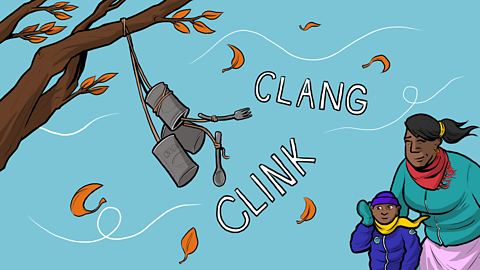
The weather offers endless arty opportunities for your little one and you can easily incorporate sounds to turn your crafty time into a true sensory experience, says Alys. “Use weather noises, for example ‘drip, drip, drip’ and ‘splatter’ the paint like rain. Or blow paint and watch it run.” You could try making a wind chime using empty food tins and old cutlery strung up at a high point like a tree branch, then talk about the sounds it makes when the wind blows.