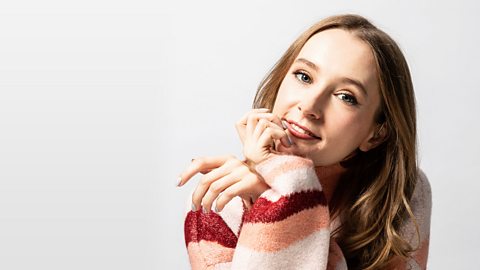
It’s been a whirlwind couple of years for former EastEnders actor Rose Ayling-Ellis. The first deaf contestant to appear on Strictly Come Dancing, she went on to win the 2021 competition as well as the hearts and minds of audiences. Since then, she’s been nominated for an Olivier Award for her performance in Shakespeare’s As You Like It in London's West End, as well as making her new BBC One documentary Rose Ayling-Ellis: Signs for Change.
We caught up with Rose to talk about her hopes for deaf children learning sign language and how her mum helped her learn to sign as a child.
Changing the story about deafness
Rose’s Strictly appearance has helped to raise awareness of what life is like for deaf people in the UK. However, she’s wary of being held up as an inspiration without prompting further discussion around the issues deaf people come up against. In the documentary, she presents a challenge to the view of signing as being inferior to speaking.
“I think there is such a lack of awareness about the challenges deaf people face when learning sign language. A lot of parents, when they find out their child is deaf, the first people they meet are doctors and they are given medical advice. But they can’t really give advice on life. And when they’re asked if children should learn sign language, a lot will say not to, because it will make them less likely to learn to speak. And that is an old, old belief that comes from Victorian times and hasn’t been updated. I think the reason I can speak is because I learnt sign language.”
Rose is on a mission to change the story when it comes to deafness and signing, starting with the way we speak about children born deaf.
I’ve always been seen for what I can’t do rather than what I can do, since the day I was born.
“The doctor would come up to my parents and say ‘I’m really sorry but she’s got a significant hearing loss’. They would use language like ‘she has failed the hearing test’. So I’d ‘lost’ something and I’d ‘failed’ something. And that set me up for the rest of my life. And it’s been up to me to prove to people that being deaf is not a loss and it’s not a failure.”
The importance of signing
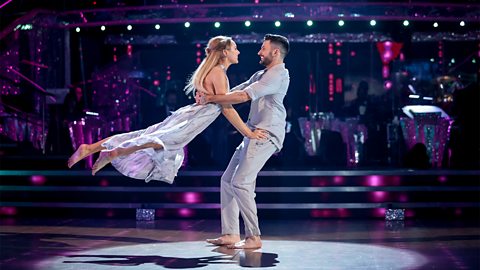
In the documentary, Rose talks how important it was for her to sign throughout her appearance on Strictly. “I thought ‘I’m just going to be myself, I’m going to sign as much as I can, just to show I’m deaf.’ Suddenly the focus was on what I could do and not what I couldn’t do.” During her and Giovanni’s ‘couple’s choice’ dance, the music fell silent in a moment that went on to define her time on the show. “The message I wanted to come across is that there’s nothing wrong with being deaf and to show how joyful it is to be deaf,” says Rose.
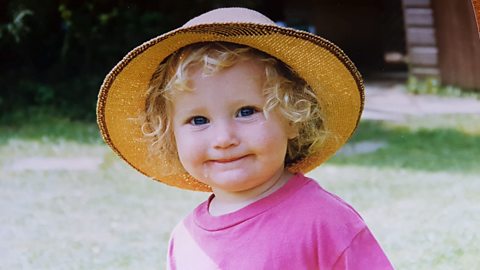
Rose began learning British Sign Language from 18 months old when her mum Donna found out she was deaf. She says this has been vital for her ability to communicate. “From 0-3 years old, you need to have a language in your brain. It doesn’t matter what language it is. And a lot of deaf children struggle with learning to lip-read, it is a really hard skill. Learning sign language is often easier for them.”
Much like children in other bilingual households, research suggests that learning sign language from birth can help children find it easier to learn spoken English. Not only that, but Rose sees sign language as a major factor that's helped her form her identity. Through meeting other deaf people, she learnt more and more BSL and became a part of a community. “I remember growing up, not being able to fully speak and not being able to fully sign, so I was often left out. And that has become part of my life, I’ve always known the feeling of being left out and not knowing what’s going on. We always want to meet people that are similar to us and we want to belong somewhere. And if you take that away, you never feel 100% hearing and you never feel 100% deaf.”
Sign language helps me feel 100% deaf and that I belong somewhere.
In an ideal world, Rose would love for more hearing people to learn basic signs and enable a more inclusive society. “There’s a problem at the moment where a lot of people think there’s no point in learning BSL because so few people know it. But if hearing children learnt the basics of signing, then people would start to see the benefit.” She says that there are many situations in which learning to sign could be beneficial to hearing people. “Many times, I’ve seen friends struggling to communicate with one another through a window and one of them has ended up having to come in to chat. What a waste of time! If they could just sign - boom, done! With my deaf friends, I could have a conversation about politics in the middle of a dancefloor in a club if I wanted. The only downside to others knowing BSL is that anyone can watch your conversation from miles away! You can’t whisper!”
The role of parents
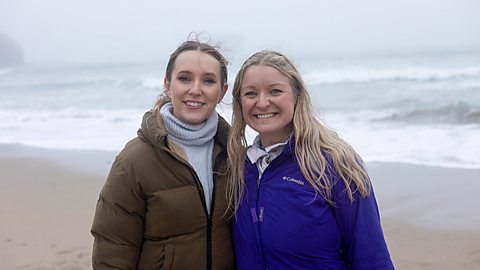
When it comes to children learning to sign, hearing parents like Donna are often learning at the same time, which can add an extra layer of difficulty to helping their children learn to communicate. “Obviously, my mum did try her best and she tried to teach me. But she was learning in the 90s – there was no online learning,” Rose tells us. And money was a significant barrier. “I think she wished that she could sign a lot more, but she couldn’t afford to learn more. There are different levels to BSL and they each cost a lot of money, so she couldn’t afford to take classes beyond levels one and two.”
The costs of learning to sign can still make things difficult for parents across the UK. Some local authorities and charities offer financial support or classes for families to learn BSL, although this is often only to a basic level. Rose wants to see this change, with less reliance on technology to help deaf children and more emphasis on signing. For her, it’s all about having a full toolkit for communication. “I want people to stop assuming that cochlear implants and hearing aids solve everything. Because yes, they give people some hearing, but it’s not 100%. They’re very good when you’re in a quiet room. But life isn’t a quiet room - it’s classrooms, it’s outside with the wind blowing… it’s very loud. It’s about giving people all the tools to be able to adapt to whatever environment they’re in. I can speak, I can lip-read, I can write, I can draw pictures if I have to, I can sign and I’ve got my hearing aid.”
If parents can afford to learn to sign with their child, Rose is clear about the benefits.
Once you learn, it stays with you forever and you will see how beautiful and amazing it is that you’re able to communicate with your child.
“By learning to sign, you’re giving so much love to them because you’re meeting them halfway rather than them doing all the work.”
Dealing with parent guilt
In the documentary, Donna questions whether she made the right choices when Rose was little, not knowing how hard it was for her daughter living in a hearing world. 90% of deaf children in the UK are born to hearing parents and few have extensive contact with the deaf community before their children are born. “My parents’ idea of what a deaf person is changed as I was growing up,” says Rose.
I was proving to my parents what I could do. They’d never met any deaf person until I was born. The first deaf person they ever met… their baby! That must have been quite overwhelming for both of them.
“Neither of my parents got any support, so they were left to just muddle along and work it out for themselves. And that’s really, really hard. But it’s hard being a parent. All parents carry that guilt, that worry about whether they’re doing the right thing. They got more of that, but they did really well. I mean, I haven’t done too badly! I’m proud of them.”
More information
Emma Fraser from The National Deaf Children’s Society gives her advice on communicating with deaf babies and children here.
Organisations that can help families affected by deafness are listed by BBC Action Line.
Rose Ayling-Ellis: Signs For Change is available to watch on demand now on BBC iPlayer.