It can be difficult to talk about parenting in 2026 without 'screen time' coming up in conversation.
TVs, tablets and smartphones are everywhere in modern life for us and our children, but evidence has shown that too much time using screens can be detrimental to a child's mental and physical health.
A new review from the Department of Education recommends that parents aim for no more than one hour of screen time per day for under-fives.
For children under two years old, they say to avoid screens except for shared, interactive use.
It also sets out recommendations for the sorts of content young children should be consuming.
Clinical psychologist Dr Martha Deiros Collado welcomes the new report: "Not all screen time is created equal and the new report on screen time is a helpful guide for parents of under-fives.
"Parents have been asking for this guidance and it’s clear that the aim is to support and guide rather than shame and blame."

The impact of screen time on development
“It’s all about balance. We know that too much sedentary screen time can have a negative effect on children’s development,” speech and language therapist Janet Cooper explains.
“The key is to balance screen time with your child’s real life experiences and make sure they have lots of real opportunities to learn about the world.”
“Your brain has a built-in ‘seeking system’,” Janet explains. “It’s activated by the people around you.”
“If young children are spoken to one-to-one and people show them interesting things, that develops the seeking system to make them explore and make the most of the world around them.”
This ‘seeking system’ is key to our motivation and desire to explore and understand from an early age, and it’s learnt through human interaction.
“We can depress children’s seeking systems with too much screen time and not interacting face-to-face”
“You’re intuitively born to play,” Janet tells us. “Your primitive brain is already hardwired to play, but it needs activating.”
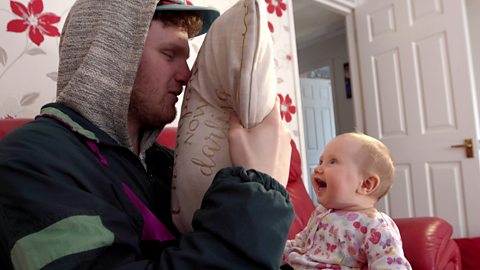
Interactive play in particular helps to develop this system of the brain. Simple things like a game of peekaboo activate this part of the brain and can’t be easily substituted for an on-screen activity.
The impact of screen time on social skills
The impact of too much screen time on children’s social skills depends on what stage of development they are at.
As children learn most crucial skills in their first year, this is a key time for them to get as much human interaction as possible.
“If young children have not developed social skills already there is a risk if there's less face-to-face time”, says Janet.
“What babies and young children really need is lots of opportunity to see faces and be talking to somebody face-to-face.”

It’s this physical interaction that helps build the foundations of language.
“We call it serve and return, where one person speaks, and then the other replies,” Janet explains.
“If there's too much screen time introduced too early on, or the adult's attention is taken away by screens, the babies and young children may be missing out on some of those key interactions.”
But could these interactions be mimicked through on-screen activities? Not for the youngest children, Janet tells us.
“Babies can't see all the colours at birth, so actually sticking a newborn baby in front of the TV or another screen… they’re getting very little from that.”
Can screen time be positive for children?
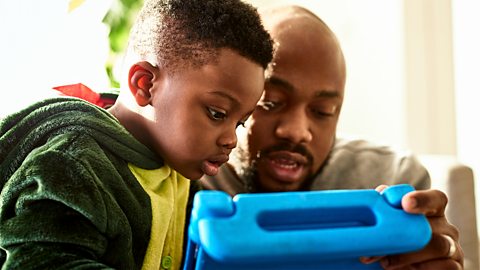
To maximise the quality of your child’s screen time, try making it a collective experience (co-viewing) and think of ways you can add to what’s going on on-screen.
"Solo screen viewing should be limited to protected chunks of time when it may help parents do a task or keep children (aged two and older) entertained for a limited time period," says Dr Martha.
“If you're going to watch a programme, watch it together and then talk about it and do some follow up activities, so the screen becomes more meaningful in everyday life”, suggests Janet.
Martha echoes the importance of making screens part of your shared experience together.
Screentime can never replace the impact of building real life skills. But watching something meaningful can be restful and connecting, and the guidance highlights the importance of co-viewing slow, age appropriate shows with your child.
The Department for Education report recommends that video content and TV shows for under-fives is…
- Slow-paced
- Simple
- Repetitive
- Made specifically for their age group
…and should also have a recognisable story structure and message (for example, it may have a beginning, middle and end).
CBeebies shows like CBeebies Bedtime Stories, Bing, Hey Duggee, Beddy Byes, Puffin Rock, I Spy You Spy, Bluey and Ranger Hamza's Eco Quest are all great places to start.
Martha says "It’s great that for the first time, fast-moving and stimulating content is being named as unhelpful to little ones.
"We know smartphones were never created for young children but this is a clear statement on not offering short-style online videos to entertain or distract little ones.
"Co-viewing shows like Hey Duggee and Beddy Byes that are repetitive and gentle can help parents talk about colours, shapes, kindness, friendship… and as a bonus we know it can help build vocabulary and complement some of the learning your child does every day with you."
Make the most of being away from a screen
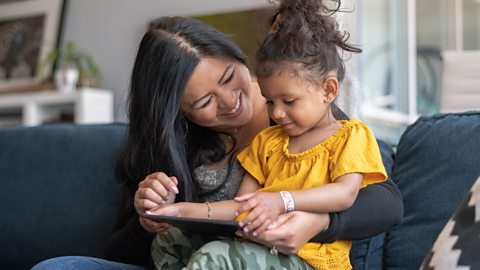
The new report suggests that parents should be mindful of their own screen usage at key shared moments of the day. Bedtimes and mealtimes are great times to talk through your day together and by simply not having the TV on in the background to your activities, your child is more likely to focus on your interactions and learn.
Martha says, "The new guidance highlights the importance of parents leading by example with screens around children. This may include setting clear ‘screen-free’ boundaries at home, for example in bedrooms and during play time, supporting parents to stay present with their child in everyday moments that truly matter and that bring children and their parents those warm fuzzy feelings of connection, love and care."
“I think the easiest thing is making your chores and everyday things you have to do an interactive experience,” suggests Janet.
“So, if you're going to wash up, give your little one a little washing up bowl too and get them alongside you. Talk about the bubbles and the temperature of the water.”
It’s a way of getting that valuable interaction with your child without having to make new time.
Ultimately, it's up to parents to find a way to navigate their child's everyday interactions with the screens around them says Martha.
Teaching children to rest, play and live without screens is essential in the first 5 years of life and as adults and parents we also need to give our brains and bodies a break from the stimulation screens can bring us. Finding the balance that works for each family is unique.
CBeebies Parenting activities
As well as the suggestions above, Janet has also handpicked some CBeebies Parenting activities that can be done around your home and outdoors.