Every child is different. And that means how you communicate with your little one will be as individual and unique as they are.
This is especially true if your child has speech, language and communication needs.
"As a parent, you may feel a sense of loss if your child isn’t where you’d hoped they might be and speaking at a particular age," says Alys Mathers, a Highly Specialist Speech and Language Therapist who works with children who have a wide range of needs.
"And you might also find yourself comparing your child to other children the same age. While that’s totally normal, it will be hard for you. Instead, I’d suggest focusing on your child, finding your own ways to communicate with each other and celebrating every success.”
Alys has lots of practical advice on how you can support your little one and help them build their communication skills…

1. Follow your child’s lead
A good starting point is watching your child to see how they are trying to communicate with you.
“Children start communicating with you in lots of different ways," says Alys. "Some children may show what they want by looking at it, others might point. Some will play with sounds by babbling. Some children will like actions when you sing and others won’t be interested. Or your child might look at you when they are ready for more information or want something from you. It’s very child-led so it’s a case of spotting how they naturally want to communicate with you and then responding to that.”
2. Make it fun
There’s been lots of research showing that children learn through play. Which is great news for you and your little one. “How your child plays is how they learn best, says Alys.
So my top tip would be keeping it light and fun
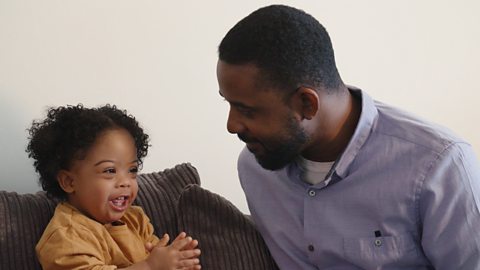
“There’s less pressure that way and it helps you bond. Even playing tag is a way of communicating because it’s still turn-taking.”
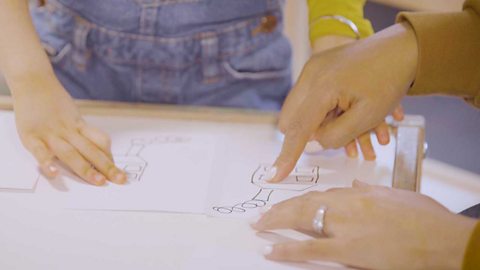
If your little one likes messy play, or exploring textures you can also use that as a chance to communicate. Alys says: “If they are enjoying colouring or finger painting, talk about the picture they are drawing. And stick with it until the end, even if they want to do the activity again and again. Don’t be the one who loses focus first.”
3. Use gestures
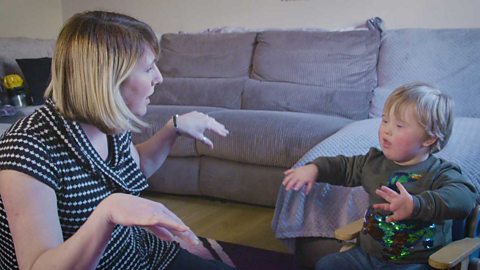
If your child is struggling with sounds or their hearing, using gestures is a great way to communicate.
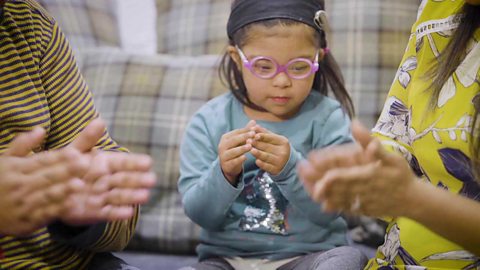
“Start off with what comes naturally like nodding or shaking your head”, says Alys. “You can also do some basic Makaton. Some parents find it a bit daunting to begin with, so start with a few signs like eat, sleep and drink. You can also watch the gestures your child uses and also think about any signs that would be helpful for them. If they are asking for their teddy all the time, but how they are asking isn’t clear, help them find a sign for that.”
4. Think about how you communicate
Your child isn’t the only one learning how to communicate. Instead, there are lots of little changes you can make in your own speech and language that will help.
“One thing to try is using shorter sentences and breaking down what you say which makes it easier to understand," says Alys.
She recommends getting down to your child’s level so they can see your face. But try not to talk too slowly. “One way of learning new sounds is by watching how other people use their mouth to make the sound. Over-pronouncing words or talking too slowly changes how your mouth and lips form that word.”
5. Stay focused
From the TV to toys, there are lots of distractions at home.
Paying attention to your child is really key.
"Put down your phone and turn off background noise when you are communicating with your child. You don’t want them (or you!) to be distracted. By giving your whole attention, this will help your child pick up on your good habits and learn how to focus their own attention.”
Not only that, you’ll also find it easier to spot their non-verbal cues like pointing and different facial expressions.
6. Try comments, not questions
Your child may feel under pressure if you ask lots of questions.
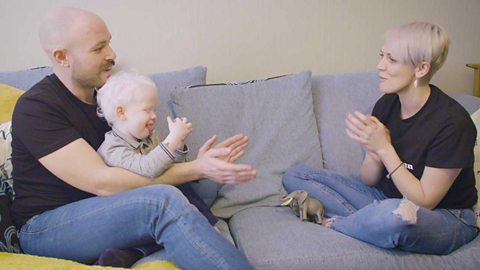
Alys says: “When you are playing together, try commenting rather than asking questions. This is another way of following your child’s lead. Rather than asking, ‘what are you doing?’, you could say, ‘you are making a house and that brick is on the top.’ If you find yourself asking a question then answer it straight away. If you say, ‘what’s that’, follow it up with ‘it’s a brick’. A question is a test, whereas a comment is a chance for learning.”
7. Celebrate every success
Whether it’s a new gesture or a new sound, be sure to praise your child. Alys says: “If your child has speech, language and communication needs, it covers such a wide range of things. It might be that they are struggling with sounds. Or it could be their understanding or learning of words."
So when they learn a new sound, gesture or way of communicating, celebrate it!
"It’s great to spot each achievement and it’s really nice for your child to have that recognition of what they’ve learned.”