What five of the most famous UK battlefields look like: then and now
There are certain historic events – such as the Battle of Hastings in 1066 – that we’re all familiar with, but have you ever considered what the battlefields looked like when these infamous conflicts took place, and what might be left there now?
1. The Battle of Hastings: 1066
The Battle of Hastings, which took place on 14 October 1066, was the moment William of Normandy invaded Britain and defeated King Harold II. Simon Marsh from The Battlefields Trust says it’s significant because it marked the end of one era and the beginning of another, as England went from being Anglo Saxon to Norman. The Normans brought with them “a different administration, language, motte and bailey castles, the Domesday Book – a whole new way of doing things.”
So, what did the battlefield look like?
The Battle of Hastings took place on Senlac Hill, seven miles outside of what is now Hastings, on the Hastings peninsula: “Senlac Hill is a really good position because you’re sat on top of the hill on the main road down into the peninsula, which was surrounded by water on both sides at this time,” says Simon Marsh.
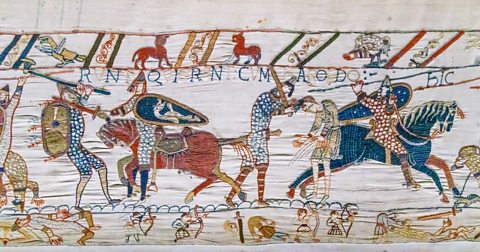
The ground at the bottom was a bit marshy and spongy but it didn’t stop the Normans, under William, marching his cavalry (men on horses) into battle against Harold on the hill, and breaking the lines of Anglo Saxon foot soldiers. Men will have carried shields and weapons such as spears, swords and axes. It will have been a noisy and violent battlefield – you can get an idea of the battle itself from the Bayeux Tapestry.
What’s the battlefield like now?
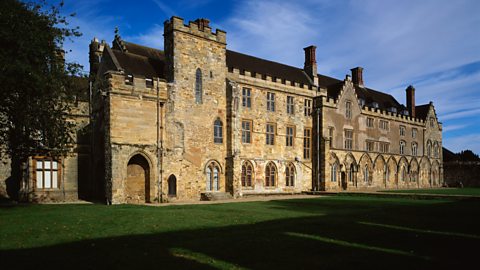
There’s now an abbey at the site of the infamous battle, which experts believe William may have ordered to be built “to allow for prayers for the people killed during the battle”. The high altar supposedly also marks where King Harold II was killed.
You can visit the abbey ruins and follow a trail with information boards around the green, open area that was the battlefield – a remarkably calm and tranquil site considering what happened there almost 1,000 years ago!
2. The Battle of Bannockburn: 1314
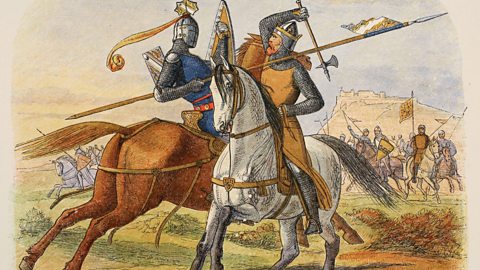
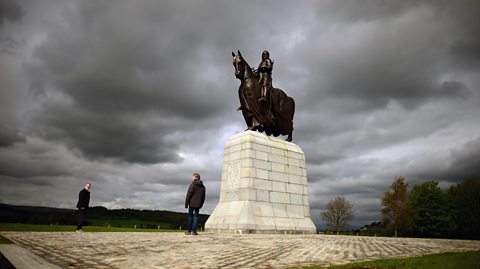
The Battle of Bannockburn took place during the first war of Scottish independence when Robert the Bruce (King of Scots) defeated the army of King Edward II of England in June 1314.
What’s the battlefield like now?
You can visit the site, south of Stirling, and watch a digitally re-created version of the battle. You can also walk around the battlefield, which is now well-manicured parkland with commemorative monuments, including one of Robert the Bruce – a little more landscaped than it was 700 years ago.
3. The Battle of Bosworth Field: 1485
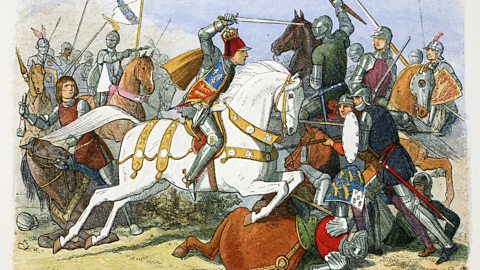
The Battle of Bosworth Field in 1485 marked the end of the infamous Wars of the Roses, between two sides of the Plantagenets (England’s royal family at the time): the House of York and the House of Lancaster. It’s also the last time an English king died on a battlefield.
What was the battlefield like then?
Simon Marsh from the Battlefields Trust says the terrain of the battlefield was “generally open heathland” at the time, but there were boggy areas which “Henry Tudor and his rebel army used as flank protection to protect one side of their army”. The battlefield will have been noisy and smelly, with the sounds of swords clashing, cannons firing and horses thundering over the ground. It ended when a former supporter of Richard III, Sir William Stanley, backed Henry at the eleventh hour and attacked King Richard, whose horse “was forced into a marsh in boggy ground” and Richard was killed.
What else do we know about the battlefield?
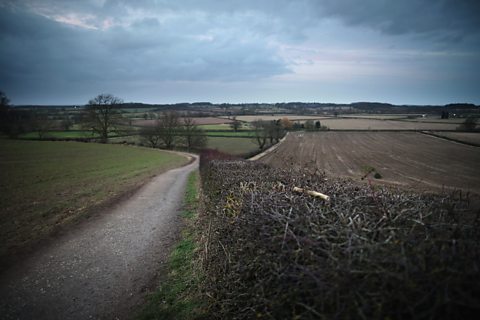
For a long time, people thought it was in a different place: Ambion Hill in Leicestershire, where the visitor centre currently is. It wasn’t until an archaeological survey was commissioned in 2005 that researchers found lead ramshots, which were fired from cannons in that period, in an area a few kilometres away from Ambion Hill. Nowadays the real battlefield is a quiet rural area with panoramic views which allow you to imagine the carnage that came before.
4. The Battle of Towton: 1461
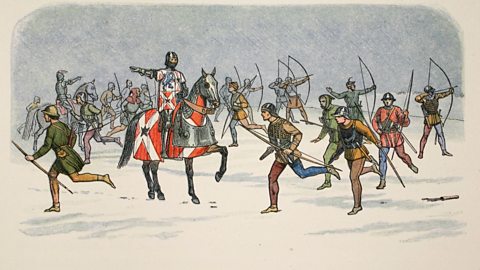
The Battle of Towton was another ‘War of the Roses’, fought in the middle of a snowstorm in March 1461, before the Battle of Bosworth. Edward IV and the Earl of Warwick beat the Lancastrian army at Towton near York during the battle, and Henry VI fled to Scotland with his wife Margaret and their son Edward afterwards.
What did the Towton battlefield look like, just before and just after the battle?
Whilst many chroniclers say Towton was one of the bloodiest battles fought in England, Simon Marsh believes those “huge numbers killed aren’t credible”. Either way, the battle was fought on common open fields between the settlements of Saxton and Towton in North Yorkshire. “When the Lancastrians were defeated, they were chased back over Cock Beck and got caught by the Yorkists… that beck is still there.” Some say the beck was awash with blood after the battle.
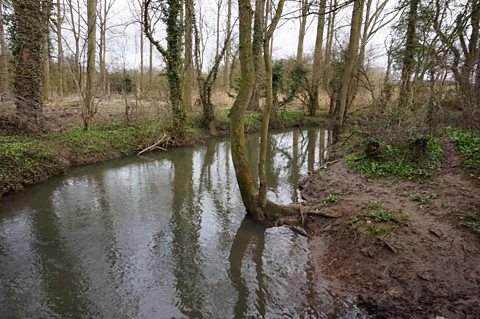 Image source, Geograph/Ian S
What does the battlefield look like now?
“You can think however many hundreds of years ago people were standing here hacking away at each other.”– Simon Marsh, Battlefields Trust
As well as the infamous beck, today you can see a wide open green field and a large medieval cross. You can follow the information boards and battlefield trail. Simon Marsh adds that seeing the battlefield in person helps you to appreciate the landscape, which has changed but not that much. “You can imagine it a lot better than you can in the classroom. You’re on the ground and you can think however many hundreds of years ago people were standing here hacking away at each other, firing arrows at each other. There’s a juxtaposition between quite a tranquil rural landscape and the visceral blood letting that was going on at the time.”
Image source, Geograph/Ian S5. The Battle of Culloden: 1746
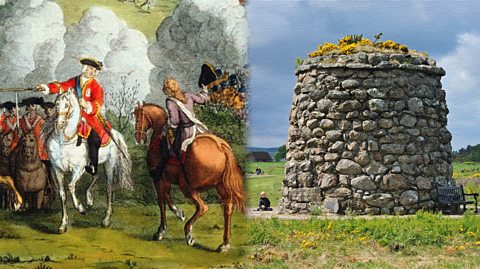
The Battle of Culloden took place in April 1746 on Drumossier Moor near Inverness. Bonnie Prince Charlie or the ‘Young Pretender’ – officially Charles Edward Stuart – led the battle, which was an attempt by the Jacobites to put a Stuart monarch on the throne of Britain.
What was the battlefield like then?
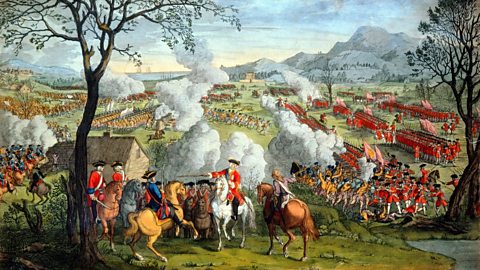
The Battle of Culloden took place on Scottish moorland. There were blue and red flags to represent the opposing sides. Imagine the sound of swords clashing with shields, musket and cannon fire, and the thundering of horses’ hooves on a wild, open battlefield.
What does the battlefield look like now?
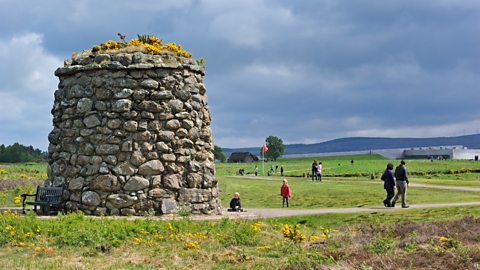
A lot of work has gone into restoring the battlefield site back to how it may have looked in the 18th Century. You can see the whole wild, rugged battlefield from a viewing station, including representations of the coloured flags and Government field hospital.
This article was written in January 2026