Key points
Overview
The poem describes a brief stop at Coventry, Larkin’s birthplace, during a train journey. Instead of feeling nostalgic, the speaker reflects on how little he remembers and how disconnected he feels. He lists imagined childhood experiences that never happened, mocking the idea of a meaningful past. The title, borrowed from Thomas Hood’s poem, is used ironically to subvert traditional nostalgia.
Main themes
The poem explores memory, childhood, disappointment, and the unreliability of nostalgia. Larkin suggests that his past was empty and unfulfilling, and implies that this feeling might apply to any place, not just Coventry.
Tone and voice
The tone is dry, ironic, and disillusioned. Larkin uses sarcasm and understatement to mock the idea of a happy childhood. The final line is bleak and resigned, suggesting that emptiness is universal.
Context
Larkin had a withdrawn and lonely childhood, shaped by illness and low self-esteem. He was part of ‘The Movement’, a group of post-war poets who rejected modernist experimentation in favour of traditional forms. The poem was written in 1954 and responds directly to Thomas Hood’s 1826 poem of the same name, which fondly recalls childhood. Larkin’s version does the opposite.
Form and structure
The poem is made up of seven quintains followed by a single final line. Enjambment links stanzas together, creating a sense of continuity. The final line – "Nothing, like something, happens anywhere" – is set apart for emphasis. Rhyme is irregular, with repeated sounds appearing and disappearing across stanzas. The metre is mostly loose, with brief moments of iambic pentameter used to highlight the speaker’s search for meaning.
Poetic devices to spot
- Irony – mocks the idea of a fulfilling childhood by listing things that never happened.
- Metaphor – "unspent" childhood and "burning mist" suggest emotional emptiness.
- Enjambment – ideas flow across lines, reflecting wandering thoughts.
- Quoted speech – dialogue with a friend adds realism and contrast.
- Inverted commas – used sarcastically around phrases like "mine" and "Really myself".
- Caesura – pauses slow the pace and emphasise key thoughts.
- Alliteration – phrases like "leaving late" add rhythm and focus.
- Iambic pentameter – briefly used to impose order before breaking down again.
I Remember, I Remember
by Philip Larkin
A link to this poem is available in the CCEA Poetry Anthology which can be downloaded from the CCEA website.
The BBC is not responsible for the contents of any other sites listed.
Summary
A poem in which the speaker unexpectedly finds himself briefly stopping at his old hometown; his sense of disconnection from the place leads him to satirically list features of an idealised childhood he never experienced. Written in 1954.
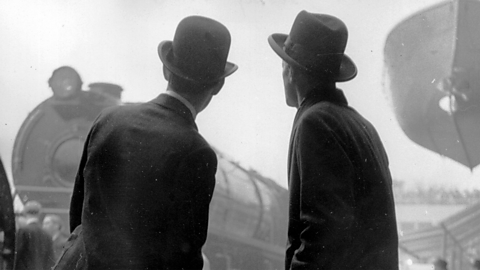
- Title: This title is lifted directly from an earlier 1826 poem by Thomas Hood in which he reminisced fondly about his childhood home and experiences; the repetition serves to underscore the nature of recall and memory.
- Themes: Childhood, belonging, nostalgia, memory, disappointment, time.
- Tone: Reflective, detached, cynical, disillusioned, resigned.
- Speaker: First person speaker, widely accepted to be Larkin himself speaking directly of his own experience after visiting Coventry early in 1954; the poem is most likely autobiographical.
Applicable context
- Larkin was withdrawn as a child, self-conscious of his stammer, and was homeschooled in early life; his childhood overall was a lonely and isolating experience. He did eventually attend school but his self-esteem was affected further by early academic failure before he found success in his writing. All of this dented his confidence and went on to contribute to the poetic persona he developed of being pessimistic, ill-at-ease and using irony, black humour and understatement to frame emotional experiences.
- Larkin’s generation was impacted by the lasting impact of World War Two, giving much of their work a strong sense of existential unease and disillusionment with modern society. He was part of a group of post-war poets named ‘The Movement’; they rejected the experimental stylings of the modernists and used traditional forms and language in their poetry.
- Larkin’s poem is inspired by Thomas Hood’s 1826 poem of the same name. In it, Hood recalls his own contented and fulfilling childhood – the sun at his window, flowers in the garden, his childhood swing and so on – and laments he can no longer experience the world with such warmth and pleasure. Larkin sardonically upends this, describing an idealised childhood that he did not experience and resignedly stating he probably would have felt the same anywhere he grew up.
Only a little context is needed for each poem; where used, it should be applied to the point you're making.
Form and structure
- The poem is arranged into seven quintains (A grouped set of lines within a poem.of five lines each) and a final, single line set apart at the end. The stanzas aren’t all self-contained, with A poetic device where a sentence continues beyond the end of the line or verse. ensuring the questions, emotions, and observations of one stanza can seep down into the next, creating a sort of continuity throughout. This is then halted by the final line, which sits by itself for emphasis; the poet feels this line, “Nothing, like something, happens anywhere”, is important enough to stand alone.
- Larkin’s use of rhyme in the poem is interesting – it isn’t exactly regular, but he uses repetition of the same sound across several lines in an irregular mix before moving on to the next rhyming sound. The first three stanzas, for example, have the following rhyme pattern: ABCCB AABCD EFFED – each sound is repeated (usually three times), across more than one stanza, and then discarded from the mix of other rhymes. The rhymes progress throughout, creating a kind of internal echo as the poem moves on and then disappearing – perhaps this is Larkin’s way of mirroring the imperfection of his past or showing the unreliability of nostalgic memories.
- The The rhythm of a line of poetry based on how many syllables it has and where they are stressed or emphasised – likes beats in music. of I Remember, I Remember isn’t regular. There are around 10 syllables per line on average, but many (such as line five) have 11 instead. This is followed by two lines of One ‘iamb’ is a two-beat combination: an unstressed syllable followed by a stressed (emphasised) syllable, making a ‘da-DUM’ pattern, like a heartbeat. Pentameter means five of these two-beat units per line, making ten syllables altogether. One ‘iamb’ is a two-beat combination: an unstressed syllable followed by a stressed (emphasised) syllable, making a ‘da-DUM’ pattern, like a heartbeat. Pentameter means five of these two-beat units per line, making 10 syllables altogether:
| that this | was still | the town | that had | been ‘mine’|
| da-DUM |da-DUM | da-DUM | da-DUM | da-DUM |
These two lines concern the poet looking for meaning in the place, which may be why he imposes an orderly rhythm on them; when he fails to find the connection he’s looking for, the metre becomes less ordered and imperfect – maybe reflecting his imperfect childhood.
Sprint down the platform to familiar gates,"Why, Coventry!" I exclaimed. "I was born here."
Language and poetic methods
- Quoted language: I Remember, I Remember uses quoted speech, and phrases in inverted commas, for more than one effect. First, we see the direct speech between Larkin and the friend with whom he’s travelling on the train: there is Larkin’s exclamation in line five, showing his initial excitement; the polite question his friend “smiled” at him in the third stanza; the friend’s more concerned observation in the last stanza that Larkin looks “as though you wished the place in Hell”; and Larkin’s last, resigned response, which includes the emphasised final line.
This use of direct speech makes the incident more immediate and helps the reader differentiate between the present, in the train, and the false past Larkin describes; it also helps to distinguish between the outer self Larkin presents and his inner thoughts and memories. The friend’s question includes within it a phrase in further quotation marks – “where you “have your roots”?” – which is used to show the An overused and unoriginal phrase. nature of the phrase and indicate how usual it is to politely assume people feel a deep connection to where they are from.
The third use of inverted commas is possibly most significant for the tone of the poem: to show Larkin’s ironic detachment, even sarcasm, towards ideas such as feeling authentically at ease with himself (“where I could be/ ‘Really myself’”) or having a powerful and meaningful sensory experience (“and 'all became a burning mist'”). It is also used in the second stanza, when he says “the town that had been ‘mine’”; the possessive “mine” in inverted commas shows that he didn’t really belong there – the town wasn’t his and still isn’t. These layers of quoted speech serve to distort and disguise the simple emotional truth of the poet’s voice, adding layers of detachment that show how disillusioned and disconnected he really feels.
I leant far out, and squinnied for a sign
That this was still the town that had been 'mine'
- Irony: Irony is a hallmark of Larkin’s poems, in that the meaning he wants to put across is often different from what he actually says. He usually employs irony to mock something, and in I Remember, I Remember, it is the idealism and romance of a perfect childhood that he is targeting. The final line, which he purposely sets apart from the other seven Any poetic form or stanza composed of five lines, such as a limerick and leaves alone as a kind of ‘final thought’ for the reader, is: “Nothing, like something, happens anywhere”.
His friend notes that thinking about his past in Coventry has made him look miserable, “’as though you wished the place in Hell’”, but Larkin admits that “’it’s not the place’s fault’” – he is saying that he would have felt the same no matter where he was. His childhood was full of the “nothing” he describes in the last line, and happened for reasons other than its location; he feels no connection to Coventry, but he Happening in the opposite way to what is expected and maybe causing amusement because of it. (and perhaps self-mockingly) implies he would still have been miserable “anywhere”.
My friend said, 'judging from your face.' 'Oh well,
I suppose it's not the place's fault,' I said.
'Nothing, like something, happens anywhere.'
Switch in tense: Larkin recounts the incident of being on the train in past tense – “We stopped”, “I exclaimed” – as an A brief interesting or funny story told about something that really happened. to frame the poem. However, when imagining all the things he didn’t do in his childhood, he switches briefly to present tense, almost as if he is a tour guide showing his friend and the reader around the town – “I’ve got the whole place clearly charted”; “_And here we have that splendid family”; “I’ll show you”. This gives an immediacy and vividness to the made-up childhood, which he can envision more clearly than his real experiences; it also lends a mocking tone, as he somewhat grandly ‘presents’ us with a series of things that didn’t happen.
Metaphor: Larkin refers to his childhood as “unspent”, inverting the usual idea of someone “spending” their childhood somewhere. This is a A metaphor is a word or a phrase used for dramatic effect, to describe something as if it were something else. – he did, of course, have a childhood, but he feels it was so empty and unfulfilling that it’s as if it did not happen at all. The metaphor of the “burning mist” is already in inverted commas, giving it a mocking tone. It is a reference to a sexual experience he did not have in adolescence, and uses sensory imagery to evoke the idea that such an experience could have been powerful enough to temporarily overload the senses. “[B]urning” gives a sense of heat and passion. “[M]ist” giving a sense that it was all around him and clouded his ability to see clearly.
'Was that,' my friend smiled, 'where you "have your roots"?'
No, only where my childhood was unspent,
This is not a list of every method or notable use of language and structure in I Remember, I Remember.
Look at the poem again. Can you find any of the following?
A break in poetic rhythm in the middle of the line, a momentary pause.
There are several important uses of caesurae in the poem. Often, they are there to help us switch between the real situation in the train and the imagined childhood Larkin outlines. The colon at the end of the third stanza and the dash in the second line of the final stanza are examples of this, bookending the false childhood account. The ellipsis (…) in the first line of the third stanza, following his question about whether he recognised a part of the station, creates a short pause. This helps to show the seeping away of the excitement he initially felt at hearing they were in Coventry. This replaces his interest with disappointment and detachment. There is another brief use of caesura with the colon that follows “Our garden, first:” – it gives a sense of presentation, underlining the sarcasm with which he recounts his non-existent ideal past, emphasising the contrast between expectation and reality.
For all those family hols? … A whistle went:
A sound feature; the repetition of the same sounds usually at the beginning of words.
Larkin uses a few small pockets of alliteration to enhance the tone in places in I Remember, I Remember. Examples include “squinnied for a sign”, where the repeated ‘s’ helps evoke the sense of him searching with difficulty; the fricative ‘f’ sound in “flowers and fruits”, which could emphasise his growing sarcasm by sounding almost like he’s spitting out the words; and the plosive ‘b’ sound in “the boys all biceps” reinforcing the sense of strength and power in the young men he idealises.
A poetic device where a sentence continues beyond the end of the line or verse.
The use of enjambment carries ideas not only to the next line in this poem, but also sometimes to the next stanza. One example is when the line flows on between stanzas two and three (“had we annually departed / For all those family hols?”) to help create a sense of his confusion overtaking him as the train prepares to move on. It happens again between stanzas four and five, when he is describing aspects of the ideal childhood, giving us a sense that these imaginary features are overflowing and overwhelming him – much more real to the speaker than his actual childhood was.
If you have found these methods, consider what you know about the poem and the poet already.
What effects do these methods create? Why has he used them?
What other poems could I compare with I Remember, I Remember?
- Piano – a poem in which the beauty and security of the poet’s remembered childhood makes him weep because he cannot go back to it, in stark contrast to Larkin’s detached feelings towards his own early years.
- In Mrs Tilscher’s Class – another autobiographical poem where the stimulation, safety and positivity of Duffy’s childhood classroom provides a contrast with the childhood in I Remember, I Remember.
- Prayer Before Birth – MacNeice’s poem provides an interesting contrast between what the unborn child prays to have (and be protected from) in their early life, and what Larkin conjures as a fulfilling childhood.
Practice questions
Use these questions to hone your knowledge of I Remember, I Remember, and to practise using your notes and analysis in organised paragraphs that focus on how particular themes or ideas are shown in the poem. There is an example answer in the following section to demonstrate how you can do this.
- What does I Remember, I Remember show us about Larkin’s attitude to his hometown?
- What poetic methods does Larkin use to show his feelings about his childhood in I Remember, I Remember?
- How does Larkin show the sense that nostalgia is flawed in I Remember, I Remember?
- How does Larkin create a tone of cynicism and disillusionment in I Remember, I Remember?
Example answer
Below is a demonstration of how to use the material in this section to answer an example essay question. The answer below is not a full essay, but only an extract of a longer answer, showing some of the points that could be made.
Q: What does I Remember, I Remember show us about Larkin’s attitude to his hometown?
A: In I Remember, I Remember, Larkin uses the anecdote of stopping briefly at a train station on a journey with a friend and realising he is in his old hometown. This serves to frame his reflection on how he feels let down by his childhood and wished it had been different. The setting of the hometown, although he is only briefly there, provides a catalyst for his disillusioned contemplation of his childhood experience overall. It’s clear from the exclamation mark and the verb in the first stanza that the speaker initially feels some excitement: “’Why, Coventry!’ I exclaimed. ‘I was born here.’” This shows Larkin’s understanding that a person’s former hometown could, or should, mean something to them; his attitude to the place at first is one of recognition and enthusiasm, prompting him to lean out and look for things he can remember.
This excitement quickly fades, however, replaced first by confusion and then by disappointment. He “wasn’t even clear / Which side was which”, giving a sense of being disoriented by the station and having no familiarity with its arrangement; he ponders a question (“From where… / … had we annually departed…?”) that he can’t answer; this is followed by a caesura in the form of ellipsis, creating a pause that emphasises the sense of disappointment and disconnection setting in for the speaker. As the train moves away from his old hometown, the speaker says he “sat back, staring at my boots” – this shows his reaction to the experience of failing to find any familiarity or sense of belonging in the brief glimpse of his hometown. This has greatly affected his mood and left him feeling downcast, showing a disillusioned attitude towards his hometown.
This essay could go on to make the following points, backed up by evidence from the poem and detailed analysis of that evidence:
- Larkin uses inverted commas around the word “mine” to create a sense of ironic detachment. He never really felt a sense of belonging to his hometown and has a disconnected attitude towards it.
- Larkin employs a metaphor, declaring his childhood was “unspent” in the location of the hometown. He feels his childhood there was empty and unfulfilling, and suggesting an almost resentful attitude to the hometown where this happened.
- The use of irony in the final line, along with his admission in the last quintain that “it’s not the place’s fault”, shows he is resigned to the idea that his hometown was not specifically at fault. He would have felt the same no matter where he grew up.
Test your knowledge of Philip Larkin's poem 'I Remember, I Remember'
More Philip Larkin
Desert Island Discs. audio
Philip Larkin lists his most favourite pieces of music.
Larkin Revisited. collection
Across ten programmes and ten Philip Larkin poems, Simon Armitage revisits and unpicks Larkin's work in his centenary year.
Return to Larkinland. video
Writer and critic AN Wilson revisits the life and work of one of the greatest English poets of the 20th century, Philip Larkin.

More on Anthology One: Identity
Find out more by working through a topic
- count5 of 11

- count6 of 11

- count7 of 11

- count8 of 11