Key points
Overview
The poem explores the emotional power of music to evoke childhood memories. The speaker is transported back to a moment with his mother, overwhelmed by nostalgia and grief. It reflects on the tension between adult restraint and childlike vulnerability.
Main themes
The poem explores memory and nostalgia, childhood and loss, emotional vulnerability, music as a trigger for reflection, masculinity, and repression.
Tone and voice
The tone is tender, mournful, and introspective. The speaker uses a first person voice to express deep emotional conflict, torn between adult composure and the pull of childhood sentiment.
Context
Written after the death of Lawrence’s mother, who played piano and was a formative influence. The poem reflects Lawrence’s personal grief and the emotional complexity of revisiting childhood through music.
Form and structure
The poem has three quatrains with rhyming couplets. The regular structure contrasts with the emotional turbulence. Use of anapestic metre creates a musical rhythm. The poem builds to a climax of emotional release in the final stanza.
Poetic devices to spot
- Metaphor – “vista of years”, “flood of remembrance”, “manhood is cast down”.
- Personification – “insidious mastery of song”, “heart weeps to belong”.
- Imagery – cosy parlour, winter outside, mother’s smile, small poised feet.
- Sound devices – alliteration (“softly singing”), assonance (“tingling strings”), plosives (“betrays”, “belong”).
- Contrast – warmth of childhood vs cold adult reality.
- Volta – emotional shift as the speaker surrenders to memory.
- Tone – nostalgic, sorrowful, emotionally raw.
Piano
by DH Lawrence
Softly, in the dusk, a woman is singing to me;
Taking me back down the vista of years, till I see
A child sitting under the piano, in the boom of the tingling strings
And pressing the small, poised feet of a mother who smiles as she sings.
In spite of myself, the insidious mastery of song
Betrays me back, till the heart of me weeps to belong
To the old Sunday evenings at home, with winter outside
And hymns in the cosy parlour, the tinkling piano our guide.
So now it is vain for the singer to burst into clamour
With the great black piano appassionato. The glamour
Of childish days is upon me, my manhood is cast
Down in the flood of remembrance, I weep like a child for the past.
The text of this poem is available in the CCEA Poetry Anthology, which can be downloaded from the CCEA website.
The BBC is not responsible for the contents of any other sites listed.
Summary
A poem in which the speaker is overcome by a flood of memories from childhood when hearing a woman sing accompanied by piano music. First published in 1913, though DH Lawrence began it in 1906 and redrafted it the year after his mother died.
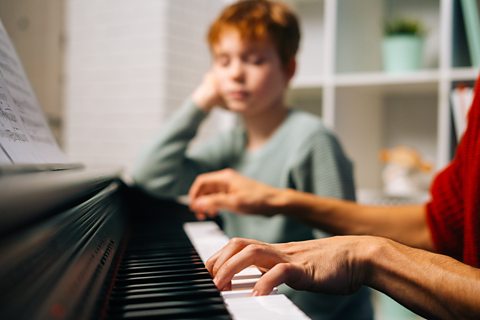
Title: Piano is the name of the instrument, but ‘piano’ is also musical notation meaning something should be played softly or quietly; this fits with the first word of the poem and instils the whole memory with a gentle quality. The title uses no article (eg ‘the’) but only the single word, evoking the sense this is not just an object but a core memory or a feeling that needs no introduction.
Themes: Childhood, memory, nostalgia, music, emotion, grief, manhood.
Tone: Sentimental, melancholy, yearning, emotional, affectionate, nostalgic.
Speaker: A first person speaker who may well be the poet himself.
Applicable context
- David Herbert Lawrence was born in 1885 in a mining town in Nottingham, England. His father was a coal miner of little education, while his mother Lydia was from a more refined background and had previously trained as a teacher. She fiercely resisted the idea that any of her four children would end up working in the mines and supported Lawrence’s education; he was an avid reader and won a scholarship to study.
- Lydia appreciated the arts and played the piano, sometimes teaching piano lessons for extra money; she encouraged her son to love literature and culture, and the two were very close. She suffered ill health for a lot of her life, and her death from cancer in 1910 devastated Lawrence. He had previously begun a draft of Piano years earlier but revised it in the year following his mother’s death, leading many to assume it was an autobiographical poem full of grief for his loss of her.
- Lawrence was interested in emotion rather than logic, and tried to express the truth of human feelings, no matter how hidden or ugly they might be, in his work. Lawrence was not alone in trying to find ways to express the inner turmoil people could feel; his work is often referred to as part of the modernist movement (in which writers and artists focused on finding new methods to illustrate the ways people thought and felt) because of its concern with the inner world of memory and emotion – Piano can be considered an example of this in some ways.
Only a little context is needed for each poem; where used, it should be applied to the point you're making.
Form and structure
- Piano is best described as a A genre of poetry which focuses on expressing a speaker’s most personal thoughts and emotions. It originated in Ancient Greece and was often set to the music of the lyre, hence the term ‘lyric’., given its focus on the internal memories and emotions of the speaker. This is especially fitting because of lyric poetry’s historic links to music, and the centrality of music in the events of the poem. The poem is organised in three A type of stanza - or a complete poem - consisting of four lines that have a rhyming scheme. (four-line
A grouped set of lines within a poem.) , an arrangement that looks short and simple but carries a great depth of information; this mirrors how the deceptively simple piano music and singing trigger such strong emotions in the speaker. - In keeping with his focus on emotional truth (not unlike the stream-of-consciousness style the modernists favoured), Lawrence allows the poem to unfold without imposing a strict The rhythm of a line of poetry based on how many syllables it has and where they are stressed or emphasised – likes beats in music. upon it. These generally irregular rhythms and line lengths allow the speaker to sound natural and thoughtful throughout; it seems as though we are watching in real time as the memory hits and the emotion is felt. There are some traces of rhythmic pattern, however, in the use of anapests – a three-beat da-da-DUM rhythm – in some lines or sections of lines. Line two, for example, starts with a stressed syllable then falls into the anapest pattern:
Ta- | -king me back | down the vis- | -ta of years | til I see |
DUM | da-da-DUM | da-da-DUM | da-da-DUM | da-da-DUM |
This one-two-three rhythm, with the emphasis on the third beat, gives a waltzing effect that echoes the musicality of the subject and the wholesomeness of the childhood memory. - While the The pattern of stresses in a line of poetry, which make up the rhythm of the line. tends to flow more freely, there is a definite rhyme scheme of In poetry, a pair of lines that rhyme and have the same length and metric pattern. throughout, giving a recognisable and reassuring predictability and satisfaction linked to the childhood memory’s simple safety and comfort.
Language and poetic methods
- Metaphor: Lawrence’s focus on the emotions of the speaker means this poem lends itself well to the use of A metaphor is a word or a phrase used for dramatic effect, to describe something as if it were something else. references to enrich its sense of feeling. It begins by referring to the “vista of years”, creating a link between the passage of time/memory and a visual presentation or “vista” as though the past is a beautiful view he can access through his memory. The metaphor of his “manhood” being “cast / Down” implies it is like a coat or cloak he wears to shield the vulnerable child within; the music brings his younger self to the surface, as though his identity as an adult has been taken off and thrown away. The “flood of remembrance” is a metaphorical illustration of the power of the memory, like water surging uncontrollably and carrying him away. Lawrence refers to the “glamour” of childhood days coming over him, meaning not flashy style or luxury, but an older sense of the word related to enchantment and magic, in which a ‘glamour’ was a bewitching spell. It is therefore as if the powerful vision of his childhood memory has cast a spell over him. These metaphors all help to reinforce the depth of the emotions he feels in the moment.
… my manhood is cast
Down in the flood of remembrance…
Personification: Lawrence uses A type of imagery in which non-human objects, animals or ideas are given human characteristics. when he writes how the “insidious mastery of song / Betrays me back” – the power of the music is conspiring against him, it seems, by showing him the beauty of his childhood but forcing him to realise he can never go back to it. The speaker feels this treachery, but is powerless against it. The speaker’s heart “weeps to belong” to the safety of his childhood again, and the poet intensifies this yearning by personifying the heart itself crying without restraint. The reference works both in viewing the heart as a literal organ, the source of his life, but also by referring to it as “the heart of me”, metaphorically evoking the centre or essence of his whole being. This shows how deeply he feels the wish to be as secure and innocent as a child again.
Sensory imagery: The realness of the memory is brought to life for the reader by Lawrence’s inclusion of sensory details to enrich it: the visual details of the “mother who smiles”, her “small poised feet” and the “child sitting under the piano”; the A word that sounds like what it is describing, eg 'crunch', 'meow', 'plop' and 'scrape'.nature of the sounds of “tingling” and “tinkling”; the tactile imagery of the child “pressing” on the mother’s feet at the pedals of the piano and the strong sense of feeling captured by the contrast between the “winter outside” and the “cosy parlour”. The sensory imagery in the scene conjures a vivid sense of the brightness, togetherness and sense of belonging he felt in childhood.
Contrast and overlap: The “winter outside” Two things placed side by side to highlight their differences. with the “cosy parlour” strongly evokes both the literal and metaphorical warmth of the speaker’s childhood, emphasising the joy and love he felt in the presence of his mother and her music. Aside from such direct contrast, the poem often plays with an overlapping centre ground between past and present, adult and child, and even sadness and comfort. It uses the contrasts between these things to portray an uncertain space in the middle that evokes the power of the mind to conjure images that are no longer real but seem to be so. Even the setting of the poem, “at dusk”, employs the sense of contrast between night and day to evoke a shadowy time in between, neither one specific thing nor another. Just as the fully grown adult speaker is intensely moved by the power of the memory and momentarily stuck somewhere between being a child and being an adult.
Marked by alliteration - the repetition of a sound at the beginning of consecutive words, such as ‘the big, bold, blue sea', assonance, andThe repetition of similar consonant sounds in nearby words.: The use of repeated sounds helps give the poem internal resonance that likens it to the music it describes, as well as contributing to the mood of the piece. Gentle Alliteration or repetition of s sounds, producing a hissing sound like that of 's' or 'sh'. in the first two lines (“Softly, in the dusk, a woman is singing to me; / Taking me back down the vista of years, till I see…”) uses the repeated ‘s’ sounds to reinforce the “softly” that begins the poem, and give a sense of the peaceful but irresistible insistence of the memory. When a vowel sound is repeated in words close together. in “tingling strings”, for example, gives a lingering sense of the piano’s vibrant sound; the plosive ‘b’ sounds in “Betrays me back” and “belong” help give a sense of the harsher, unpleasant edge he feels in the experience of remembering a childhood safety he can never experience again.
And pressing the small, poised feet of a mother who smiles as she sings.
This is not a list of every method or notable use of language and structure in Piano.
Look at the poem again. Can you find any of the following?
Enjambment
A poetic device where a sentence continues beyond the end of the line or verse. occurs throughout the poem, sending almost every thought the poet has pouring onto the next line without neat end-stops. This helps stop the rhyme scheme from sounding too rigid, and mimics both the surging of the music and the relentless stream of thoughts and feelings it causes in him. Lawrence’s attempt to mirror how a person thinks, in a stream of consciousness style, is partly captured by the free flow of the enjambment.
Simile
The only use of A simile is a word or phrase used to make a comparison for dramatic effect, using 'like' or 'as'. occurs in the final line: “I weep like a child for the past”. It is simple but sums up the speaker’s trouble – however much he wishes to go back to the past, he cannot. He may weep like a child, but he can never actually be a child again. The comparison suggests that despite his “manhood”, he is still vulnerable and powerless underneath.
Onomatopoeia
The speaker brings the piano music to life with use of A word that sounds like what it is describing, eg 'crunch', 'meow', 'plop' and 'scrape'., words that sound like what they are describing; “boom”, “tingling” and “tinkling” are all examples of this, enriching the Related to hearing or sound. imagery in the poem.
If you have found these methods, consider what you know about the poem and the poet already.
What effects do these methods create? Why has he used them?
What other poems could I compare with Piano?
Effacé – the speaker in Piano recalls a detailed memory from his past linked to music; the speaker in Effacé imagines a scene based on a past love linked to dance, and both speakers allude to issues regarding their manhood as a result of these experiences.
I Remember, I Remember – In contrast to the vivid and genuine childhood memory and equally genuine flood of emotion in Piano, Larkin’s poem offers repressed, disappointed and detached feelings and accounts of longed-for childhood memories that didn’t occur.
Kid – A poem in which the speaker has endured hardship and feels he has become a stronger, more capable grown-up as a result, contrasting with the emotionally vulnerable speaker in Piano.
Practice questions
Use these questions to hone your knowledge of Piano, and to practise using your notes and analysis in organised paragraphs that focus on how particular themes or ideas are shown in the poem. There is an example answer in the following section to demonstrate how you can do this.
- How does Lawrence evoke a sense of the power of music in Piano?
- What poetic methods does Lawrence use to show the strength of nostalgia in Piano?
- What does Piano show us about Lawrence’s attitudes to childhood and adulthood?
- How does Lawrence create a melancholy tone in Piano?
Example answer
Below is a demonstration of how to use the material in this section to answer an example essay question. The answer below is not a full essay, but only an extract of a longer answer showing some of the points that could be made.
Q: How does Lawrence evoke a sense of the power of music in Piano?
A: Piano focuses on the internal memories and feelings of the first person speaker, making it a lyric poem. This is especially fitting because of lyric poetry’s historic links to music, and the centrality of music in the events of the poem. Piano is organised in three quatrains, an arrangement that looks short and simple but carries a great depth of information; this mirrors how the deceptively simple piano music and singing trigger such strong emotions in the speaker. Enjambment is used throughout the poem, with the speaker’s thoughts frequently spilling over into the next line rather than being neatly end-stopped; this helps to mimic the flow of the music and give a sense of how powerfully it is affecting him, as if it is pulling him along and leaving him no time to organise his thoughts. The poem does not have a regular metre throughout; however, there are some traces of rhythmic pattern in Lawrence’s use of anapests in some lines or sections of lines. This one-two-three rhythm, with the emphasis on the third beat, gives a waltzing effect that echoes the musicality of the subject and helps shape the poem in a way that evokes a sense of the power of the music.
While Lawrence began Piano a few years earlier, he redrafted it the year after the death of his mother Lydia, leading many to believe it to be autobiographical and a tribute to his grief at losing her. Lydia appreciated the arts and played the piano, sometimes teaching piano lessons for extra money; she encouraged her son to love literature and culture, and the two were very close. Lawrence links the memory of her singing and playing to the feeling of being secure and loved in childhood; the memory is a positive one, but it brings with it not only the pain of losing her but the sadness of being unable to ever again feel such happiness, joy, and lack of worry as he did in childhood. He uses personification when he writes how the “insidious mastery of song / Betrays me back” – the power of the music is conspiring against him, it seems, by showing him the beauty of his childhood but forcing him to realise he can never go back to it. The speaker feels this treachery, but is powerless against it. The speaker’s heart “weeps to belong” to the safety of his childhood again, and the poet intensifies this yearning by personifying the heart itself crying without restraint. The reference works both in viewing the heart as a literal organ, the source of his life, but also by referring to it as “the heart of me”, metaphorically evoking the centre or essence of his whole being. This shows how deeply he feels the wish to be as secure and innocent as a child again, and how potent the power of the music is, to be able to stir such emotions.
This essay could go on to make the following points, backed up by evidence from the poem and detailed analysis of that evidence:
- Lawrence uses metaphors like “flood of remembrance” and “glamour of childish days” to illustrate the power of the music, sweeping him away on memories and seemingly casting a spell over him.
- Lawrence uses sensory imagery and onomatopoeia to enrich the vivid nature of the memory, showing the strength of music to conjure an image so powerfully.
- Lawrence uses a simile to show the powerful effect of music on the speaker, both reducing him to the feeling of being a powerless child and also showing him he can never be a child again.
Test your knowledge of Piano
More DH Lawrence
Great Lives. podcast
Poet John Hegley chooses the author of Lady Chatterley's Lover, DH Lawrence.
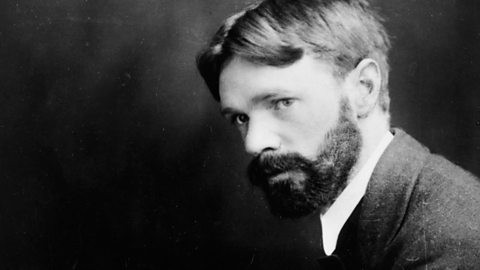
Artworks: Three Faces of DH Lawrence. audio
Michael Symmons Roberts presents a new three-part series examining three facets of DH Lawrence
Start the Week: DH Lawrence: life and work. podcast
Frances Wilson, Salman Rushdie and Simon Armitage discuss the rehabilitation of DH Lawrence and the relationship between the writer and their work.

More on Anthology One: Identity
Find out more by working through a topic
- count11 of 11
- count1 of 11

- count2 of 11

- count3 of 11