Who has lived behind the famous Number 10 door at Downing Street?
Since 1721, 58 people have held the office of Prime Minister in the United Kingdom.
The position has a long and storied history, with various leaders steering the country through wars, recessions, international crises, and all manner of other issues.
But who was the first person to hold the office of Prime Minister? And who's taking up the position now? Well, here at BBC Bitesize, we thought it high time we took a look at one of the most important positions in British politics, with this guide on the history of the British PM.
Who was the first Prime Minister of the UK?
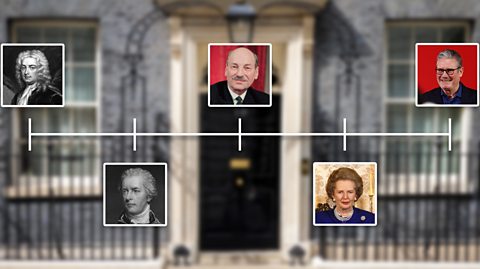
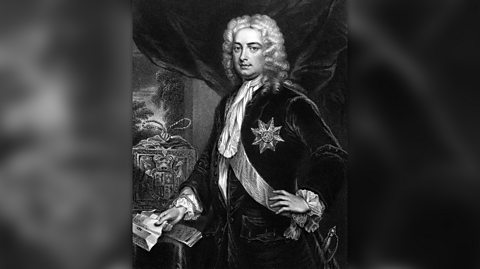
Holding office from 1721 to 1742, Sir Robert Walpole is widely considered to be the first British Prime Minister. Walpole never actually held the title, instead going by the title 'First Lord of the Treasury', but possessed a number of powers now associated with the role of Prime Minister.
Walpole served under both King George I and King George II, with the latter awarding him residency of 10 Downing Street in 1735, which became the official residence for the First Lord of the Treasury (and therefore the Prime Minister) from that point onwards.
Walpole was a member of the Whig party, and played a crucial role in restoring government credit in the wake of the South Sea Bubble financial crisis.
A poor general election result in 1741, coupled with a loss of confidence from parliamentary colleagues led to Warpole's resignation in 1742, three years before his eventual death.
Who is the current Prime Minister of the UK?
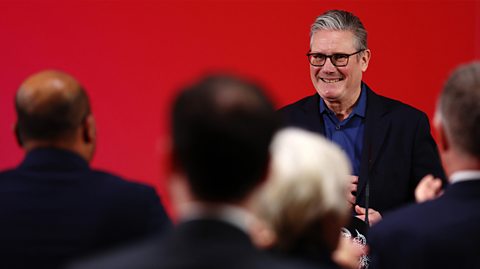
Keir Starmer is the current Prime Minister of the UK, having won a landslide victory in the 2024 UK General Election.
The 58th person to hold the office of Prime Minister, Starmer also serves as MP for the constituency of Holborn and St Pancras.
Starmer succeeds Rishi Sunak as Prime Minister, who held the position from 2022 to 2024.
To read more about what a Prime Minister does, check out this guide from BBC Bitesize.
Where does the Prime Minister live?
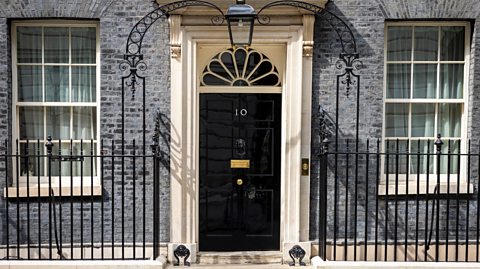
10 Downing Street is the official residence of the UK Prime Minister, standing alongside The White House as one of the most iconic political residences in the western world.
The building is famed for its black door, behind which much of our nation's history has been shaped. Be it victory in World War One or the foundation of the welfare state, there's something quintessentially British about a world power being run from inside a terraced house.
The first Prime Minister to call Downing Street home was Sir Robert Walpole, who rejected the residence as a personal gift, instead requesting it be designated the official residence of the First Lord of The Treasury - a role then held by Walpole, and a precursor to the role of Prime Minister.
Not all Prime Ministers have used Downing Street as their residence, with Walpole's successor Henry Pelham preferring to live in his own residence instead. Sir Winston Churchill also left Downing Street for a brief time, due to the ongoing threat of bombing during World War Two.
Who are the longest and shortest serving Prime Ministers?
Widely considered the first British Prime Minister, Sir Robert Walpole is also the longest serving, holding the position for almost 21 years (1721 - 1742).
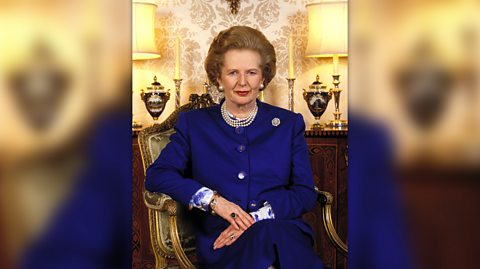
Margaret Thatcher was the first woman elected to the position of Prime Minister, and the longest serving PM of the modern age. Thatcher's time as Prime Minister began in 1979, lasting until her resignation in November 1990.
Liz Truss, by contrast, is the shortest serving UK Prime Minister, resigning only 45 days after assuming the premiership. Truss took the shortest serving title from George Canning, who died 119 days after taking office in 1827.
Every UK Prime Minister in history
- Sir Robert Walpole (1721 - 1742)
- Spencer Compton, 1st Earl of Wilmington (1742 - 1743)
- Henry Pelham (1743 - 1754)
- Thomas Pelham-Holles, 1st Duke of Newcastle (1754 - 1756)
- William Cavendish, Duke of Devonshire (1756 - 1757)
- Thomas Pelham-Holles, 1st Duke of Newcastle (1757 - 1762)
- John Stewart, 3rd Earl of Bute (1762 - 1763)
- George Grenville (1763 - 1765)
- Charles Watson-Wentworth, 2nd Marquess of Rockingham (1765 - 1766)
- William Pitt 'The Elder', 1st Earl of Chatham (1766 - 1768)
- Augustus Henry Fitzroy, 3rd Duke of Grafton (1768 - 1770)
- Lord Frederick North (1770 - 1782)
- Charles Watson-Wentworth, 2nd Marquess of Rockingham (1782 - 1782)
- William Petty, 2nd Earl of Shelburne (1782 - 1783)
- William Cavendish-Bentinck, Duke of Portland (1783 - 1783)
- William Pitt 'The Younger' (1783 - 1801)
- Henry Addington, 1st Viscount Sidmouth (1801 - 1804)
- William Pitt 'The Younger' (1804 - 1806)
- William Wyndham Grenville, 1st Baron Grenville (1806 - 1807)
- William Cavendish-Bentinck, Duke of Portland (1807 - 1809)
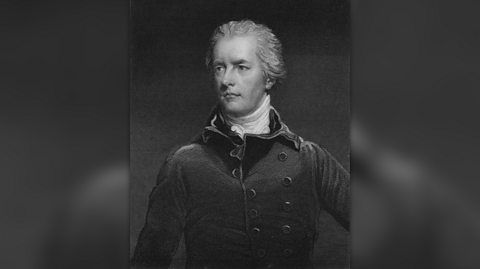
- Spencer Perceval (1809 - 1812)
- Robert Banks Jenkinson, Earl of Liverpool (1812 - 1827)
- George Canning (1827 - 1827)
- Frederick Robinson, Viscount Goderich (1827 - 1828)
- Arthur Wellesley, 1st Duke of Wellington (1828 - 1830)
- Charles Grey, 2nd Earl Grey (1830 - 1834)
- William Lamb, 2nd Viscount Melbourne (1834 - 1834)
- Arthur Wellesley, 1st Duke of Wellington (1834 - 1834)
- Sir Robert Peel, 2nd Baronet (1834 - 1835)
- William Lamb, 2nd Viscount Melbourne (1835 - 1841)
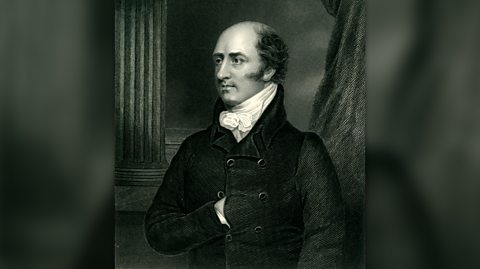
- Sir Robert Peel, 2nd Baronet (1841 - 1846)
- Lord John Russell, 1st Earl Russell (1846 - 1852)
- Edward Smith Stanley, 14th Earl of Derby (1852 - 1852)
- George Hamilton Gordon, Earl of Aberdeen (1852 - 1855)
- Henry John Temple, 3rd Viscount Palmerston (1855 - 1858)
- Edward Smith Stanley, 14th Earl of Derby (1858 - 1859)
- Henry John Temple, 3rd Viscount Palmerston (1859 - 1865)
- Lord John Russell, 1st Earl Russell (1865 - 1866)
- Edward Smith Stanley, 14th Earl of Derby (1866 - 1868)
- Benjamin Disraeli, Earl of Beaconsfield (1868 - 1868)
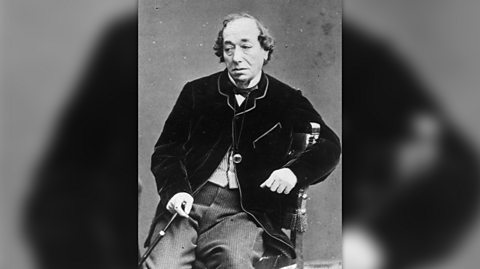
- William Ewart Gladstone (1868 - 1874)
- Benjamin Disraeli, Earl of Beaconsfield (1874 - 1880)
- William Ewart Gladstone (1880 - 1885)
- Robert Gascoyne-Cecil, 3rd Marquess of Salisbury (1885 - 1886)
- William Ewart Gladstone (1886 - 1886)
- Robert Gascoyne-Cecil, 3rd Marquess of Salisbury (1886 - 1892)
- William Ewart Gladstone (1892 - 1894)
- Archibald Primrose, 5th Earl of Rosebery (1894 - 1895)
- Robert Gascoyne-Cecil, 3rd Marquess of Salisbury (1895 - 1902)
- Arthur James Balfour (1902 - 1905)
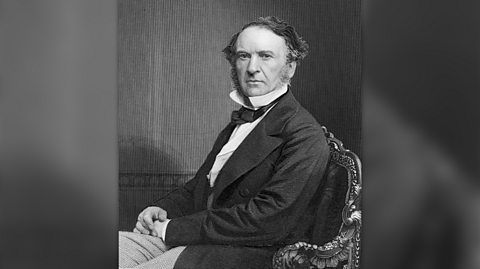
- Henry Campbell-Bannerman (1905 - 1908)
- Herbert Henry Asquith (1908 - 1916)
- David Lloyd George (1916 - 1922)
- Andrew Bonar Law (1922 - 1923)
- Stanley Baldwin (1923 - 1924)
- James Ramsay MacDonald (1924 - 1924)
- Stanley Baldwin (1924 - 1929)
- James Ramsay MacDonald (1929 - 1935)
- Stanley Baldwin (1935 - 1937)
- Neville Chamberlain (1937 - 1940)
- Winston Churchill (1940 - 1945)
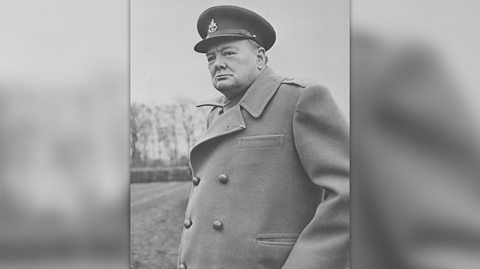
- Clement Attlee (1945 - 1951)
- Winston Churchill (1951 - 1955)
- Anthony Eden (1955 - 1957)
- Harold Macmillan (1957 - 1963)
- Alec Douglas-Home (1963 - 1964)
- Harold Wilson (1964 - 1970)
- Edward Heath (1970 - 1974)
- Harold Wilson (1974 - 1976)
- James Callaghan (1976 - 1979)
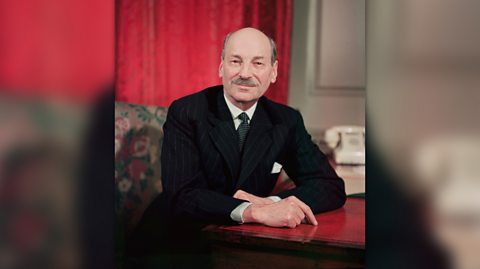
- Margaret Thatcher (1979 - 1990)
- John Major (1990 - 1997)
- Tony Blair (1997 - 2007)
- Gordon Brown (2007 - 2010)
- David Cameron (2010 - 2016)
- Theresa May (2016 - 2019)
- Boris Johnson (2019 - 2022)
- Liz Truss (2022 - 2022)
- Rishi Sunak (2022 - 2024)
- Keir Starmer (2024 - )