Key points
Overview
The poem is a dramatic monologue spoken by an unborn child who pleads for protection from the horrors of the world they are about to enter. It explores the vulnerability of innocence and the fear of corruption, violence, and dehumanisation.
Main themes
The poem explores fear, innocence, evil, modernity, nature, industrialisation, society and humanity.
Tone and voice
The tone is pleading, sombre, and desperate. The speaker uses a first-person voice to express escalating anxiety and dread, addressing an unknown listener - possibly God or the reader - through apostrophe.
Context
Written in 1943 during World War Two, the poem reflects MacNeice’s personal and political anxieties. His fractured family life, the loss of his mother, and the birth of his daughter during wartime likely influenced the poem’s bleak outlook. MacNeice distrusted totalitarianism and blind industrial progress, which is reflected in the poem’s imagery and tone.
Form and structure
The poem is a dramatic monologue divided into eight stanzas of varying length. Most stanzas begin with the refrain “I am not yet born”, reinforcing the speaker’s innocence and fear. The rhyme scheme is irregular but internally consistent, often pairing the first and last lines of each stanza. The final stanza is a rhyming couplet, ending with the stark ultimatum: “Otherwise kill me”.
Poetic devices to spot
- Refrain – “I am not yet born” repeated to emphasise innocence and fear.
- Apostrophe – Direct address to an unseen listener heightens emotional intensity.
- Metaphor – “cog in a machine”, “lethal automaton”, “a thing with one face” express dehumanisation.
- Personification – Nature is given human traits: “trees to talk to me”, “sky to sing to me”.
- Alliteration – “bat or the rat or the stoat”, “parts I must play”.
- Assonance and consonance – Repeated sounds create rhythm and mood: “sky… white light… mind to guide me”.
- Polysyndeton – “and the desert calls me to doom and the beggar refuses…” builds overwhelming tension.
- Asyndeton – Lists without conjunctions intensify pace: “with tall walls wall me, with strong drugs dope me…”.
- Parallelism – Repeated grammatical structures echo biblical language and reinforce rhythm.
- Tone – Bleak, urgent, and emotionally raw.
Prayer Before Birth
by Louis MacNeice
The text of this poem is available in the CCEA Poetry Anthology, which can be downloaded from the CCEA website.
The BBC is not responsible for the contents of any other sites listed.
Summary
An unborn child relates their fears about the world they will soon enter, and pleads with an unknown addressee for protection and guidance in their future. Written in 1943 and published the following year.
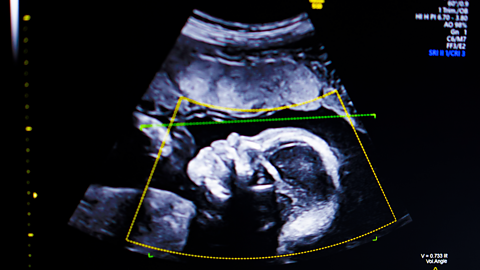
Title: “Prayer” evokes both a religious aspect and a sense of pleading; “before birth” immediately announces the state or identity of the speaker as one who is yet to be born.
Themes: Hope, fear, anxiety, evil, innocence, corruption, modernity, nature, industrialisation, society, humanity.
Tone: Pleading, solemn, fervent, earnest, sombre, desperate, confrontational, bleak.
Speaker: A first person speaker who is not the poet himself but a The voice adopted by an author for a particular purpose, this voice does not necessarily reflect the author's true thoughts. It can also mean a mask that someone presents to the world as their real character ('persona' is the Latin word for an actor's mask). or character made up to explore the themes – in this case, an unborn baby speaking from the womb.
Applicable context
- Louis MacNeice was born in Belfast, the son of an Anglican clergyman and a former schoolteacher. His mother was sent to an institution suffering from depression when he was six and died there a year later without him ever having seen her again; he strongly felt the loss of a loving mother figure and blamed himself for her contracting uterine cancer, linking it to his own difficult birth. His brother, who had Down Syndrome, was sent to live in Scotland and his sister was sent to boarding school in England. His family life fractured, Louis thrived at boarding school himself and won academic scholarships to public school and Oxford, where he socialised with many poets and intellectuals.
- The world of the 1930s was full of social and political turmoil, with the devastating effects of World War One and the Wall Street Crash of 1929 still felt, and ever-increasing rates of industrialisation and globalisation prevailing. MacNeice published a long poem called Autumn Journal in 1939, detailing his thoughts on much of what was going on: the Spanish Civil War (he visited Barcelona in 1938 to try to gain more insight into conditions there); division in Ireland; the ominous approach of what would soon erupt as World War Two. His work explored themes of social justice but he saw no easy political or ideological solutions to the troubles of the world, which may inform the sense of quiet desperation in Prayer Before Birth.
- MacNeice had a son born in 1934; his wife left them both when the child was still an infant, meaning he had to be cared for by an employed nurse. MacNeice remarried in 1942, while World War Two was ongoing, and his daughter Corrina was born in 1943; the war-torn, brutal and demoralising state of the world into which his daughter would be born is likely to have been on his mind when he wrote Prayer Before Birth.
Only a little context is needed for each poem; where used, it should be applied to the point you're making.
Form and structure
- Prayer Before Birth is a A poem in which the speaker addresses the reader directly. A dramatic monologue usually involves a fictional speaker who may not necessarily speak the views of the poet., spoken by a single character and giving us insight into what they think and feel; in this case, the character is an unborn infant who addresses a silent audience through use of Not the punctuation mark, but a figure of speech where the poet addresses someone who cannot answer back because they are absent, or an inanimate object.. This could be someone who has departed for another place, or even an inanimate object; in this case, the unborn child may be addressing God (hence the “Prayer” in the title) or the reader themselves. We cannot be exactly sure to whom the poem is addressed, but the increasing pleas of the child to be protected from its fears become impossible to resolve. This leads us to feel discomfort at the idea that any child can be born innocent into a world full of evil-doing and is utterly vulnerable to circumstance. The poem is divided into eight A grouped set of lines within a poem. of varying length, all of which (apart from the last short stanza) begin with the same refrain, “I am not yet born”, reinforcing both the helpless innocence of the speaker and the sense that they will soon be forced into a frightening world.
- The main rhyme scheme is not regular, but it is consistent; in each stanza, the Verbs that give commands, instructions, or requests directly to the reader or a specific character final phrase of the first line rhymes with the last two syllables of the last line – in stanza one, “hear me” in line one is rhymed with “near me” at the end of line three; stanza two rhymes “console me” with “roll me” and so on. This serves to ‘wrap’ each stanza a little more neatly than the The rhythm of a line of poetry based on how many syllables it has and where they are stressed or emphasised – likes beats in music. and line lengths would otherwise allow; it also helps to create cohesion in a way that reinforces the idea of this actually being a prayer, giving it resonance that lends it solemnity and a sense of being important, even forceful at times. Internal rhymes are also used – sometimes they are tight phrases like “wise lies” and “tall walls”, adding some punch to the negative imagery; at other points they are more like echoes of a previous word, such as the fifth stanza's slant rhymes “lecture” and “hector”, or “call me” and “folly”. The rhymes help to drive the poem on and reinforce rhythmic elements that the irregular metre doesn’t; they also create a tone of incantation or chanting that underlines the connection to prayer. The final stanza of the poem is brief, a In poetry, a pair of lines that rhyme and have the same length and metric pattern. whose final words echo both the end of its matching line but also the rhymes in the stanza before it; the unexpected abruptness of the bleak ending – “Otherwise kill me” – is brought out all the more strongly by its rhyme, decisively stamping finality on the poem.
I am not yet born, console me.
I fear that the human race may with tall walls wallme
- The The rhythm of a line of poetry based on how many syllables it has and where they are stressed or emphasised – likes beats in music. is largely irregular throughout but has pockets of consistency in which the rhythms align in certain patterns, serving to intensify those moments of the poem and give them a frightening resonance. As if they are threats approaching swiftly and steadily to terrorise the speaker. The fourth stanza, for example, settles into a kind of violent, lurching waltz in which anapests – a three-beat da-da-DUM rhythm – give a sense of the inevitability of the child’s future sins approaching:
words/ | when they speak | me, my thoughts | when they think | me/
DUM | da - da - DUM | da - da - DUM | da - da – DUM | da-
Language and poetic methods
Refrain: Prayer Before Birth gains most of its prayerlike qualities from its slightly archaic and biblical-style phrasing (“Let” and “let not…”, for example) and from its repeated A short phrase or verse of a song or poem that is repeated at recurring intervals, especially at the end of each stanza.. A device which is similar here to a church congregation giving a well-rehearsed response at appropriate points throughout a reading or prayer at worship. Through this refrain, “I am not yet born”, we are repeatedly reminded that the child is not yet a part of the world, but somehow they already know – and fear – so much about it; this contrast between vulnerable innocence and fearful knowledge heightens the sombre effect of the poem, making us fear for the helpless child and their future. This refrain starts almost every stanza, building a sense of consistency before snatching it away at the end with the shock of the last stanza’s final plea and its severe ultimatum. The refrain reinforces the speaker’s purity and blamelessness – they are not yet part of the world they know to be brutal and corrupt – at the start of each new stanza’s plea. As if trying to remind us they have no one else to protect them. The inclusion of the word “yet” intensifies the emotion and pace of the poem, so that we increasingly gain a sense of the speaker’s desperation and terror as their inevitable birth draws nearer.
Repetition: Aside from the refrain, other types of repetition are used in the poem, all contributing to a sense of pace and rhythm throughout. The most frequently repeated word throughout the poem is the pronoun “me”, focusing on the nameless child’s fears and often positioning them as the object of a verb. That is, the one who has the verb done to them, or receives the action. Whether positive (“hear me”; “console me”) or negative (“dope me”; “curse me”). This emphasises their vulnerability and dread of what is to come. MacNeice uses a specific type of repetition which repeats grammatical structures or elements in a line to give it a recognisable structure, rhythm or effect in every stanza of the poem, usually in the list of fears or requests the child issues; for example the individual fears in stanza two are all laid out in the same way, with each clause or item using a preposition, an adjective, a noun, a verb, and the pronoun “me” – “with tall walls wall me,/ with strong drugs dope me, with wise lies lure me,/ on black racks rack me, in blood-baths roll me”. Parallelism can be commonly found in biblical language, which adds to the sense of this poem seeming like prayer; here, it helps give each stanza its own internal structure and rhythm by forming a pattern with the language use, showing the listed items mounting up and emphasising their fearsomeness or significance.
With water to dandle me, grass to grow for me, trees to talk to me, sky to sing to me.
Metaphor: Prayer Before Birth does not rely heavily on A metaphor is a word or a phrase used for dramatic effect, to describe something as if it were something else.; many of the fears the child voices are literal and realistic references, which makes them all the more vivid and threatening. However, two stanzas notably shy away from unflinching realism and employ metaphorical language to enrich their points. The first is stanza three, in which the child offers the only real glimpse of positivity in the poem – the nurturing influence of the natural world. A type of imagery in which non-human objects, animals or ideas are given human characteristics. is used in the phrases “trees to talk/ to me” and “sky to sing to me”, creating an image of connection and care, and imbuing the elements of nature with more supportive and positive humanity than the actual human race. MacNeice tends to personify all non-animal nature in the poem, even in negative instances like “mountains frown at me” or “the desert calls me to doom” – in his reckoning, an innocent person has more kinship with nature than with the artificial and inhospitable society humans have constructed for themselves. Stanza five reinforces this idea by showing the The use of opposite ideas or words to create contrast, such as placing contradictory terms or images side by side. of stanza three’s natural idyll – the threat of “those who would freeze my / humanity, would dragoon me into a lethal automaton, / would make me a cog in a machine, a thing with / one face, a thing”. It is a nightmare vision of disconnection, coercion, deadly violence, mindless capitalism and inhumanity, using metaphors of industrialisation (“automaton” or robot, “cog in a machine”) and dehumanisation (“a thing with one face, a thing”, in which the repetition of “thing” emphasises how they would no longer be a person). This is done to voice the speaker’s fear and to illustrate MacNeice’s own distrust of warmongering A system of government where the state has total control over public and private life, often using propaganda, censorship, and repression to maintain power., blind profiteering and the oppression of the individual.
Assonance, consonance, and alliteration: Small, localised instances of repeated sounds help give the poem internal resonance and create pockets of rhythm, cohesion, and atmosphere that enhance the separate stanzas and their subjects. The repeated ‘t’ sounds in “bat or the rat or the stoat” are brittle and jarring, using The repetition of similar consonant sounds in nearby words. to offset the gentle plea of “hear me” with abrupt sharpness. When a vowel sound is repeated in words close together. supports the many instances of internal rhyme in instances like stanza three, where the multiple long ‘i’ sounds in “sky… a white light /… my mind to guide me” create a unified and satisfying coherence while also reinforcing the speaker’s nurtured sense of self ('I'). Marked by alliteration - the repetition of a sound at the beginning of consecutive words, such as ‘the big, bold, blue sea' is peppered throughout, offering emphasis on significant words or phrases and highlighting the specific mood of each. Examples include how “parts I must play” is a plosive ‘p’ sound, possibly showing distaste for the dishonesty of acting; “lovers laugh at me” is a smooth liquid 'L', suggesting how easily they will ridicule him; the alliterative phrasing in stanza three – “grass to grow for me, trees to talk / to me, sky to sing to me” – shows the harmony and unity of the natural scene.
Polysyndeton and asyndeton: MacNeice uses both The lack of conjunctions between phrases, like and, or, so, since, for, because, as, but, yet, still, while, as soon as, therefore etc, in which conjunctions like ‘and’ are left out between words and phrases they might usually connect. Its opposite is A writing technique where a lot of conjunctions like 'and', 'or', or 'but' are used close together. It slows down the rhythm and can make ideas feel more dramatic or emotional., which adds many conjunctions like ‘so’ or ‘and’ between words and phrases that might typically only have one (a single ‘and’ at the end of a list of items separated by commas, for example). In stanza five, the repetition of “and” is used – “the white/ wave call me to folly and the desert calls/ me to doom and the beggar refuses/ my gift and my children curse me” – towards the end of a long list of challenging scenarios the child feels they will face; this use of polysyndeton emphasises each occurrence as if they were all happening at once, and contributes to a sense of being overwhelmed by them. A similar, overwhelming effect is created by asyndeton in places like stanza two, where the child’s fears are listed: “with tall walls wall me, / with strong drugs dope me, with wise lies lure me, / on black racks rack me, in blood-baths roll me.” Both devices work to intensify the lists they are used in; they drive the poem relentlessly forward at speed, enhancing the impression of multiple threats swiftly engulfing the speaker and giving them no room to breathe.
This is not a list of every method or notable use of language and structure in Prayer Before Birth.
Look at the poem again. Can you find any of the following?
Enjambment
In each stanza the speaker presents a new scenario, piling on item after item in a breathless and desperate accumulation of detail. A poetic device where a sentence continues beyond the end of the line or verse. is used to enhance this effect in almost every stanza apart from two and eight, letting the worries and pleas overflow into the next line to show the extent of the dread the speaker feels.
Simile
Stanza seven employs two A simile is a word or phrase used to make a comparison for dramatic effect, using 'like' or 'as'., both comparing the child to elements of nature. The first is thistledown, the light and fragile threads attached to a seed that enable it to be scattered from its parent plant and carried on the wind; the speaker fears being tossed “hither and/ thither or hither and thither” (here and there; repeated for emphasis of how haphazard and dangerous this seems) when he is delicate and has potential to grow like a seed does. The second is “like water held in the/ hands” – water too has the potential to nurture life, but if carried improperly in an insecure container will be spilled and lost. The speaker recognises their own potential but feels vulnerable to the forces of chance; these similes illustrate how precarious they feel their life could be in a world that was not careful with them.
Archaic ‘O’
The use of the single-lettered “O” is a nod to the classical Greek and Latin MacNeice studied. It is characteristic of the style in ancient epic works by poets like Homer, who would use ‘O’ (as translated from Greek) to call upon the muse or to lament a sad chapter in the stories of heroes. It is grandiose and poetic, giving the child’s pleas a solemn depth, and underscoring their desperation in calling on divinity to save them.
If you have found these methods, consider what you know about the poem and the poet already.
What effects do these methods create? Why has he used them?
What other poems could I compare with Prayer Before Birth?
Dover Beach – another dramatic monologue similarly full of anxieties about the future of humanity; it has concerns about declining religious faith which could be contrasted with how Prayer Before Birth nods to the prayer format and has concerns about human morality.
Here – this poem presents an adult speaker who questions his own existence, finds solace in nature and may have been a participant in violence or war; there are many parallels with the child speaker in Prayer Before Birth.
Catrin – a poem told from the perspective of a parent who wants to both protect their child and give them independence; this could provide an interesting contrast for the child speaker in Prayer Before Birth.
Practice questions
Use these questions to hone your knowledge of Prayer Before Birth, and to practise using your notes and analysis in organised paragraphs that focus on how particular themes or ideas are shown in the poem. There is an example answer in the following section to demonstrate how you can do this.
- How does MacNeice show the speaker’s anxieties in Prayer Before Birth?
- What does Prayer Before Birth show us about MacNeice’s attitude to the modern world?
- What poetic methods does MacNeice use to give the poem prayer-like qualities in Prayer Before Birth?
- How does MacNeice create a tone of desperation in Prayer Before Birth?
Example answer
Below is a demonstration of how to use the material in this section to answer an example essay question. The answer below is not a full essay, but only an extract of a longer answer, showing some of the points that could be made.
Q: How does MacNeice create a sense of the speaker’s anxieties in Prayer Before Birth?
A: MacNeice’s Prayer Before Birth is a dramatic monologue, related by a first person speaker in the persona of an unborn infant. He sends out a plea for reassurance and help in the face of their anxieties about the state of the world into which they will soon be born. Apostrophe is used to address a silent audience - possibly God (hence the “Prayer” in the title) or the reader themselves. We cannot be exactly sure to whom the poem is addressed, but the increasing pleas of the child to be protected from its roster of fears become impossible to resolve. This leads us to feel discomfort at the idea that any child can be born innocent into a world full of evil-doing and is utterly vulnerable to circumstance. The very nature of the dramatic monologue means there is no other character within the poem to address the child’s fears; therefore, the format of the poem itself causes the speaker’s projected dread to rise unabated throughout, illustrating the power of their anxieties.
The poem is divided into eight stanzas of varying length, all of which (apart from the last short stanza) begin with the same refrain, “I am not yet born”, reinforcing both the helpless innocence of the speaker and the sense that they will soon be forced into a frightening world. We are repeatedly reminded that the child is not yet a part of the world, and yet they know – and fear – so much about it; this contrast between vulnerable innocence and fearful knowledge heightens the sombre effect of the poem, making us fear for the helpless child and their future. This refrain starts almost every stanza, building a sense of consistency before snatching it away at the end with the shock of the last stanza’s final plea and its severe ultimatum. The repetition reinforces the speaker’s purity and blamelessness – they are not yet part of the world they know to be brutal and corrupt – at the start of each new stanza’s plea. As if trying to remind us they have no one else to protect them. The inclusion of the word “yet” intensifies the emotion and pace of the poem, so that we increasingly gain a sense of the speaker’s desperation and terror as their inevitable birth draws nearer. This gives a clear and disturbing sense of their anxieties.
This essay could go on to make the following points, backed up by evidence from the poem and detailed analysis of that evidence:
- MacNeice employs metaphors and personification, contrasting nature and industrialisation to illustrate the anxieties of modernity and how the pastoral is more nurturing than all of human society.
- MacNeice occasionally regulates the metre into a metrical pattern of three syllables: two unstressed followed by one stressed, giving a light, flowing rhythm e.g. 'In the blink of an eye' - da da DUM / da da DUM, accentuating the pace of the approaching horrors the child anticipates, and uses enjambment to give a similar sense of the speaker being overwhelmed with anxiety.
- MacNeice uses asyndeton and polysyndeton to intensify the lists of horrors the child apprehends, showing their anxieties.
Test your knowledge of Prayer Before Birth
More Louis MacNeice
In the Dark Tower - Louis MacNeice at the BBC. audio
Poet Paul Muldoon recalls a fellow Belfast wordsmith who innovated radio production, loved rugby and drank hard.
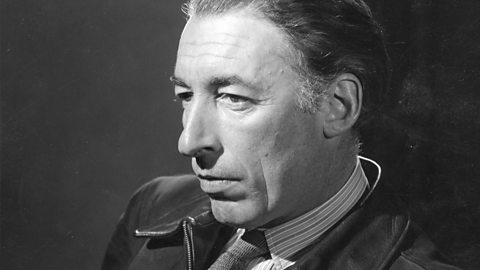
Castles on the air. upload
The life and work of poet and broadcaster Louis MacNeice.
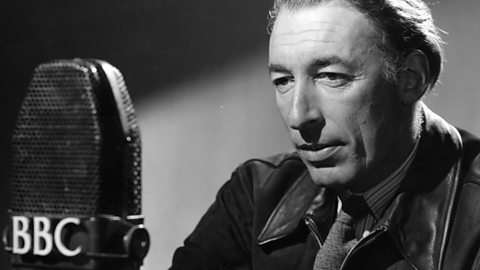
A potted history of Louis MacNeice. audio
Glenn Patterson traces the life of Louis MacNeice from Carrickfergus harbour to Oxford University and a career in broadcasting.
More on Anthology One: Identity
Find out more by working through a topic
- count1 of 11

- count2 of 11

- count3 of 11

- count4 of 11