Key points
Overview
The poem is a personal reflection on a disturbing memory from the poet’s youth. Armitage recalls burning a girl’s fingers with hot scissors and expresses deep regret. It is an unconventional love poem, revealing how a moment of cruelty was tied to confused affection.
Main themes
The poem explores teenage awkwardness, guilt, regret, immaturity and unconventional love. It shows how youthful actions can have lasting emotional consequences, and how remorse can deepen with reflection.
Tone and voice
The tone is honest, reflective, and remorseful. Armitage uses a first person voice to create a confessional mood, speaking directly to the person he hurt. The language is simple and matter-of-fact, which adds to the sincerity.
Context
Simon Armitage grew up in Yorkshire and often writes about ordinary people and personal experiences. This poem is from his collection Book of Matches, which includes poems based on school memories. The girl in the poem may be his first wife, Alison. His down-to-earth style and willingness to confront past mistakes are typical of his work.
Form and structure
The poem is 14 lines long – the length of a sonnet – but lacks regular rhyme or metre. It is divided into three parts: the act, the result, and the reflection. A turning point (volta) comes in the final section, where the speaker shifts from describing the event to explaining his motive. Slant rhymes and internal rhymes suggest imperfection, mirroring the poet’s emotional immaturity and flawed attempt at expressing love.
Poetic devices to spot
- Enjambment – creates a natural, conversational tone.
- Caesura – commas in brackets highlight keywords like "marked" and "please".
- Imagery – "two burning rings" suggests wedding rings; "branded" implies ownership.
- Metaphor – "branded skin" and "eternity" link to lasting emotional damage.
- Allusion – the "O" at the start of a line echoes classical poetry, adding drama.
- Tone – honest, reflective, and remorseful.
- First person voice – makes the poem feel like a direct confession.
I Am Very Bothered
by Simon Armitage
A link to this poem is available in the CCEA Poetry Anthology which can be downloaded from the CCEA website.
The BBC is not responsible for the contents of any other sites listed.
Summary
A deeply unconventional love poem; the poet reflects on a terrible wrong he committed in the past at the expense of the person addressed in the poem, a girl he liked.

- Title: The first person “I” shows it is personal. “Bothered” can often be associated with teen slang and suggest a brash, lazy tone: “not bothered, mate” or “I can’t be bothered doing that” – here he emphasises with “very” that he is, in fact, troubled by his actions.
I am very bothered when I think
of the bad things I have done in my life.
Themes: Teen love, awkwardness, guilt, regret, confession, youth/immaturity.
Tone: Mostly flat and matter-of-fact; he uses simple, straightforward language choices, showing moral clarity and a sense of right and wrong.
Speaker: First person, voice of the poet; this is a personal account, addressing the person he hurt.
Applicable context
Simon Armitage comes from a humble background in Yorkshire and has a compassionate, empathetic and understanding A poetic persona is the voice, character, or identity that a poet uses in their work. It’s how the poet presents themselves in their writing. It’s not necessarily who the poet is in real life, but how they come across in the poetry itself. Some poets use the same persona across their work, others change depending on the theme or tone.. His ability to confront his own mistakes in the poem may be connected to this. A poem like I Am Very Bothered, about a small moment that took on great significance for him, is characteristic of his down-to-earth style.
This poem is from Book of Matches, a collection based on his youth and school experiences; it is very likely that the girl to whom this poem is addressed is actually his first wife, Alison, who he met at school.
Only a little context is needed for each poem; where used, it should be applied to the point you're making.
Form and structure
- I Am Very Bothered is 14 lines long – the same length as a A fourteen-line poem, usually with ten syllables in each line. – but lacks a sonnet’s regular rhyme scheme and The rhythm of a line of poetry based on how many syllables it has and where they are stressed or emphasised – likes beats in music.. The sonnet form was often used for love poetry – perhaps Armitage is partly acknowledging this while also showing that his is a highly irregular love poem, that doesn’t quite follow the usual rules.
- The poem is divided into three A grouped set of lines within a poem.: the first represents the ‘set-up’ (the cause of the event), the second shows the consequences (the effect of the event) and the third shows his reflection on what happened (the reason behind the event). The A change in focus within a poem, perhaps revealing a ‘twist’ with further information, new detail or emotion that may make us feel differently about the first part. occurs between the second and third stanzas, when Armitage shifts the focus from the horror of what he did to his reason for doing it.
What is a sonnet? revision-guide
Learn about the conventions of a sonnet, Shakespearean sonnets and Petrarchan sonnets, iambic pentameter and rhyme in this KS3 English BBC Bitesize article.
- The poem lacks regular rhyme but contains some slant rhymes (half-rhymes, such as “skin” with “rings” or “burner” with “over” for example) and some internal rhymes (rhymes within the lines rather than at their end, eg “flame” and “name” in the first stanza). The effect can be seen as showing imperfection, like the poet is confessing the hurt he caused and admitting his wrongdoing. It could even suggest his immaturity – as though he was trying to write a standard rhyming love poem but couldn’t quite manage it. Just as he couldn’t express his care for the girl in the poem in a more mature, civilised, and understandable way.
Language and poetic methods
Enjambment: Use of A poetic device where a sentence continues beyond the end of the line or verse. helps to keep the tone conversational. The confessional nature of the poem is unrehearsed and honest, and the tone reflects this. The poet hasn’t worked hard in advance to make sure the is sounding good; instead he lays bare his fairly shocking actions in a straightforward, natural way, allowing them to spill onto the next line in places.
Caesura: Armitage uses Parenthetical commas are commas used to add extra information to a sentence, like a side note or explanation, without changing the main meaning. Like brackets or dashes. as A break in poetic rhythm in the middle of the line, a momentary pause. in stanzas two and three. These work to emphasise a few particular words: “marked” (the consequences of his actions) and “at thirteen” (the apparent reason for his actions). These parenthetical commas also mark out the word “please” at the start of the last A grouped set of lines within a poem., suggesting he wants to place particular emphasis on this too: “Don’t believe me, please, if I say…”. He seems to be implying that she should not feel she has to accept the excuse of his young age and forgive him, a sentiment which maybe suggests he has a lot more emotional maturity now.
Imagery of marriage: The “two burning rings” that form the handles of the scissors double as a symbol of wedding rings, tying in with the reason he gives for hurting this person – “asking you if you would marry me”. “Eternity” is another term that could be associated with marriage. It is ironic in this poem that the “eternity” he gives her with the “rings” is not a pleasant, respectful union as a marriage should be, but rather an act of deception that hurts and scars her for life. Something he recognises as one of the “bad things” he has done in his life.
Imagery of possession: “Branded” is a strong term, with associations of a farmer branding cattle that he owns. It’s unpleasant to think of a person having done this to another person. The poet uses this adjective on purpose because of the unpleasant associations, which makes us feel disgusted by what he did. Treating her like livestock, as if he owns her, is a horrible image, and it underscores how bad his actions were and how immature and reckless he was to think of treating someone he liked in that way.
Archaic ‘O’: Use of the single-lettered “O” to start the line “O the unrivalled stench of branded skin” is a nod to classic literature. Armitage seemingly uses this spelling as it is characteristic of the style in ancient A very long, serious poem that tells the story of a heroic figure and their adventures by poets like Homer, who would use ‘O’ (as translated from Greek) to call upon the muse or to lament a sad chapter in the stories of heroes. It is grandiose and poetic, but also strangely detached – as though the moment itself (when her skin actually burns) is too real to describe in realistic terms. The elevated “O” makes the moment close to being legendary; it is as though he marvels at what he did, as well as being horrified by it.
This is not a list of every method or notable use of language and structure in I Am Very Bothered.
Look at the poem again. Can you find any of the following?
Sensory language
The poet engages our various senses – the “naked” flame is dangerous, as well as having associations of sex; “lilac” is visual, perhaps even floral, and sounds pretty and innocent despite the flame’s hazardous nature; “burning” engages our sense of touch, giving a sense of the pain she felt; the word “stench” is very strong, a shocking reference to how bad it smelled and how serious his actions were. These all combine to show how vivid the memory is for him.
Active verbs
The use of the active verbs “held”, “called” and “handed” show that his actions are deliberate. He had time to stop and think but let himself carry on until he had done irreparable damage to the person that took the scissors from him. The poet’s choice of the word “played” – “and played the handles in the naked lilac flame” – is interesting too. It suggests he is taking his time, enjoying it, and that he thinks of it as a game in some way.
Do you think this suggests his actions were deliberately cruel or just a bit thoughtless?
If you have found these methods, consider what you know about the poem and the poet already.
What effects do these methods create? Why has he used them?
What other poems could I compare with I Am Very Bothered?
Wild Oats – another poem about a young man having trouble expressing affection or desire in a healthy way.
To His Coy Mistress – the poem’s speaker also feels attracted to the person he addresses in the poem, though his intentions and tone are very different from Armitage’s humble attempt at atoning for his past crime.
Before You Were Mine – a poem in which the poet discusses her mother’s past; there could be a small amount of guilt felt by the poet for how greatly her arrival as a baby altered her mother’s life and sense of self, which could be compared to Armitage’s regret for his past actions.
Practice question
Use these questions to hone your knowledge of I Am Very Bothered, and to practise using your notes and analysis in organised paragraphs that focus on how particular themes or ideas are shown in the poem.
- How does Armitage show the extent of the regret he feels in I Am Very Bothered?
- What does I Am Very Bothered show us about Armitage’s attitude to his past actions?
- How does Armitage show the reasons for his past actions in I Am Very Bothered?
- How does Armitage create a sincere tone in I Am Very Bothered?
Example answer
Below is a demonstration of how to use the material in this section to answer an example essay question. The answer below is not a full essay, but only an extract of a longer answer, showing some of the points that could be made.
Q: How does Armitage show the extent of the regret he feels in I Am Very Bothered?
A: Armitage firstly shows the extent of the regret he feels for his past actions in his unconventional sonnetI Am Very Bothered through his use of straightforward, simple language. The plain, unflowery word choices indicate honesty and a lack of deception or ambiguity – he refers to the “bad things” he has done in his life, revealing a clear and straightforward sense of right and wrong. He also uses the plain, unflinching first person statement “I Am Very Bothered” as both the title and the first line of his poem, showing he is not hiding from what he has done or trying to make excuses. It creates a sincere and believable tone. Coupled with the enjambment he uses throughout, this all makes the poem feel conversational and unrehearsed – it gives a sense that he hasn’t tried to make himself sound good but is speaking from the heart, which suggests the regret he feels is genuine and he is taking full responsibility for it.
He further shows the extent of his regret in his choices of sensory language and imagery – “lilac”, which suggests the flame is visually pretty and delicate, coupled with “naked” which suggests it is unadorned and dangerous; “[B]urning” engages our sense of touch to show the pain his prank must have caused; and “stench”, a horribly strong description of the smell which shocks us into realising the full damage he has done. All are used to show how vivid the memory is for Armitage, as though he has relived it many times in detail. This indicates that he may well regret his actions. Furthermore, the imagery of possession in the word “branded” evokes a farmer branding livestock – it’s an alarming image to think of the poet ‘branding’ a girl in the same way, as though he owns her, and the poet knows this. He now understands how disgraceful his actions were and seems to use this term as a way of shocking the reader into understanding this as well, showing his regret for what he did.
This essay could go on to make the following points, backed up by evidence from the poem and a clear sense of how each point can link back to showing his regret:
- Armitage shows regret through his use of active verbs, which suggest deliberate action.
- Armitage uses caesura to mark out certain words in the poem with parenthetical commas, emphasising them in a way that shows regret.
- Armitage reveals the reason for his actions, coupled with imagery usually associated with marriage, and this too could show the extent of his regret.
Test your knowledge of I Am Very Bothered
More Simon Armitage
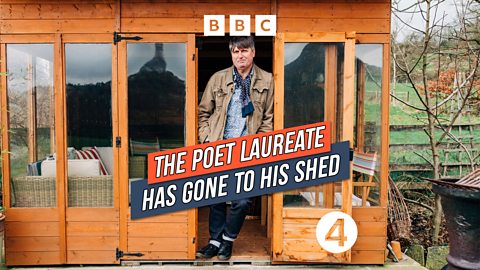
The Poet Laureate Has Gone to His Shed. collection
Poet Laureate Simon Armitage talks to guests about life, language and music in his shed.
Simon Armitage reads the BBC's centenary poem. video
Poet Laureate Simon Armitage’s poem Transmission Report was broadcast on The One Show to mark 100 years of the BBC.

Bookclub. audio
Poet Simon Armitage joins James Naughtie and readers to discuss his translation of the Middle English epic Sir Gawain and the Green Knight.

More on Anthology Two: Relationships
Find out more by working through a topic
- count3 of 12

- count4 of 12

- count5 of 12

- count6 of 12