Learn fun facts about Shakespeare
William Shakespeare is one of the most influential artistic figures in the history of Britain, sitting firmly alongside the likes of Charles Dickens and Jane Austen in the canon of literary greats.
Shakespeare's works are known the world over, translated into a number of languages, as well as making the transition from stage to screen in the 400 years since the Bard's passing.
Shakespeare's plays are a core part of the English curriculum, here at BBC Bitesize, we thought it was high time to take a deep dive into the playwright's life, with a bit of a quiz to boot.
In this article, we'll look at who Shakespeare was, his life beyond the stage, the plays he wrote, the adaptations they spawned and give you the chance to find out which of his most famous works is perfect for you!
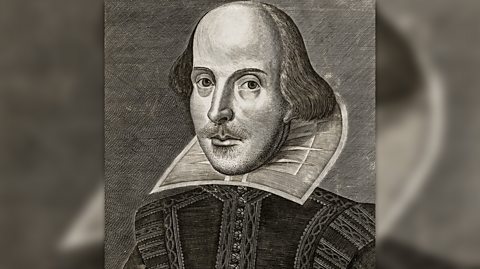
Who is William Shakespeare?
William Shakespeare, often referred to as 'the Bard' (a traditional term for a poet), was an English playwright, poet and actor.
Famous for both tragic and comic plays, as well as producing more than 100 sonnets (14-line poems written in iambic pentameter), Shakespeare is one of the most iconic writers in history.
Shakespeare's work helped to shape language as we know it, introducing, or first recording in writing, a number of words and phrases now common in the English lexicon. Amongst his most famous works are Romeo and Juliet, Macbeth and Hamlet - plays that are still performed and studied around the world today, some 400+ years after their debuts.
Read more about Shakespeare's life and inspirations with this guide from BBC Bitesize.
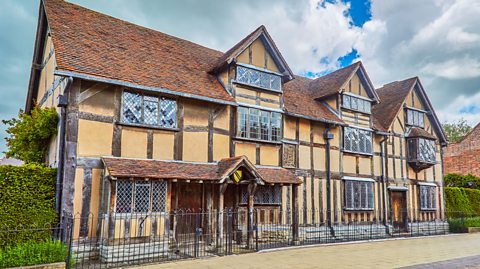
Where and when was William Shakespeare born?
William Shakespeare was born in the town of Stratford-upon-Avon in 1564, the third of eight children to John and Mary Shakespeare.
The exact date of the bard's birth is not confirmed, though we know his baptism took place on 26 April 1564. At the time, it was traditional for baptisms to come three days after birth, leading many scholars to conclude that Shakespeare's official date of birth was 23 April 1564.
Interestingly, this would mirror the date of his eventual death, on 23 April 1616, when he was 52 years of age.
Whilst few official details of Shakespeare's schooling are known, it is suspected he attended a local grammar school, due to his father's position as a bailiff. It is thought that Shakespeare left school at 15, before going on to meet his wife, Anne Hathaway. The two married in 1582, when he was 18 and she was 26, before going on to have three children together - Susanna, Judith and Hamnet, who were twins. Hamnet died aged just 11 years old, with this event, alongside Shakespeare's relationship with Hathaway, playing a central role in 2025's 'Hamnet', starring Paul Mescal and Jessie Buckley.
The seven years following the baptism of Shakespeare's children are sometimes referred to as his 'lost years', due to the lack of knowledge about his life at this time. At some point in this period, however, Shakespeare left his family in Stratford to pursue his career and establish himself as a playwright and actor in London. Shakespeare remained married to Hathaway until his death in 1616.
How many plays did Shakespeare write?
Scholars believe that Shakespeare wrote at around 38 plays over the course of his career, with performances of Shakespeare's work beginning in 1592. His work can be categorised across three genres: tragedies, comedies and histories.
Tragedy was defined by Greek philosopher Aristotle as a play involving a protagonist, usually of some importance, who through the course of the tale reveals a fatal flaw, leading them to a reversal of their fortune, where success and joy are replaced by failure and misery. These stories often end with death or destruction, caused by the actions of the protagonist(s), be it directly or indirectly. Some famous examples of tragedies in Shakespeare's catalogue include Macbeth, Hamlet and Romeo and Juliet.
Shakespearean comedies can be defined much the same way as any comedy - they're funny! As far as other trademarks go, Shakespeare's comedies often centre around themes of mistaken identity, and usually come to a joyful resolution. Prominent examples of comedy across Shakespeare's work include Much Ado About Nothing, A Midsummer Night's Dream and Twelfth Night.
Shakespeare's history plays are those which centre on historical events and figures, particularly English monarchs, which includes works like Richard III and Henry V.
Some academics have also created a fourth category called the problem play, which are harder to categorise due to their blending of comedy and drama. The Merchant of Venice is a famous example of a problem play, combining comedic elements with serious themes.
In addition to his work as a playwright, Shakespeare was also a poet, writing three long narrative poems and 154 sonnets.
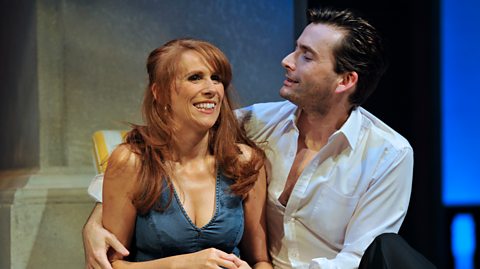
Take the quiz: Which Shakespeare play are you?
Which films are based on Shakespeare plays?
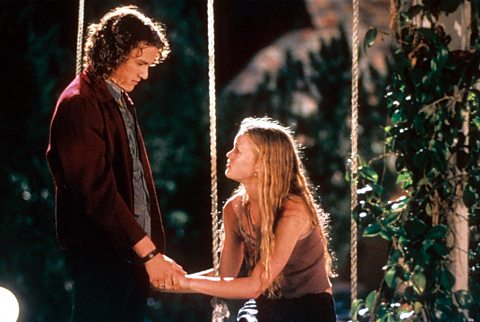
Shakespeare's catalogue of plays is amongst the most iconic around, so it's no surprise to know he's been adapted in many forms over the years.
As far as more classic adaptations go, Hamlet and Macbeth have both been adapted for the screen a number of times, with 1948's Hamlet winning Best Picture at the Academy Awards, making it the first British film to do so.
Romeo and Juliet has been adapted numerous times, both directly and indirectly. Baz Luhrmann's stylised adaptation 'Romeo + Juliet' modernised the setting whilst staying true to the text, with films like West Side Story taking the basic plot of the play and transposing it into a new context.
As a matter of fact, there are a number of films you may not know are actually adaptations of Shakespeare's famous works. 10 Things I Hate About You, featuring Heath Ledger in a star-making performance, is an adaptation of The Taming of the Shrew, whilst the animated classic The Lion King takes many cues from Shakespeare's Hamlet. To read more about modern films based on classic works of literature, check out this article from BBC Bitesize.