Key points
Overview
A reflection on how soldiers’ remains from World War One still surface in the French countryside. The poem honours their sacrifice while condemning war’s destruction.
Main themes
The unnatural destruction of war, comradeship, wasted youth, human fragility, nature, memory.
Tone and voice
Detached, reflective, mournful, reverent, sombre. Uses an impersonal third-person perspective for a distant, observational effect.
Context
Owen Sheers is a Welsh poet and playwright born in 1974. He wrote this poem after visiting Mametz Wood in France, where the 38th Welsh Division suffered heavy losses during the Battle of the Somme in 1916. Ordered to "walk, not run" into machine-gun fire, over 4,000 soldiers were killed or wounded. Sheers was inspired by the excavation of a mass grave where 20 soldiers were found buried arm-in-arm. The poem was first published in 2005.
Form and structure
Seven tercets (three-line stanzas) in free verse, with no regular rhyme or metre – reminiscent of bones emerging randomly. Two deliberate rhymes for emphasis: "run" with "guns" (fatal command) and "sung" with "tongues" (closure, restoring voice).
Poetic devices to spot
- Metaphor – "chit of bone", "china plate", "broken bird’s egg" suggest fragility and youth.
- Personification – the land "stands sentinel" and "reaches back into itself" like a wounded soldier.
- Simile – "like a wound working a foreign body to the surface of the skin" shows the earth healing.
- Alliteration – "broken bird’s egg", "farmers found them" emphasise fragility and discovery.
- Assonance and consonance – "broken mosaic of bone" uses long ‘o’ sounds to create a mournful tone; "linked arm in arm" harsh ‘k’ sounds evoke bitterness and waste.
- Dance-macabre allusion – skeletons "paused mid dance-macabre" highlight death and camaraderie.
- Caesura – pauses for reflection at the end of the opening line: "For years afterwards the farmers found them – ".
- Enjambment – lines flow naturally, mimicking thought and conversation.
- Tone – reverent, sombre, mournful, reflective.
Mametz Wood
by Owen Sheers
The text of this poem is available in the CCEA Poetry Anthology, which can be downloaded from the CCEA website.
The BBC is not responsible for the contents of any other sites listed.
Summary
A poignant observation on how the remains of soldiers mown down in France still surface from the rural landscape today, highlighting the ongoing devastation a war creates. First published in 2005.
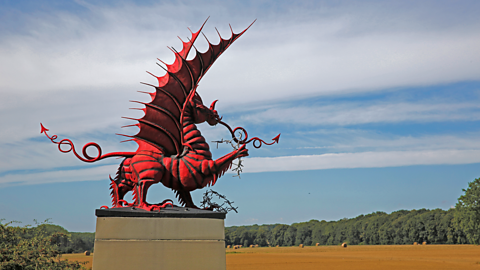
Title: A simple place name evoking a rural, forested area – not a place one might expect to hold the horrific evidence of so much death and destruction.
Themes: The unnatural destruction of war, time, comradeship, wasted youth, human fragility, nature.
Tone: Detached, reflective, mournful, reverent, poignant, sombre.
Speaker: Uses an impersonal third person perspective for a distant, observational effect.
Applicable context
- Owen Sheers is a Welsh writer born in Fiji in 1974. As well as poetry he has written novels, plays, documentaries, and journalism throughout his career, and performed as an actor and presenter. He lives in Wales and is a Professor in Creativity at Swansea University. Much of his work has concerned war in one way or another – one of his novels considers life in Wales if the Nazis had won World War Two. On stage, he has portrayed war poet Wilfred Owen, writer of Anthem for Doomed Youth, and he wrote a one-man play about war poet Keith Douglas, writer of Vergissmeinnicht.
- Mametz Wood is a real place in Northern France, which was taken by German forces in 1916. The 38th Welsh Division was tasked with retaking it and the surrounding areas as part of the Battle of the Somme, which would last months and became one of the bloodiest battles in history. The commanding officer, Field Marshal Haig, was disdainful of the initial efforts by the young and inexperienced Welsh Division; he implied they were cowards and put a notoriously blunt and unforgiving officer in charge of them. At this officer’s mercy, they were commanded to “walk, not run” directly into the gunfire of the waiting Germans sheltered by the wood; this cruel and stupid tactic resulted in 4,000 casualties and over a thousand deaths.
- Sheers visited France in 2001 and witnessed the aftermath of the excavation he mentions in the poem – “while I was there they uncovered a shallow grave of 20 Allied soldiers who had been buried very, very quickly, but whoever had buried them had taken the time to actually link their arms, arm-in-arm, and when I saw a photograph of this grave I just knew that it was one of those images that had burned itself onto my mind.” He found the image – and the surrounding story of his young fellow countrymen – so haunting that as well as the poem, he wrote a play called Mametz about it, which was performed by the National Theatre Wales in 2014.
Only a little context is needed for each poem; where used, it should be applied to the point you're making.
Form and structure
- Mametz Wood is arranged in seven A tercet is a group of three lines in a poem. It is a type of stanza. (three line A grouped set of lines within a poem.) of varying lengths. It is written in Free verse is a poem with no set rhyme or rhythm., meaning there is no strict pattern of rhythm or rhyme. This lack of formal organisation makes it seem more natural, and mirrors the haphazard and random ways in which the bones of the soldiers slowly rise and appear out of the earth over time.
- The The rhythm of a line of poetry based on how many syllables it has and where they are stressed or emphasised – likes beats in music. is irregular with no real set patterns of rhythm. It uses varying sentence lengths and different arrangements of stressed and unstressed syllables throughout, making it feel unplanned, almost conversational.
- There is no regular rhyme scheme, but Sheers uses two notable instances of rhyme to mark out particularly significant moments in the poem. The first is in the third stanza, where he rhymes “run” with “guns” to emphasise the foolishness and horror of the command imposed on the soldiers, using the rhyme to give the soldiers’ doom an added resonance. He uses another instance of rhyme in the final stanza, again for increased resonance, using “sung” to rhyme with the final word of the poem, “tongues”. This gives a sense of quiet but powerful closure at the end, inviting the reader to reflect on the awful fate of the buried soldiers. It also underlines the fact that Sheers intended this poem to give the fallen young men a voice they lacked in the years since they died.
Language and poetic methods
Metaphor: Mametz Wood uses several instances of A metaphor is a word or a phrase used for dramatic effect, to describe something as if it were something else. to subtly heighten the sense of tragedy in the poem and to lend resonance and a kind of tragic beauty to the plights of both the dead soldiers and the wounded landscape. The imagery used to describe the unearthed remains implies various qualities of youth, innocence, and fragility for the dead men. A “chit” can mean both a young animal or child and a small slip of paper, like a receipt, giving a sense of the “chit of bone” being only a tiny fragment, belonging to someone young and vulnerable, and being small but of value. The image of a “china plate” evokes something delicate and easily broken; a “relic” has religious associations (such as body parts said to belong to saints) as well as evoking long-gone archaeological finds from the ancient past; the “broken bird’s egg” again shows the vulnerability and the youth of those who died. There is further metaphorical language in Sheers’ personification of the earth itself as a wounded soldier ravaged by the war and still trying to heal into land that brings forth crops for the farmers rather than fragments of dead bodies. The “nesting” machine guns sound horribly comfortable and at home, as though they are a part of the wood itself and happy to wait for the chance to mow down the advancing soldiers. Sheers also uses a metaphorical allusion to the “dance-macabre”, a medieval convention of art depicting dancing skeletons to remind the viewer that death comes to everyone. He compares the arm-in-arm dead to this, highlighting both the grisly image and the tragic reminder of their camaraderie in serving, dying, and being buried together.
Alliteration, assonance, and consonance: Sheers uses pockets of repeated sounds to highlight particular moments in poem. The opening lines use repeated ‘f’ sounds, for example, using Marked by alliteration - the repetition of a sound at the beginning of consecutive words, such as ‘the big, bold, blue sea' of soft A fricative is a sound made by squeezing air through a narrow space, like in f, v, s, z, or th in think and this. to create a sense of breezy conversation before the speaker reveals the grim truth of what the farmers found; “broken bird’s egg” also uses alliteration, this time of tough plosive ‘b’ sounds that emphasise the shattering of the delicate bones. The When a vowel sound is repeated in words close together. in “broken mosaic of bone” repeats the long ‘o’ sound in a way that mimics an “oh” of interest or wonder, emphasising the sinister beauty in the long-dead remains; the “broken mosaic” also works with “linked” to give The repetition of similar consonant sounds in nearby words. with the repeated ‘k’ sounds seeming harsh and bitter, showing the sad waste of life.
For years afterwards the farmers found them
Simile: Sheers likens the bodies slowly being cast up by the ploughed earth to “a wound working a foreign body to the surface of the skin”. This A simile is a word or phrase used to make a comparison for dramatic effect, using 'like' or 'as'. is referring to the ability of the human body to slowly expel a small object (such as a splinter) that has broken the skin by growing around and behind it, to push it back out. It creates an image of the wounded land pushing out things that do not naturally belong there, as though it is trying to heal itself; there is also a suggestion that the land may be trying to draw attention to the silent dead and allow them to be acknowledged for the tragic sacrifice they made. A further simile is used at the end of the poem: Sheers notes the jaws of the buried men are open, “As if the notes they had sung / have only now, with this unearthing, / slipped from their absent tongues”. The imagery here is both unsettling – the “absent tongues” having rotted away – and poignant, as these men’s lives were sacrificed to futile warfare and they have lain silent and undiscovered for years without being properly buried or honoured. The unearthing of the remains is the first step in letting them be ‘heard’ – identified, venerated and mourned as they should have been.
Personification: In Mametz Wood, the land is A type of imagery in which non-human objects, animals or ideas are given human characteristics. as being a soldier itself, who “stands sentinel” or keeps guard over the graves of the others “even now”, decades after the battle. Sheers notes that it keeps “reaching back into itself for reminders”, which evokes both the mental sense of trawling its own mind for memories of what occurred, and the physical sense of pushing into the ground and casting around for fragments of the bodies. This use of personification helps make the landscape another character in the scene of tragedy, underscoring the point that the land is as ravaged by war as the human casualties, although the land can slowly recover – unlike the men.
Caesurae: In addition to the free verse style, Sheers employs A break in poetic rhythm in the middle of the line, a momentary pause. to add to the sense of Mametz Wood feeling more like a conversation than a formal poem. The wistfulness of the observations becomes more genuine and touching when unconstrained by patterns, and the use of caesurae enhances this. It can emphasise pauses for thought (eg the full stop at the end of stanza six before the speaker goes on to add “As if the notes…” in the final stanza, suggesting a thought that has just occurred to them). It also allows a pause for dramatic effect before information is revealed (for example, in the first line, the dash used for a brief halt before the speaker reveals who or what it was that the farmers kept finding).
This is not a list of every method or notable use of language and structure in Mametz Wood.
Look at the poem again. Can you find any of the following?
Asyndeton
The second stanza of the poem utilizes The lack of conjunctions between phrases, like and, or, so, since, for, because, as, but, yet, still, while, as soon as, therefore etc, in which conjunctions like ‘and’ are left out between words and phrases they might usually connect. The details of the unearthed ‘finds’ from the soldiers’ graves are random fragments that slowly but relentlessly continue to appear over time. Use of Check your connection, refresh the page and try again. emphasises the haphazard and ongoing process of the bones appearing. There is no final ‘and’ to end the list and give a sense of closure, but instead a never-ending list of examples, quietly intensified by a lack of conjunctions.
Pun
Sheers uses a pun, not for comedic effect, but rather to underscore the irony of the double meaning of “foreign body” in stanza four. In medicine, a ‘foreign body’ is something that has breached a person’s physical form, such as a splinter in the finger; the human body will work to eject such things, trying to push the splinter out by slowly growing behind it. Sheers sees the earth doing this to the soldiers, who themselves are ‘foreign bodies’ – young men a long way from their home in Wales, whose physical forms are trapped beneath the ground in France.
Enjambment
Along with caesurae, A poetic device where a sentence continues beyond the end of the line or verse. is used throughout the poem to create a sense of irregular pace – sometimes cascading information onto the next line such as in stanza two (“the blown / and broken bird’s egg”). Sometimes, it interrupts the flow for dramatic effect, such as the stanza break used between stanza five’s “paused mid dance-macabre” and the follow-up in stanza six: “in boots…”. This helps to create the conversational and observational tone, sharing the poet’s thoughts with no rigid structure, and makes it sound more natural.
If you have found these methods, consider what you know about the poem and the poet already.
What effects do these methods create? Why has he used them?
What other poems could I compare with Mametz Wood?
Vergissmeinnicht – both poems detail discovery of the war’s dead in ways that resonate horribly with the reader. There is ample material for comparison in the poets’ treatments of the respective remains, and the ways in which soldiers who fought and died are both humanised and dehumanised in the poems.
Bayonet Charge – neither poet actually served in war, but both focus on the plight of the landscape and the soldiers of World War One – Hughes mid-conflict, Sheers years later. Despite Hughes’ protagonist running, not walking, towards German fire, the situation in Bayonet Charge could otherwise be a fairly accurate recreation of the battle conditions faced by the Welsh regiment, whose dead bodies influenced Sheers decades later.
Requiem for the Croppies – the first person speaker in Heaney’s poem fights on home territory rather than in France, but there are parallels with Mametz Wood in the imagery of a mass grave and the land growing crops again. Also, the doomed nature of the Croppies’ rebellion echoes the equally doomed Welsh regiment walking into German fire.
Practice questions
Use these questions to hone your knowledge of Mametz Wood, and to practise using your notes and analysis in organised paragraphs that focus on how particular themes or ideas are shown in the poem. There is an example answer in the following section to demonstrate how you can do this.
- How does Sheers show that war is unnatural in Mametz Wood?
- What does Mametz Wood show us about Sheers’ attitude to the soldiers of the 38th Welsh Division?
- What poetic methods does Sheers use to show his feelings about war in Mametz Wood?
- How does Sheers create a sombre tone in Mametz Wood?
Example answer
Below is a demonstration of how to use the material in this section to answer an example essay question. The answer below is not a full essay, but only an extract of a longer answer showing some of the points that could be made.
Q: How does Sheers show that war is unnatural in Mametz Wood?
A: Sheers’ free verse poem Mametz Wood has an innocuous title – the simple place name of a real location in France evoking a rural, forested area, peaceful and lush. A reader might not expect such a place to hold the horrific evidence of so much death and destruction, but the wood was the site of a horrific offensive during the Battle of the Somme in 1916. It saw 4,000 casualties mown down by German gunners. These were members of the 38th Welsh Regiment. Fellow Welshman Sheers intended Mametz Wood to be both a tribute to these men decades later and an examination of the damage war caused not only to the soldiers but to the land itself. Damage still evident from the fact that remains of dead bodies were still appearing from the ground in the twenty-first century. Sheers uses fricative alliteration in the opening line – “For years afterwards the farmers found them” – to give an airy, conversational tone before a caesural dash gives a dramatic pause and the speaker reveals that what these farmers discovered were in fact dead bodies of fallen soldiers. The image of the farmers ploughing the land, and it's yielding human bones instead of crops is the first, startling indication Sheers gives that war is deeply unnatural.
In Mametz Wood, the land is personified as being a soldier itself, who “stands sentinel” or keeps guard over the graves of the others “even now”, decades after the battle. Sheers notes that it keeps “reaching back into itself for reminders”, which evokes both the mental sense of trawling its own mind for memories of what occurred, and the physical sense of pushing into the ground and casting around for fragments of the bodies. This use of personification helps make the landscape another character in the scene of tragedy, underscoring the point that the land is as ravaged by war as the human casualties, although the land can slowly recover – unlike the men. The scars the war has wrought on the natural landscape shows the situation of war to be unnatural – war has literally gone against nature, hurting and damaging it in ways that last for decades.
This essay could go on to make the following points, backed up by evidence from the poem and detailed analysis of that evidence:
- Sheers uses the simile “like a wound” and a pun to highlight the irony in the double meaning for “foreign body”, showing the war put the soldiers in an unhealthy and unnatural situation.
- Sheers uses metaphors to liken the soldiers’ remains to things of youth, beauty and value, showing their lives were precious and suggesting that the war that took them was unnatural.
- Sheers uses only two instances of rhyme in the poem to highlight significant moments, showing the cruelty of the commands given and the tragedy of their remote, impersonal burials. This implies that the war that led to these things was unnatural.
Test your knowledge of Mametz Wood
More Owen Sheers
Mametz Wood and its legacy. document
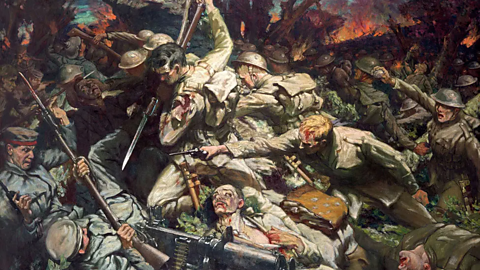
The 38th (Welsh) Division suffered heavy losses while driving German forces out of Mametz Wood as part of the Battle of the Somme.
Private Passions. audio
Owen Sheers talks to Michael Berkeley about his love of Wales, poetry and rugby, plus how a trip to the Large Hadron Collider inspired a musical collaboration.

Battle of Mametz Wood commemorated. collection
Acts of commemoration and reconciliation were held for the Welsh soldiers who died during the battle of Mametz Wood in northern France, 100 years after the event.
More on Anthology Three: Conflict
Find out more by working through a topic
- count10 of 11
- count11 of 11
- count1 of 11
- count2 of 11