What's so special about opera and ballet?
Opera and ballet are highly respected art forms that have been around for many, many years.
But they've made their way back into the limelight recently after comments made by actor Timothée Chalamet, who has caused a bit of a song and dance after the remarks he made in March.
Chalamet, 30, said in an interview with Matthew McConaughey that "no one cares" about ballet and opera any more, sparking a backlash from stage stars, opera houses and ballet companies alike.
"I don't want to be working in ballet, or opera, or things where it's like, 'Hey, keep this thing alive, even though like no one cares about this anymore.'," Chalamet said.
"All respect to all the ballet and opera people out there," he quickly added.
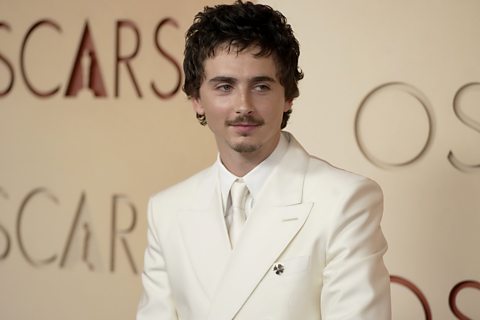
Safe to say, it hasn't gone down well, with some even suggesting that it could have harmed his chances of winning an Oscar after he was nominated for Best Actor for his role in Marty Supreme. In the end, Michael B. Jordan won the award for his performance in Sinners, but that's not to say that the opera and ballet comments were why Chalamet lost out.
"He's an absolute fool," theatre critic and arts broadcaster Ian Brown told BBC Radio. "I just think he's ridiculous, and I suspect that will come back to haunt him."
But while lots of people were angry about the comments, there could be some basis to the point Chalamet was making after an official survey of arts attendance in the US, carried out every five years, showed that just 0.7% of the population went to the opera at least once in 2022, down from 2.2% in 2017. Ballet and other live dance declined from 8.2% to 4.7% over the same period.
So, what are they all about? And what does their history look like? We've got a quick explainer below to help you understand a bit more.
The history of opera
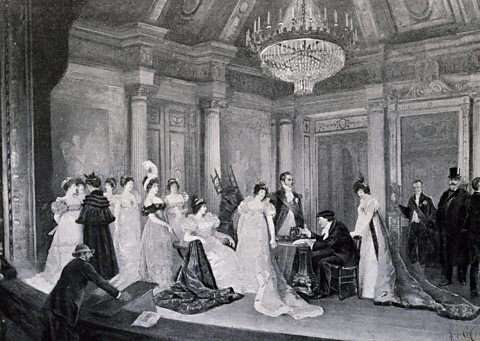
Opera first originated in Italy in the 16th Century and was performed at court to entertain royalty. It soon became the ideal musical style for celebrating mythological and historical characters and performing to public audiences.
But what actually is it?
Well, a simple definition is that opera is a musical play performed on stage with costumes, scenery and props. It differs from a musical in that it is almost exclusively sung through, whereas a musical uses a mixture of song and spoken words. Where opera will usually use classical, unamplified vocals and traditional orchestration, often in foreign languages, a musical often features more contemporary vocal styles.
Early operas tell the story of Greek drama and were sung in Italian. Italian dominated the musical form until the 18th century. By this time composers across Europe, such as Henry Purcell, were composing operas and establishing their own national traditions. Now operas are sung in many languages including German, English and Spanish.
This form of vocal music contrasted with the religious music being composed at the time. Instead of music that was safe and in a style that could be used mainly for church occasions, opera could express a range of strong emotions both musically and in staging, costumes and scenery.
Who are the most famous opera composers?
Just some of the most influential opera composers include:
- Giuseppe Verdi - Italian composer whose work covered political themes, Shakespeare and historical and modern settings
- Wolfgang Amadeus Mozart - introduced German language texts
- Richard Wagner - introduced through-composed style of opera. Famous for his epic Ring Cycle of operas.
One of the most performed operas of all time is La Traviata (translated as 'the fallen woman') by Verdi. Based on a true story, it tells the tragic tale of a Paris courtesan (a mistress who catered to wealthy, noble, or royal clientele) named Violetta Valéry and her passionate love affair with nobleman Alfred.
Their relationship is put under pressure thanks to societal expectations, misunderstandings and illness, ultimately leading to a heart-breaking conclusion.
The history of ballet
Ballet first began in 15th Century Italian Renaissance courts as an opulent spectacle for aristocrats blending music, dance, and poetry before flourishing in France under King Louis XIV, who established the first ballet school in 1661.
But are ballet and opera connected?
To put it simply, yes! The inclusion of ballet in opera began around 1645 when Italian operas were taken to the court of King Louis XIV and were tailored to fit French tastes. They were actually used within the opera performances and would occur usually during the first or second act. Often the purpose was a divertissement, essentially a way for the audience to take time to enjoy the art form instead of constantly having to keep up with the plot. Basically a short interlude that provided time to reflect on the story.
By the 18th Century, ballet had been adopted by Peter the Great as part of a modernisation movement in Russia, and was perfected by the tsars, turning St. Petersburg into the world’s ballet capital by the late 19th Century.
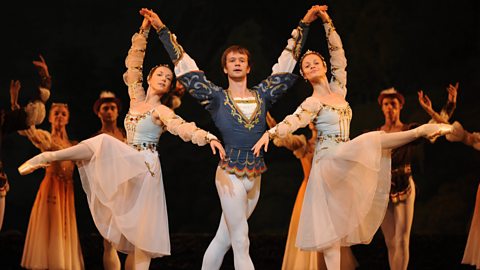
Famous ballets and their composers
There are countless different ballets that are performed around the world, but some of the most famous include:
- The Nutcracker by Pyotr Tchaikovsky
- Swan Lake, also by Pyotr Tchaikovsky
- Giselle by Adolphe Adam
- Romeo and Juliet by Sergei Prokofiev