Key points
Overview
A reflective poem in which a soldier tries to justify killing a man in war. He realises that, had they met in different circumstances, they might have shared a drink and become friends. The poem explores the senselessness of war and the speaker’s moral discomfort.
Main themes
Guilt, futility of war, class inequality, empathy, powerlessness.
Tone and voice
Conversational and hesitant. The speaker uses a first-person voice and colloquial language, creating a natural, speech-like tone. His pauses and repetitions suggest internal conflict and regret.
Context
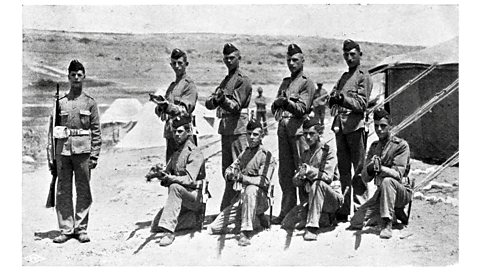
Written in 1902, shortly after the Boer War. Hardy was critical of British imperialism and its motives. The speaker is a rural, working-class man, reflecting Hardy’s concern for ordinary people caught up in war.
Form and structure
Five four-line stanzas (quatrains). Regular ABAB rhyme scheme. Mostly iambic trimeter with some tetrameter lines. Nursery rhyme rhythm contrasts with the serious subject matter.
Poetic devices to spot
- Juxtaposition – the speaker imagines meeting the man in a pub, contrasting sharply with the battlefield setting.
- Colloquial language – "’list", "nipperkin", "off-hand like" reflect the speaker’s ordinariness.
- Caesura – dashes interrupt the flow of thought, showing hesitation and moral conflict.
- Assonance – repeated vowel sounds like "foe", "so", "although" create a muddled, uncertain tone.
- Irony – "quaint and curious war is!" downplays the horror of killing.
- Repetition – "Because – / Because he was my foe" shows the speaker struggling to justify his actions.
- Enjambment – lines flow into each other naturally, mimicking speech and suggesting the speaker is thinking aloud.
- Tone – reflective, uncertain, conversational, regretful.
The Man He Killed
by Thomas Hardy
“Had he and I but met
By some old ancient inn,
We should have sat us down to wet
Right many a nipperkin!
“But ranged as infantry,
And staring face to face,
I shot at him as he at me,
And killed him in his place.
“I shot him dead because —
Because he was my foe,
Just so: my foe of course he was;
That's clear enough; although
“He thought he'd 'list, perhaps,
Off-hand like — just as I —
Was out of work — had sold his traps —
No other reason why.
“Yes; quaint and curious war is!
You shoot a fellow down
You'd treat if met where any bar is,
Or help to half-a-crown.”
The text of this poem is available in the CCEA Poetry Anthology, which can be downloaded from the CCEA website.
The BBC is not responsible for the contents of any other sites listed.
Summary
A poem which portrays the complex emotions felt by a soldier who uncomfortably recognises the similarities between himself and an enemy he killed, and the pointlessness of the war that made them enemies. Written in 1902.
- Title: Past tense and slightly unexpected in the bluntness of the word “killed”; focuses on the 'other' man, showing he is on the speaker’s mind and suggesting the speaker’s uneasiness with what he has done.
- Themes: Morality, guilt, war and its futility, socio-economic class, powerlessness.
- Tone: Good-natured, musing, conversational, reflective, uncertain, hesitant, regretful.
- Speaker: Uses first person, the persona of a man who joined the military; quotation marks suggest directly spoken speech, which gives a sense of the reader 'overhearing' what is said rather than having it directed towards them.
Applicable context
- Thomas Hardy was a much lauded Victorian novelist and poet who was born in a small village in Dorset in 1840. He was clever and fairly well-educated in his teens, but his family couldn’t afford university and he was apprenticed to an architect and moved to London aged 22. The city was never a home to him, and he returned to Dorset after a few years, but seeing the social inequality of the city and experiencing the class divides there started his interest in social reform and liberalism.
- The Man He Killed is one of a number of poems Hardy wrote in response to the Boer War, a brutal three-year campaign fought by the British Empire against the Republics set up by Dutch-speaking inhabitants of what is now South Africa. They claimed independence from Britain. There were two republics: the Transvaal and the Orange Free State. in South Africa. Hardy was more sceptical of the Empire than many of his contemporaries, feeling a good deal of the conflict stemmed from the desire to plunder resources like gold in the captured lands.
- While many of his contemporary novelists wrote about life in cities, Hardy was more concerned with the countryside – he created a semi-fictional county named Wessex, based on areas in and around Dorset, as a setting for many of his novels. His frequent focus on rural life and the difficulties of people who lived in the countryside can be partly seen in the character of the speaker in The Man He Killed. Hardy initially published the poem with an introductory note about the setting: "Scene: the settle of the Fox Inn, Stagfoot Lane. Characters: The speaker (a returned soldier) and his friends, natives of the hamlet." – these details speak of rural life in a small community and go some way to portraying the speaker as an unsophisticated and unworldly person who was very much out of his depth when sent abroad to fight.
Only a little context is needed for each poem; where used, it should be applied to the point you're making.
Form and structure
- The Man He Killed is divided into five A type of stanza - or a complete poem - consisting of four lines that have a rhyming scheme. (four line stanzas). The poem is a A poem in which the speaker addresses the reader directly. A dramatic monologue usually involves a fictional speaker who may not necessarily speak the views of the poet., given that it’s a single speaker talking about his past actions. We cannot be sure if he is speaking directly to the reader or to someone else in a manner that the reader ‘overhears’, but the latter is more likely. The use of speech marks highlights the speaker’s monologue as something he is relating in a casual, conversational way. Hardy’s initial setting notes (see Applicable context section) imply the man is speaking only to a small group of his friends in the pub, and not directly to the reader.
- The The rhythm of a line of poetry based on how many syllables it has and where they are stressed or emphasised – likes beats in music. is mostly regular, using mainly iambs. One ‘iamb’ is a two-beat combination: an unstressed syllable followed by a stressed (emphasised) syllable, making a ‘da-DUM’ pattern, like a heartbeat. Trimeter means three of these two-beat units per line, making six syllables altogether, and tetrameter means there are four two-beat iambs, with eight syllables in total; the poem uses trimeter in lines one, two and four of each A grouped set of lines within a poem., and tetrameter in the third line. Here, as an example, are lines three (iambic tetrameter) and four (iambic trimeter) from the second stanza:
| I shot | at him | as he | at me |
| da-DUM |da-DUM | da-DUM | da-DUM |
| and killed | him in | his place |
| da-DUM | da-DUM | da-DUM |
This iambic pattern of 3-3-4-3 is short, simple and sounds satisfying; it is, in fact, so wholesome a structure that it is commonly found in nursery rhymes. This simple format with its singsong rhythm contrasts strongly with the darkly complex subject matter. It also helps to portray the speaker as naïve or even childlike in his struggle to understand the cynical imperial politics that sent him to kill people in the name of his country. - The rhyme scheme alternates lines in an ABAB pattern, supporting the neat and simple nursery-rhyme feel, and maybe even mirroring the symmetry between the lives and circumstances of the speaker and the man he killed.
Language and poetic methods
Juxtaposition: The poem hinges on the Two things placed side by side to highlight their differences. of two scenarios – one in which two people meet in a friendly manner, share a drink, and find they have a lot in common. Another in which the same two people meet in conflict, each one moving to kill the other first and one inevitably succeeding. The two hugely contrasting scenarios highlight the fact that the men at the centre of each are highly similar; it is this realisation that troubles the speaker so much, leading him to doubt the cause he fought for and empathise, almost as if by accident, with the man he killed. He wonders if, “just as I”, the man “was out of work – had sold his traps”, which suggests both could be the victims of similar socio-economic difficulties, lacking the means or education to do much else other than join up for an army wage.
A grouped set of lines within a poem. one is the ‘what if’ scenario, with Everyday language. language and a good-natured exclamation mark creating a friendly, jolly tone which is then horribly destroyed by stanza two’s depiction of reality. The speaker’s tone is more serious and blunt, offering no fancy Polite or neutral words or expressions used to refer to things which people may find upsetting or embarrassing to talk about. for the slaying, and emphasising the symmetry of the men’s situations and actions with the repetition of “face to face” and the When a vowel sound is repeated in words close together. of “as he at me”.Colloquial language: The character of the speaker is shown through the way he talks, which is informal and mostly uses simple vocabulary. This reflects both who he is and the setting in which he seems to be speaking – a relaxed atmosphere, among friends. He casually uses abbreviations, shortening ‘enlist’ to “’list” or ‘trappings’ (another word for ‘stuff’ or belongings) to “traps”, as many people would when speaking to those who are familiar to them. He also uses ‘everyday’ or Everyday language. terms, referring to drinking as having “Right many a nipperkin”, and discussing how the man he killed might not have thought seriously about his reasons for joining the army but rather joined “Off-hand like”, just as he himself did.
The unsophisticated speech helps portray him as an ordinary person, underscoring the idea that he was not equipped to deal with the momentous action of taking a life. It also shows how badly war affects ordinary people like himself and the man he killed. The simplicity of his speech may even be related to the idea that men like him, who live in rural areas and have little money or education, had very few choices of work other than enlisting; Hardy was often concerned with the prospects of those who lived in the countryside and had limited chances to improve their lives.Caesurae: The most important instances of A break in poetic rhythm in the middle of the line, a momentary pause. in the poem occur in stanzas three and four, the points at which the speaker’s doubts are closest to the surface. The first is the dash that cuts off the first line of the third stanza: “I shot him dead because – / Because he was my foe”. The next is the use of four other dashes in stanza four: “Off-hand like – just as I – / Was out of work – had sold his traps –…”. Both sets of caesurae show the speaker struggling with his feelings. The first emphasises the repetition of “because”, suggesting there is a pause between the words as the speaker searched for an actual, meaningful reason to have done what he did – and finds none.
The dashes in the second example also convey hesitation, with the speaker pausing briefly between each phrase as he thinks about the parallels between himself and the man he killed. The caesurae bring emphasis to these hesitations, letting the reader know that deep down, the man is grappling with the guilty knowledge that the killing was unjustified, unjustifiable and wrong.Assonance: There is notable use of When a vowel sound is repeated in words close together. in the second stanza of the poem, which repeats ‘o’ sounds in “foe”, “so” and “although”, and “-au” sounds in “because” and “was”. The effect of these repetitions is clumsy, almost comical in such a short space, making the soldier’s reasoning sound muddled and ridiculous. It underlines the fact that he has begun to understand that there was no real reason for the death.
Because he was my foe,
Just so: my foe of course he was;
That's clear enough; although
- Irony: The speaker spends stanzas three and four musing upon the man he has killed and finding reasons to feel kinship with and sympathy for him. Having called him his “foe”, he goes on to find similarities between the two of them, until he hesitatingly reaches the disturbing conclusion – there is “no other reason why” the man had to die other than the horrible circumstances in which they both ended up. The final stanza starts with an exclamation: “Yes; quaint and curious war is!”. This seems like the speaker’s attempt to brighten up, come out of his sad thought process and shake off his tragic conclusion; this statement itself is an Happening in the opposite way to what is expected and maybe causing amusement because of it. understatement as the facile, inappropriate word choices “quaint” and “curious” completely ignore the brutal realities of war and the trauma and guilt the speaker is suffering as a consequence.
There is further irony in the situation itself, as the speaker sums it up afterwards: in any other circumstance he’d share a drink or maybe even lend money to a man like the man he killed, but in war they were arbitrarily told they were now enemies. So both have suffered – the speaker with his guilt and trauma, and the man he killed with the loss of his life.
This is not a list of every method or notable use of language and structure in The Man He Killed.
Look at the poem again. Can you find any of the following?
Direct speech
The use of the quotation marks which surround the entire poem, implying the speaker’s direct speech, has an interesting effect. We can interpret it either as the speaker directly addressing the reader in a casual conversation, or as one side of a conversation addressed to someone else, but overheard by the reader. The speech marks highlight the fact the man is in the act of talking in a casual, friendly manner, and emphasise how the dark subject matter contrasts with the informal, chatty nature of the way his speech is presented.
Repetition
Repetition has several effects in the poem. Firstly, it emphasises the parallels between the two men in phrases like “face to face”, showing how truly alike they are in situation. In stanza three, repetition is used to help to show the speaker’s hesitation in explaining why he did what he did, when he repeats “because” with a caesura in between, faltering to find a reason. Shortly after, he repeats the word “foe” – “my foe of course he was” – and gives the strong impression that he is trying to convince himself the man was truly his enemy. The following stanzas, where he shows signs of appreciating the humanity of the man he killed, suggest he isn’t convinced the man was really his “foe” at all.
Enjambment
A poetic device where a sentence continues beyond the end of the line or verse. is used at various points to help enhance the easy, unrehearsed, conversational tone of the poem; the speaker’s thoughts often spill onto the next line in an untidy stream of consciousness – look at the end of stanza three, where the last word “although” indicates the thought will continue into the next stanza. The enjambment helps to give the sense that the speaker is uneasy with what he has done, and finding it hard to justify in neat and tidy phrases.
If you have found these methods, consider what you know about the poem and the poet already.
What effects do these methods create? Why has he used them?
What other poems could I compare with The Man He Killed?
Vitaï Lampada – from around the same time as The Man He Killed (though not about the same war), but showcasing a much more positive attitude to war; there is further contrast to be seen in the social status of the people in each poem – rich public schoolboys versus poor country soldier.
Vergissmeinnicht – another poem which focuses on the lives of the soldiers outside the conflict they find themselves in; the speaker muses on the body of his dead enemy, seeing the human side of him and how his lost life is a tragedy for those who cared for him.
An Irish Airman Foresees His Death – Yeats’ poem has a more philosophical tone than Hardy’s, suggesting a slightly more sophisticated speaker. However, the poems share many concerns, including the idea of war as pointless or wasteful, and the concept that many who fought had few other prospects, insubstantial reasons for enlisting, and bore no personal hatred for their supposed enemies.
Practice questions
Use these questions to hone your knowledge of The Man He Killed, and to practise using your notes and analysis in organised paragraphs that focus on how particular themes or ideas are shown in the poem. There is an example answer in the following section to demonstrate how you can do this.
- How does Hardy portray the speaker in The Man He Killed?
- What does The Man He Killed show us about Hardy’s attitude to war?
- What poetic methods does Hardy use to show the speaker’s feelings about his own actions in The Man He Killed?
- How does Hardy create a sense of similarity between the speaker and his “foe” in The Man He Killed?
Example answer
Below is a demonstration of how to use the material in this section to answer an example essay question. The answer below is not a full essay, but only an extract of a longer answer showing some of the points that could be made.
Q: How does Hardy portray the speaker in The Man He Killed?
A: The Man He Killed is a dramatic monologue, exposing the inner feelings of a single speaker in the first person persona of a man who joined the military and took a life in the fighting. It is one of a number of poems Hardy wrote in response to the Boer War, a brutal three-year campaign fought by the British Empire against the Boer Republics in South Africa. Hardy’s frequent focus in his work on rural life and the difficulties of people who lived in the countryside can be partly seen in the character of the speaker in The Man He Killed. Hardy initially published the poem with an introductory note about the setting: “Scene: the settle of the Fox Inn, Stagfoot Lane. Characters: The speaker (a returned soldier) and his friends, natives of the hamlet.” – these details speak of rural life in a small community and go some way to portraying the speaker as an unsophisticated and unworldly person, very much out of his depth when sent abroad to fight. This is further supported by the simple rhyme scheme and mostly regular metre of trimeter and tetrameter. The metrical pattern of the poem is short, simple and sounds satisfying; it is, in fact, so wholesome a structure that it is commonly found in nursery rhymes. This simple format with its singsong rhythm contrasts strongly with the darkly complex subject matter. It helps to portray the speaker as naïve or even childlike in his struggle to understand the cynical imperial politics that sent him to kill people in the name of his country.
The character of the speaker is further shown through the way he talks, which is informal and mostly uses simple vocabulary. This reflects both who he is and the setting in which he seems to be speaking – a relaxed atmosphere, among friends. He casually uses abbreviations, shortening ‘enlist’ to “’list” or ‘trappings’ (another word for ‘stuff’ or belongings) to “traps”, as many people would when speaking to those who are familiar to them. He also uses ‘everyday’ or colloquial terms, referring to drinking as having “Right many a nipperkin”, and discussing how the man he killed might not have thought seriously about his reasons for joining the army but rather joined “Off-hand like”, just as he himself did. The unsophisticated speech helps portray him as an ordinary person, underscoring the idea that he was not equipped to deal with the momentous action of taking a life. It also shows how badly war affects ordinary people like himself and the man he killed. The simplicity of his speech may even be related to the idea that men like him, who live in rural areas and have little money or education, had very few choices of work other than enlisting; Hardy was often concerned with the prospects of those who lived in the countryside and had limited chances to improve their lives.
This essay could go on to make the following points, backed up by evidence from the poem and detailed analysis of that evidence:
- Hardy uses repetition to show the speaker’s hesitation and uncertainty over what he has done, showing he is morally troubled by the killing he carried out.
- Hardy uses juxtaposition to show how the speaker reflects on the connections between himself and the man he killed in different scenarios, showing he has some empathy for his supposed “foe”.
- Hardy uses caesurae to show hesitation and enjambment to mirror the free, unrehearsed nature of the conversation. Both of which show the disorganised, unsettled thoughts the speaker has about what he did and his difficulty in justifying it, even to himself.
Test your knowledge of The Man I Killed
More Thomas Hardy
In Our Time - Thomas Hardy's Poetry. audio
Melvyn Bragg and guests discuss Hardy's poems, which he prized far above the novels which made him famous and rich.
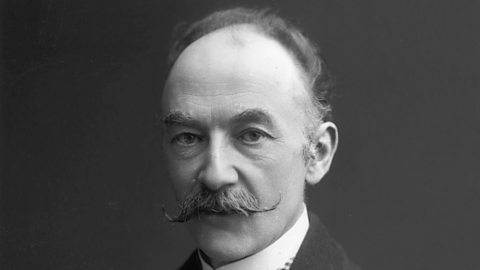
Meridian - The life of Thomas Hardy. audio
The British author whose life started in a working man's cottage in Dorset and ended in fame and fortune. He was one of the best known authors in Britain and one of the most controversial.

Hardy’s Wessex. video
Two programmes in which Desmond Hawkins explores the comer of England that featured so strongly in the life of Thomas Hardy.
More on Anthology Three: Conflict
Find out more by working through a topic
- count4 of 11
- count5 of 11
- count7 of 11