Medical advancements trialled on the Western Front
There were many medical developments on the Western Front because:
- The new challenges of difficult terrain and mechanised weapons needed to be solved.
- The government dedicated resources to improving medical and surgical equipment.
- High numbers of Someone who is injured or dies in a war or other destructive event. led to more operations and therefore greater knowledge of how to perform them well.
- Doctors were under pressure to treat and heal soldiers so that the soldiers could return to the fighting.
Wounds and infection
Joseph Lister had introduced A substance that kills or stops the growth of germs which cause disease. surgery in 1867. However, this was not possible on the Western Front as the conditions increased the risk of infection. Treatment areas and operating theatres could not be free from Single-celled microorganisms, some of which are pathogenic in humans, animals and plants. Singular is bacterium., so Surgery using precautions to lower the risk of infection from sepsis. was not possible.
Surgeons returned to using carbolic acid to kill the bacteria in the soldiers’ wounds. However, this was not successful in treating An infection that causes gas in gangrene wounds.. Doctors Alexis Carrel and Henry Dakin overcame this by developing a system of tubes to keep the chemical solution flowing through the wound. This would fight the infection. This system became known as the Carrel–Dakin method.
After 1915, surgeons began to ensure all bullets and shell fragments were removed from inside the body before cutting away the dead muscle and tissue around the wound. This ensured that all bacteria were removed from deep inside the body. The wound was then left open and treated with antiseptics to kill any bacteria and avoid them getting trapped in the wound.
The Thomas splint
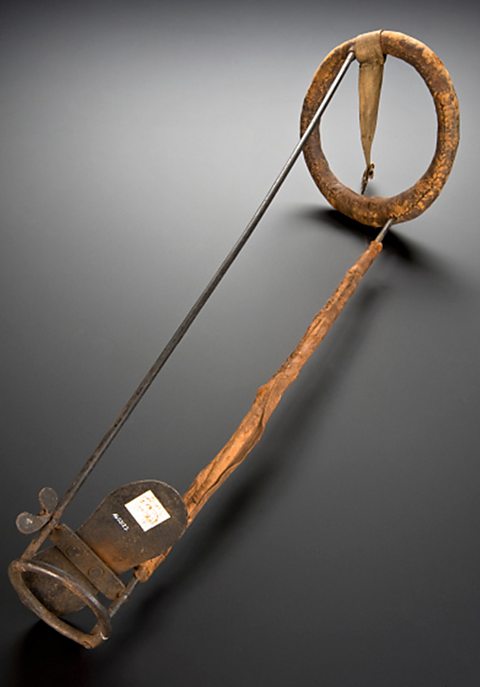
Developed in the late 19th century by Hugh Owen Thomas, the Thomas splint was designed to help heal fractured bones, particularly in the leg.
- At the beginning of World War One, 80 per cent of soldiers with a broken thigh bone died.
- The Thomas splint pulled the bones lengthways to stop them rubbing on each other.
- It was used on the Western Front from 1916.
- It prevented high amounts of blood loss, and as a result it reduced the death rate from 80 per cent to 20 per cent. This also meant that fewer amputations were needed.
Mobile X-ray machines
- High frequency electromagnetic radiation, used for medical imaging. allowed surgeons to locate bullets and A hollow shell filled with tiny steels balls used in war. quickly.
- The result was that they could be removed more accurately and with smaller wounds from surgery.
- This reduced the chance of infection. By 1915, the British army had two mobile X-ray vehicles in operation on the Western Front.
- By 1916, X-ray units were being used in casualty clearing stations and base hospitals.
Blood bank for the Battle of Cambrai
There were problems with storing blood for extended periods, as it easily A clump of platelets and blood cells that forms when a blood vessel is damaged.. Clotted blood could not be given to patients. The need for blood on the Western Front led to a solution being developed:
- It was discovered that sodium citrate could be added to blood to prevent clotting and enable it to be stored.
- Scientists discovered that blood could be refrigerated. Adding citrate glucose solution lengthened its refrigeration time for several days. This led to blood banks being prepared before a major battle.
- Geoffrey Keynes, a British surgeon, developed a portable machine for storing blood. This enabled blood to be taken to the front line to treat injured soldiers.
Stocks of blood were prepared before the Battle of Cambrai in 1917. These were used to treat soldiers on the battlefield. This was important as by this time tanks and machine guns were commonly being used, which raised the likelihood of severe injuries.