Key points
Overview
A patriotic poem linking school sports to battlefield heroism. It suggests that values like honour and discipline learned in youth prepare men for war and sacrifice.
Main themes
Duty, courage, tradition, sportsmanship, imperialism.
Tone and voice
Motivational and solemn. Third-person voice presents characters as symbols of British values.
Context
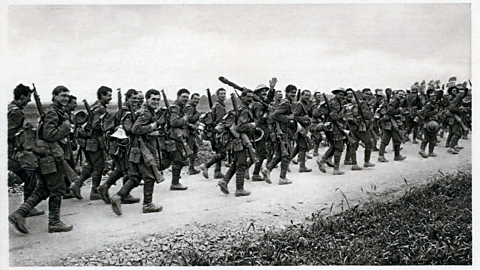
Written in 1897. Inspired by the Mahdist War and British public school ideals. Popular during the Boer War; later criticised after World War One.
Form and structure
Three eight-line stanzas (octets). Regular ABABCDCD rhyme. Tetrameter rhythm. Moves from cricket match to battlefield to reflection.
Poetic devices to spot
- Refrain – “Play up! play up! and play the game!” repeated to reinforce duty.
- Symbolism – “torch of life” = tradition and moral legacy.
- Metaphor – “ribboned coat”, “river of death” evoke reward and loss.
- Imagery – sport and war linked through cricket and relay race metaphors.
- Allusion – classical reference to Lucretius.
- Consonance – “jammed”, “dead” intensify battlefield tension.
- Juxtaposition – calm sport vs. chaos of war.
- Tone – “inspirational”, “idealistic”, “reflective”.
Vitaï Lampada
(They Pass On The Torch of Life)
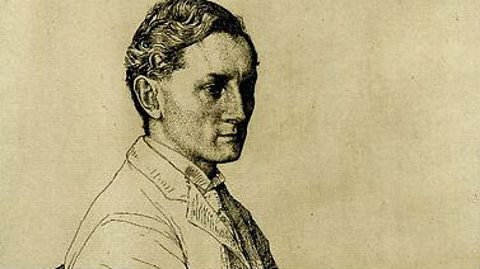
by Henry Newbolt
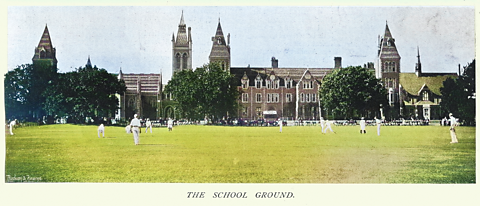
There's a breathless hush in the Close to-night –
Ten to make and the match to win –
A bumping pitch and a blinding light,
An hour to play and the last man in.
And it's not for the sake of a ribboned coat,
Or the selfish hope of a season's fame,
But his Captain's hand on his shoulder smote –
'Play up! play up! and play the game!'
The sand of the desert is sodden red, –
Red with the wreck of a square that broke; –
The Gatling's jammed and the Colonel dead,
And the regiment blind with dust and smoke.
The river of death has brimmed his banks,
And England's far, and Honour a name,
But the voice of a schoolboy rallies the ranks:
'Play up! play up! and play the game!'
This is the word that year by year,
While in her place the School is set,
Every one of her sons must hear,
And none that hears it dare forget.
This they all with a joyful mind
Bear through life like a torch in flame,
And falling fling to the host behind –
'Play up! play up! and play the game!'
The text of this poem is available in the CCEA Poetry Anthology, which can be downloaded from the CCEA website.
The BBC is not responsible for the contents of any other sites listed.
Summary
A tribute to the public school values that the speaker feels created generations of honourable and brave soldiers to serve the British Empire abroad. First published in 1897.
- Title: Latin for “the torch of life”, from the longer quote “vitaï lampada tradunt” (“they pass on the torch of life”) in an epic poem by the Roman poet Lucretius. This suggests the subject matter as hopeful and vital, and also invokes a sense of timelessness and high status through its use of Latin, a classical language often associated with the prestigious public school culture shown in the poem.
- Themes: Sportsmanship, courage, duty, honour, tradition, camaraderie.
- Tone: Disciplined, controlled, tense, reflective, motivational, inspirational.
- Speaker: A third person speaker describing the actions of others from a removed standpoint rather than experiencing the events of the poem personally; the poet is an All knowing - an omniscient narrator is one who knows all of the thoughts and feelings of the characters in a story.narrator who does not take part but has access to view the events and describe them from a distance.
Applicable context
- Henry Newbolt was born in 1862, the son of a vicar. He attended Clifton College, a private boys' school near Bristol, at which he would have been immersed in the culture and trained in the values he extols in the poem: bravery, honour, a sense of duty and a sense of fair play, as well as a belief in serving the interests of the British Empire. He went on to study at Oxford and pursue a career in law but gave this up to become a writer, producing novels, poems, and history texts. Furthermore, he was knighted in 1915 for services to literature.
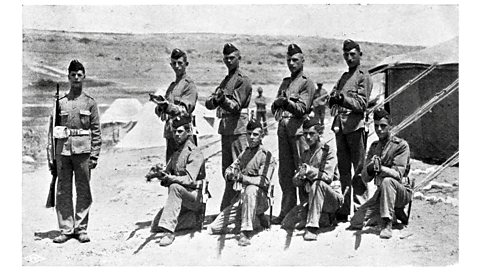
- Vitaï Lampada uses a specific battle as the setting for its second stanza: the Battle of Abu Klea, fought in Sudan in 1885 during the Mahdist War between Sudan and Egypt. The latter were supported by British forces, who sent a unit to support a besieged English general in Khartoum; they were greatly outnumbered by opposing forces in the desert on the way but managed to prevail. Newbolt takes liberties with the facts of what happened for poetic effect, but it’s true that many of his classmates from Clifton College served in the Mahdist War. Among them was Douglas Haig, who would go on to become a notorious high-ranking general in World War One, named ‘Butcher Haig’ by some for the vast numbers of men who died under his command in apparently ill-judged military campaigns.
- At the start of World War One, Newbolt was one of a group of writers who were engaged by the War Propaganda Bureau, a government agency responsible for maintaining public opinion in favour of the war. It is ironic that, while Vitaï Lampada had gained great popularity among both fighting forces and the public during the Boer War fought by Britain from 1899 to 1902, its central message of honour and sacrifice was more sourly received by many. The realities of modern warfare and the devastating impacts of World War One began to hit home, just over a decade later.
Only a little context is needed for each poem; where used, it should be applied to the point you're making.
Form and structure
- Vitaï Lampada is an example of formal verse – this means it follows a regular rhyme scheme and rhythm but does not conform to the rules of any specific type of poem such as a A fourteen-line poem, usually with ten syllables in each line. or A nineteen-line poem consisting of five tercets and a quatrain, with a very specific rhyme scheme.. It is divided into three octtets (eight line A grouped set of lines within a poem.) – the first is set during a school game of cricket, the second on a battlefield years later. The third steps back from any specific time or place to explore the philosophical and moral values that connect the two scenes.
- The The rhythm of a line of poetry based on how many syllables it has and where they are stressed or emphasised – likes beats in music. is not quite regular in terms of the number of syllables used and the patterns of stresses. The syllable patterns are mostly a mix of Containing iambs. (When we emphasise the second syllable not the first syllable like ‘to-day’, this is called an iamb). – a two beat, unstressed-stressed syllable unit, da-DUM – and a metrical pattern of three syllables: two unstressed followed by one stressed, giving a light, flowing rhythm e.g. 'In the blink of an eye' - da da DUM / da da DUM, a three beat da-da-DUM), but it consistently uses four stressed beats per line (A line of poetry that has four metric feet or beats in it.). This gives a steadiness at the poem’s centre even when the metre strays and varies – perhaps a reflection of how the former schoolboys’ core values can keep them steady even in the chaos of war.
- The rhyme scheme is regular and full, alternating rhyming lines in an ABABCDCD pattern. This creates a feeling of order and completion that reflects the stability and orderliness instilled in the boys who are now young men, fighting for the Empire.
Language and poetic methods
Refrain: Newbolt’s poem ends each A grouped set of lines within a poem. with the same repeated A short phrase or verse of a song or poem that is repeated at recurring intervals, especially at the end of each stanza., urging the comrades present to “‘Play up! play up! and play the game!’”. The use of the Verbs that give commands, instructions, or requests directly to the reader or a specific character command is rousing and inspirational, and the repetition within the phrase reinforces the rallying nature of the cry.
The A quick reference - often to an image, character or place - from a work of literature or music or mythology. to a “game” applied to both the cricket match of the first stanza and the battlefield in the second stanza illustrates how the moral values taught at public schools will serve the soldiers well. Newbolt cements this idea in the third stanza, repeating the refrain once more for emphasis to give the effect that even when the men are “falling”, these values are precious and eternal.Symbolism: The symbolism of the “torch of life” mentioned in the title is picked up again in the third stanza, where Newbolt uses the A simile is a word or phrase used to make a comparison for dramatic effect, using 'like' or 'as'. “This they all with a joyful mind / Bear through life like a torch in flame”. This equates the lessons in bravery, duty, and sporting conduct with a lit torch passed from one man to the next in a never-ending tradition of honour.
The imagery of light associates the moral values of the men with hope and goodness. It is also an allusion to the idea of “passing the torch”, a reference to ancient Greek ‘torch races’ which are echoed in modern times in the Ceremonies of the Olympic Games; it is also an A series of words together or phrase that convey a certain meaning that does not reflect the meanings of the words separately. An example is "kicked the bucket". (a common saying) for passing on responsibilities and duties to a successor, showing that even as individuals die in the war, the victory of their ‘goodness’ over their enemies’ ‘evil’ is the most important thing. The torch as a symbol allows Newbolt to convey the idea that these schoolboys will be guided by the light of their principles, no matter what challenges they face.Imagery of sport: The cricket game in the first stanza is made clear to the reader through use of particular terms related to the game – “Ten to make” (meaning ten runs are needed to win), “match”, “pitch”, “the last man in” and a reference to a team captain; these combine with the time pressure of “an hour to play” and the difficulties of a “bumping pitch and a blinding light” to show the high stakes of the game, which creates a “breathless hush” among the teams that evokes the tension and anticipation.
There is further sporting imagery employed in the use of the torch as something they will “fling to the host behind”, evoking a relay race. Public schools insisted on students being involved in sport. Newbolt suggests here that this is a large part of the value system that teaches these young men the honourable values, teamwork, and resilience they will later use in their most difficult moments.Metaphor: The idea that the boys do not play sport to win fame or prizes is illustrated through the “ribboned coat”, which uses imagery of rosettes and other badges of honour awarded as prizes as a metaphor for short-term material gain. The rejection of these superficial ‘ribbons’ shows Newbolt believes that gaining moral courage and a sense of duty and fair play is more important than any symbolic award.
A more disturbing A metaphor is a word or a phrase used for dramatic effect, to describe something as if it were something else. is stanza two’s “The river of death has brimmed his banks”, proposing that the carnage of war is ongoing and overwhelming and lending a sombre, almost mythic quality to the dire situation the soldiers find themselves in.Assonance and consonance: Small pockets of repeated sounds in the poem enhance the mood of what they describe. Examples of this include in stanza one, when the ‘worldly’ and superficial gains use When a vowel sound is repeated in words close together. of the ‘o’ sound in “ribboned coat” and “selfish hope” to help show disdain for these things as being unimportant; or the assonance in the final stanza between “mind”, “life” and “like”, in which the ‘I’ sounds are open and hopeful.
The repeated ‘d’ sounds in stanza two’s “The sand of the desert is sodden red” use The repetition of similar consonant sounds in nearby words. to help to evoke the thudding downbeat feeling of being trapped and the frequency of the incoming threats; these are carried on in the line three with “jammed” and “dead”, creating a dull-sounding sense of finality and hopelessness to show the desperation of their situation before the rallying cry awakes their spirits to fight on.
This they all with a joyful mind
Bear through life like a torch in flame,
This is not a list of every method or notable use of language and structure in Vitaï Lampada.
Look at the poem again. Can you find any of the following?
Caesurae
The tension in the first stanza is heightened through use of A break in poetic rhythm in the middle of the line, a momentary pause., making the match come alive for the reader and showing its importance as a training ground for the values the poem celebrates. In the second line of stanza one, “Ten to make and the match to win” is an aside emphasised by use of dashes to show the high stakes of the game. Stanza two echoes this by also putting its second line in dashes to emphasise the caesural pause for effect, but this time the situation is much more intense and has already wrought havoc; “Red with the wreck of a square that broke” is a much more sombre and sobering aside, implying the standard military formation they use (a square with everyone facing out) has been breached, with terrible consequences.
Personification
Britain was typically represented visually in posters and paintings by Britannia, a mythic female figure named after the Roman name for the British Isles. In keeping with this traditional representation, Newbolt personifies England as ‘she’ by identifying the dutiful soldiers of the empire as “her sons”, implying a familial sense of belonging for these men as well as their citizenship and nationality.
Juxtaposition
Having brought the reader forward in time and space from the school cricket match to the war-torn desert, Newbolt Two things placed side by side to highlight their differences. one of the plucky young schoolboys from stanza one against the backdrop of the battle in stanza two, with the line “The voice of a schoolboy rallies the ranks.”. This could be to show how young and inexperienced the fighters were, but is mainly a reference to the fact that the moral code they learned at school is still with them. The shared memory of their captain’s message on the cricket pitch still applies, unifying and strengthening them when they hear it from one of their groups.
If you have found these methods, consider what you know about the poem and the poet already.
What effects do these methods create? Why has he used them?
What other poems could I compare with Vitaï Lampada?
Who’s for the Game? – the jingoistic fervour of Pope’s poem is more intense than Newbolt’s, but they share a more positive outlook on war than most other poems in the collection, as well as both employing the comparison of war and sport.
The Charge of the Light Brigade – written about fifty years before Vitaï Lampada, this also concerns an historical battle, uses a powerful refrain throughout and celebrates the archetypal British soldier’s sense of duty and bravery. Although there are subtle differences in the overall messages and attitudes to war in the poems.
Bayonet Charge – the calm and resolve demonstrated by the well-trained former schoolboys of Vitaï Lampada while they are under attack forms a stark contrast to the blind panic of Hughes’ speaker in Bayonet Charge.
Practice questions
Use these questions to hone your knowledge of Vitaï Lampada, and to practise using your notes and analysis in organised paragraphs that focus on how particular themes or ideas are shown in the poem. There is an example answer in the following section to demonstrate how you can do this.
- How does Newbolt portray the characters featured in Vitaï Lampada?
- What does Vitaï Lampada show us about Newbolt’s attitude to war?
- What poetic methods does Newbolt use to show his feelings about sporting values in Vitaï Lampada?
- How does Newbolt create a positive, motivational tone in Vitaï Lampada?
Example answer
Below is a demonstration of how to use the material in this section to answer an example essay question. The answer below is not a full essay, but only an extract of a longer answer, showing some of the points that could be made.
Q: How does Newbolt portray the characters featured in Vitaï Lampada?
A: Newbolt’s formal verseVitaï Lampada uses a third person narrative viewpoint, which allows the poet to take on the stance of an omniscient narrator, viewing the action from a distance. He uses this to describe the characters first as schoolboys playing a cricket game, and then as comrades fighting in the battle of Abu Klea in 1885. He does not focus on any individual person – we never know their names or how many of them there are – but rather shows them as embodying the spirit of public school values like honour and bravery. This is impersonal, but it gives the sense that these values elevate them beyond their individual personalities. The symbolism of the “torch of life” mentioned in the title is picked up again in the third stanza, where Newbolt uses the simile “This they all with a joyful mind / Bear through life like a torch in flame”. This equates the lessons in bravery, duty and sporting conduct with a lit torch passed from one man to the next in a never-ending tradition of honour. The imagery of light associates the moral values of the men with hope and goodness. The torch as a symbol allows Newbolt to convey the idea that these schoolboys will be guided by the light of their principles, no matter what challenges they face; he therefore portrays the characters as more symbolic than human.
The cricket game in the first stanza is made clear to the reader through use of particular terms related to the game – “Ten to make” (meaning ten runs are needed to win), “match”, “pitch”, “the last man in” and a reference to a team captain; these combine with the time pressure of “an hour to play” and the difficulties of a “bumping pitch and a blinding light” to show the high stakes of the game, which creates a “breathless hush” among the teams that evoke the tension and anticipation. There is further sporting imagery employed in the use of the torch as something they will “fling to the host behind”, evoking a relay race. Public schools insisted on students being involved in sport. Newbolt suggests here that this is a large part of the value system that teaches these young men the honourable values, teamwork and resilience they will later use in their most difficult moments. He portrays the characters as sportsmanlike, steady, committed and resilient in this scene.
This essay could go on to make the following points, backed up by evidence from the poem and detailed analysis of that evidence:
- Newbolt uses personification of the nation as “she” (Britannia) and refers to the characters as her sons, showing a familial connection that suggests closeness, love and loyalty to their country.
- Newbolt uses a refrain to suggest the characters’ constancy, resilience and eternal willingness to face a challenge
- Newbolt uses the metaphor of the “ribboned coat” to show the characters have noble values and focus on higher things than selfish or material rewards.
Test your knowledge of Vitaï Lampada
More Henry Newbolt
Adventures in Poetry - Vitaï Lampada. audio
Daljit Nagra selects Adventures in Poetry, featuring the iconic Victorian poem Vitaï Lampada.

World War One: The Cultural Front. audio
Francine Stock explores how World War One changed art, words and society, featuring The Vigil by Henry Newbolt.

Front Row's Cultural Exchange. audio
A reading of the poem The Fighting Temeraire, by Sir Henry Newbolt.
More on Anthology Three: Conflict
Find out more by working through a topic
- count3 of 11
- count4 of 11
- count5 of 11