What did people wear?
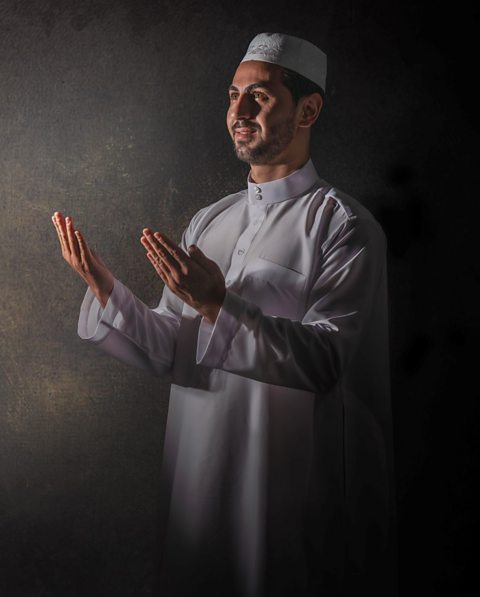
In the early Islamic civilisation, it was traditional to dress modestly and cover the body.
It was disrespectful if your clothing trailed on the ground or if the basic undergarments were past the ankle in length.
Men started wearing a long one piece garment with sleeves called a thawb.
Many women wore a headscarf or a veil to cover their faces.
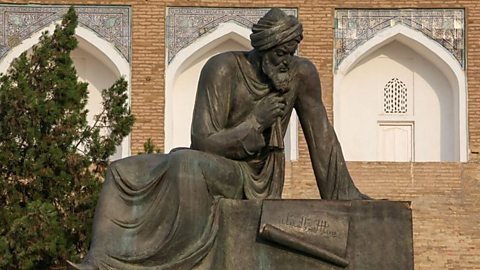
Men would often cover their heads with a turban.
Richer people in the society were able to afford damask fabric (named after Damascus in Syria) which was a patterned silk
Poorer workers would have worn cheaper materials such as wool and would have worn fewer layers.
During the Abbasid Caliphate (AD751 - 1258), court officials began to wear black for ceremonies.
Black became a popular colour for clothes because it represented wealth and high status.
What were clothes made from?
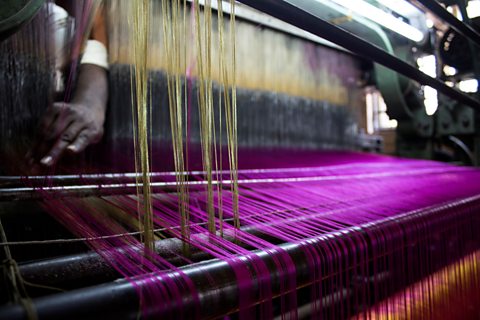
Most clothes were made from linen, cotton and wool.
Shoes and sandals were made of leather.
Traders in the early Islamic civilisation introduced new fabrics from countries like China. These included silk which was very expensive.
Special fabrics and perfumes
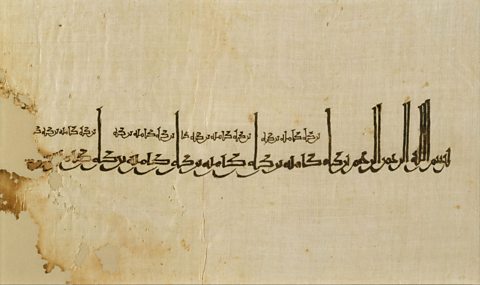
A Tiraz was a piece of fabric with writing on it such as a ruler's name. They were given to important people who worked with the Caliph as a sign of honour. They were worn as bands and sewn onto robes.
A Tiraz could be made of linen, wool or cotton. Some were dyed yellow, green, or brown. The writing would have been embroidered (sewn) onto the fabric.
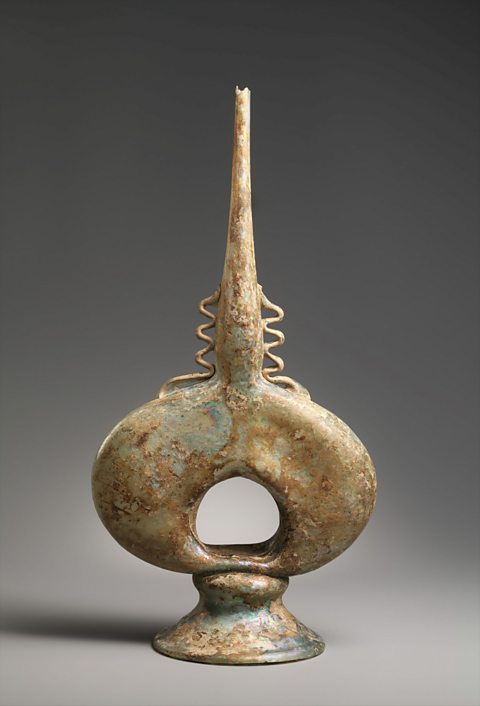
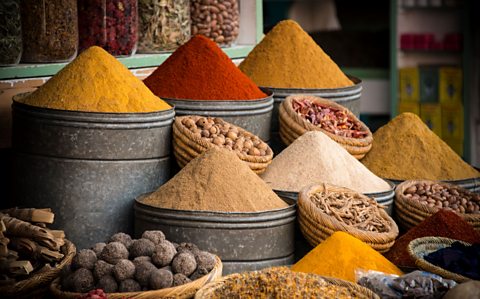
People used spices and oils to make perfume. Popular ingredients included roses, orange blossoms and water lilies.
Scientist Al-Kindi carried out experiments to work out ways of creating perfumes with plants and oils. Perfume could be used as part of religious ceremonies.
Activity: Quiz – Early Islamic clothing
Horrible Histories: Raid and Trade game! game
Play Horrible Histories: Raid and Trade KS2 History
More on Islamic civilisation
Find out more by working through a topic
- count9 of 10
- count1 of 10