Key points - Talking about studies and school
All Spanish Word used to describe an action, state of being or an occurrence. end in either ar, er or ir in the Form of the verb that has not been conjugated. Usually translated with 'to' in English, eg to play. form.
Some of the most common verbs in Spanish are irregular verbs and are A verb that is not in the infinitive form but has been changed to match the subject of the verb, for example I go, he goes. differently.
Use the Goes before a noun and means the. In Spanish the definite article changes according to whether the noun is masculine, feminine, singular or plural. when talking about school subjects and days of the week.
Vocabulary – School subjects
Have a look through the slideshow for the most common school subjects:
Click or tap on Show more to see a table of the vocabulary shown in the slideshow.
| Spanish | English | Spanish | English |
|---|---|---|---|
| el alemán | German | la geografía | geography |
| el español | Spanish | la historia | history |
| el francés | French | la religión | RS |
| el inglés | English | la informática | computer science/IT |
| las matemáticas | maths | la educación física | PE |
| la química | chemistry | el arte dramático | drama |
| la física | physics | el dibujo | art |
| la biología | biology |
Other useful nouns for talking about school subjects include:
| Spanish | English |
|---|---|
| Check your connection, refresh the page and try again. | subject |
| Check your connection, refresh the page and try again./Check your connection, refresh the page and try again. | languages |
| Check your connection, refresh the page and try again. | science |
| Check your connection, refresh the page and try again. | economics |
| Check your connection, refresh the page and try again. | business studies |
| Check your connection, refresh the page and try again. | food technology/cookery |
Useful adjectives for talking positively about subjects include:
| Spanish | English | Spanish | English |
|---|---|---|---|
| divertido/a | fun/enjoyable | interesante | interesting |
| fácil | easy | práctico/a | practical |
| fenomenal | great/fantastic | sencillo/a | simple |
| guay | great/cool | útil | useful |
| importante | important |
Useful adjectives for talking negatively about subjects include:
| Spanish | English |
|---|---|
| aburrido/a | boring |
| difícil | difficult |
| duro/a | hard |
| malo/a | bad |
Useful vocabulary for expressing opinions includes:
| Spanish | English |
|---|---|
| me chifla, me encanta | I love… |
| estar harto/a de… | to be fed up with… |
| interesar | to interest |
| lo bueno | the good thing |
| lo mejor | the best thing |
| lo peor | the worst thing |
| odiar | to hate |

For example:
Me encanta la física porque es práctica. - I love physics because it is practical.
Odio la cocina porque es aburrida. - I hate food technology because it is boring.
Grammar – Regular verbs in the present tense
All Spanish verbs end in either ar, er or ir. This form of the verb is called the Form of the verb that has not been conjugated. Usually translated with 'to' in English, eg to play..
For example:
Check your connection, refresh the page and try again. - to study
Check your connection, refresh the page and try again. - to learn
Check your connection, refresh the page and try again. - to write
When using verbs, you will need to be able to conjugate them. Conjugating a verb means changing the infinitive ending to match the Replaces a noun that is the subject of the verb., eg yo, tú, él, ella etc.
Remember
You don’t always need to use subject pronouns in Spanish as there is a unique verb ending for each subject pronoun.
Conjugating regular ‘ar’, ‘er’ and ‘ir’ verbs in Spanish
To conjugate regular verbs, remove the ar, er or ir ending from the infinitive and add the unique ending that goes with each subject pronoun to the The part of the verb that is left once the infinitive ending (ar/er/ir) has been taken off. It can also be called a radical..
Click or tap on Show more to see how to conjugate the regular verbs in Spanish.
Regular ar verb - estudiar
| Subject Pronoun | Stem | Ending | Example | English |
|---|---|---|---|---|
| yo | estudi | o | (yo) estudio | I study |
| tú | estudi | as | (tú) estudias | you (informal) study |
| él/ella/usted | estudi | a | (él/ella/usted) estudia | he/she/you (formal) studies |
| nosotros/as | estudi | amos | (nosotros/as) estudiamos | we study |
| vosotros/as | estudi | áis | (vosotros/as) estudiáis | you (informal) study |
| ellos/ellas/ustedes | estudi | an | (ellos/ellas/ustedes) estudian | they/you (formal) listen |
For example:
(Yo) estudio mucho en el colegio. - I study a lot at school.
Estudiamos el español tres veces a la semana.– We study Spanish three times a week.
Mi mejor amigo estudia la historia. – My best friend studies history.
Regular er verb - aprender
| Subject Pronoun | Stem | Ending | Example | English |
|---|---|---|---|---|
| yo | aprend | o | (yo) aprendo | I learn |
| tú | aprend | es | (tú) aprendes | you (informal) learn |
| él/ella/usted | aprend | e | (él/ella/usted) aprende | he/she/you (formal) learns |
| nosotros/as | aprend | emos | (nosotros/as) aprendemos | we learn |
| vosotros/as | aprend | éis | (vosotros/as) aprendéis | you (informal) learn |
| ellos/ellas/ustedes | aprend | en | (ellos/ellas/ustedes) aprenden | they/you (formal) learn |
For example:
Apendemos español en el colegio. – We learn Spanish at school.
¿Aprendes el francés? – Do you learn French?
Aprenden las matématicas con la Señora Jones. – They learn maths with Mrs Jones
Regular ir verb - escribir
| Subject Pronoun | Stem | Ending | Example | English |
|---|---|---|---|---|
| yo | escrib | o | (yo) escribo | I write |
| tú | escrib | es | (tú) escribes | you (informal) write |
| él/ella/usted | escrib | e | (él/ella/ usted) escribe | he/she/you (formal) writes |
| nosotros/as | escrib | imos | (nosotros/as) escribmos | we write |
| vosotros/as | escrib | ís | (vosotros/as) escribís | you (informal) write |
| ellos/ellas/ustedes | escrib | en | (ellos/ellas/ustedes) escriben | they/you (formal) write |
For example:
Escriben mucho en las clases de inglés. – They write a lot in English lessons.
Escribís muy bien. – You (plural informal) write very well
Me escribe una carta cada mes. – He writes me a letter every month
Grammar - Common irregular verbs in the present tense
Some of the most common verbs in Spanish are irregular verbs. This means that they don’t follow the usual pattern in the present tense. You have to learn each one separately.
Three of the most common irregular verbs are:
Check your connection, refresh the page and try again. - to be
Check your connection, refresh the page and try again. - to have
Check your connection, refresh the page and try again. - to go
| ser - to be | tener - to have | ir - to go |
|---|---|---|
| soy - I am | tengo - I have | voy - I go |
| eres - you are | tienes - you have | vas - you go |
| es - he/she is | tiene - he/she has | va - he/she goes |
| somos - we are | tenemos - we have | vamos - we go |
| sois - you (plural) are | tenéis - you (plural) have | vais - you (plural) go |
| son - they are | tienen - they have | van - they go |

For example:
Mi profe de matemáticas es aburrido. – My maths teacher is boring.
Tenemos un buen profesor de español. - We have a good Spanish teacher.
Voy a la clase de ciencias a las dos. – I go to the science lesson at two o’clock.
Present tense verbs – Mini quiz
Complete the following sentences with the correct part of the verb.
_____ la historia.
He studies history.
Estudia la historia.
_____ el francés también en mi colegio.
We also learn French in my school.
Aprendemos el francés también en mi colegio.
____ muchos deberes.
I have a lot of homework.
Tengo muchos deberes.
En mi colegio los profesores ____ simpáticos.
In my school the teachers are nice.
En mi colegio los profesores son simpáticos.
Find out more about verbs in the present tense in Present tense regular verbs in Spanish and Irregular verbs in the present tense in Spanish guides.
Reading practice

Read what these students say about the subjects they are studying.
For each extract write down:
a) which subject the student is studying
b) their opinion of that subject, choosing one of the following options:
positive
negative
both positive and negative
Answer in English.
- Me gusta mucho el francés.El profe es fenomenal y además es una asignatura muy útil.
a) French
b) The opinion is positive.
Translation:
I really like French. The teacher is great and it is also a very useful subject.
- Creo que las matemáticas son muy importantes, pero por desgracia es una asignatura que encuentro muy difícil.
a) Maths
b) The opinion is both positive and negative
Translation:
I think maths is really important but unfortunately it is a subject I find very difficult.
- El arte dramático es una asignatura fenomenal. Sin embargo, no creo que sea muy útil.
a) Drama
b) The opinion is both positive and negative.
Translation:
Drama is a great subject. However, I don’t think it is very useful.
- Odio las ciencias económicas. Es una asignatura muy aburrida y personalmente creo que no vale la pena estudiarla.
a) Economics
b) The opinion is negative
Translation:
I hate economics. It is a really boring subject and personally I don’t think it is worth studying.
- Me chifla la química. Es mi asignatura favorita, es muy interesante y creo que también es muy práctica.
a) Chemistry
b) The opinion is positive
Translation:
I love chemistry. It’s my favourite subject, it is very interesting and I also think it is very practical.
- Creo que el comercio es una asignatura muy importante que va a ser muy útil cuando salga del colegio. Sin embargo, no lo encuentro muy divertido.
a) Business studies
b) The opinion is both positive and negative.
Translation:
I think business studies is a very important subject that is going to be very useful when I leave school. However, I do not find it much fun.
- Me gustan todos los idiomas, pero el inglés es mi asignatura favorita. Algunos alumnos dicen que es duro, pero yo lo encuentro muy fácil. Además es una asignatura importante.
a) English
b) The opinion is positive
Translation:
I like all languages but English is my favourite subject. Some students say that it is difficult but I find it very easy. What’s more it is a very important subject.
- ¿Por qué tenemos que estudiar el dibujo? A mí, no me interesa nada - lo encuentro muy aburrido.
a) Art
b) The opinion is negative
Translation:
Why do we have to study art? It doesn't interest me at all – I find it boring.
Vocabulary – Giving opinions about school subjects
Useful phrases for giving more detailed positive opinions about school subjects include:
| Spanish | English |
|---|---|
| El español es difícil, pero me gusta. | Spanish is difficult, but I like it. |
| El profesor de matemáticas es muy divertido. | The maths teacher is very funny. |
| La religión es interesante. | RS is interesting. |
| Mi asignatura favorita/preferida es la química. | My favourite subject is chemistry. |
| La física es fácil. | Physics is easy. |
| Los idiomas son útiles. | Modern languages are useful. |
| Soy bastante bueno en matemáticas. | I am quite good at maths. |
Useful phrases for giving more detailed negative opinions about school subjects include:
| Spanish | English |
|---|---|
| El inglés me parece un poco aburrido. | I find English a bit boring. |
| La biología es la asignatura más difícil. | Biology is the most difficult subject. |
| La educación física es divertida, pero el profesor es estricto. | PE is fun, but the teacher is strict. |
| A veces encuentro que la informática es aburrida. | Sometimes I find IT boring. |
| Soy malo/mala en historia. | I'm bad at history. |
| El profesor de historia no es justo. | The history teacher is not fair. |
All Foundation Tier vocabulary listed in this guide can be found on the vocabulary sheet below.
Spanish uses the definite article in many situations where English doesn't, such as referring to days of the week and school subjects.
Days of the week
Days of the week typically are preceded by either el or los, depending on whether the day is singular or plural. All days of the week are masculine so it will always be el or los.
The names of the weekdays don't change in the plural form.
For example:
Voy al club de fútbol el martes. - I'm going to football club on Tuesday.
Voy al club de fútbol los martes. - I go to football club on Tuesdays.
School subjects
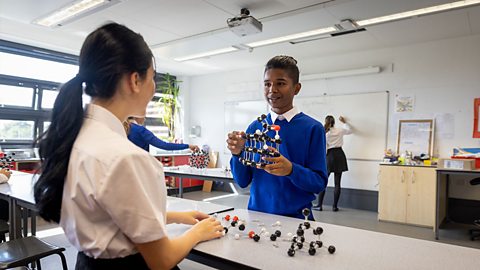
School subjects are typically preceded by the definite article el, la,los or las. For example:
Me gusta el inglés – I like English
No me gustan las ciencias – I don’t like science
Me encanta el español – I love Spanish
Grammar - Talking about the time

Saying what time it is - on the hour
To find out what the time is, ask ¿Qué hora es? - What time is it?
Reply with son las followed by a number to say the time on the hour.
For example:
Son las dos. - It is two o’clock.
However, for one o’clock only, use es la instead of son las.
For example:
Es la una. - It is one o’clock.
Click or tap on Show more to see how to say the time when it is on the hour.
| Spanish | English |
|---|---|
| Check your connection, refresh the page and try again. | It is one o’clock |
| Check your connection, refresh the page and try again. | It is two o’clock |
| Check your connection, refresh the page and try again. | It is three o’clock |
| Check your connection, refresh the page and try again. | It is four o’clock |
| Check your connection, refresh the page and try again. | It is five o’clock |
| Check your connection, refresh the page and try again. | It is six o’clock |
| Check your connection, refresh the page and try again. | It is seven o’clock |
| Check your connection, refresh the page and try again. | It is eight o’clock |
| Check your connection, refresh the page and try again. | It is nine o’clock |
| Check your connection, refresh the page and try again. | It is ten o’clock |
| Check your connection, refresh the page and try again. | It is eleven o’clock |
| Check your connection, refresh the page and try again. | It is twelve o’clock |
Saying what time it is - Quarter past, half past and quarter to
To say the time in Spanish when it is quarter past, half past or quarter to the hour, say the hour first followed by the relevant phrase:
Check your connection, refresh the page and try again. – quarter past
Check your connection, refresh the page and try again. – half past
Check your connection, refresh the page and try again. – quarter to
For example:
Check your connection, refresh the page and try again.. - It’s quarter past eight.
Check your connection, refresh the page and try again.. - It’s half past eleven.
Check your connection, refresh the page and try again.. - It’s a quarter to ten.
Saying what time it is - 5 minute increments
Click or tap on Show more to see how to say minutes past the hour or minutes to the hour.
| Spanish | English |
|---|---|
| Check your connection, refresh the page and try again. | five past |
| Check your connection, refresh the page and try again. | ten past |
| Check your connection, refresh the page and try again. | twenty past |
| Check your connection, refresh the page and try again. | twenty-five past |
| Check your connection, refresh the page and try again. | five to |
| Check your connection, refresh the page and try again. | ten to |
| Check your connection, refresh the page and try again. | twenty to |
| Check your connection, refresh the page and try again. | twenty-five to |
For example:
Son las nueve y diez. - It is ten past nine.
Es la una menos veinte. - It is twenty to one.
Telling the time in French – Mini quiz
Translate the following sentences into Spanish.
It’s ten past eight.
Son las ocho y diez.
It’s twenty past ten.
Son las diez y veinte.
School starts at 8 o’clock.
El colegio empieza/comienza a las ocho.
It finishes at 2.30.
Termina a las dos y media. - It finishes at half past two.
OR
Termina a las dos treinta. - It finished at two thirty.
Listening practice
Listen to a Peruvian student talking about her school day and say what time each activity starts.
- What time does the maths lesson start?
The maths lesson starts at 8:10.
- What time does the Spanish lesson start?
The Spanish lesson starts at 9:10.
- What time is break?
Break starts at 10:30.
- What time does the English lesson start?
The English lesson starts at 11:00.
- What time is lunchtime?
Lunchtime is at 12:15.
Click or tap on Show more to read the transcript and translation of the audio.
Transcript
El colegio empieza a las ocho y la primera clase, las matemáticas, empieza a las ocho y diez. Después tengo una clase de español a las nueve y veinte, la que encuentro muy aburrida. Tenemos el recreo a las diez y media, cuando como un bocadillo y charlo con mis amigas. A las once hay una clase de inglés que me gusta porque el profe es muy divertido. La comida es de doce y cuarto hasta la un menos cuarto.
Translation
School starts at eight and the first class, maths, starts at ten past eight. Then I have a Spanish class at nine twenty, which I find very boring. We have break at ten thirty, when I eat a sandwich and chat with my friends. At eleven there is an English class that I like because the teacher is very funny. Lunch is at a quarter past twelve until quarter to one.
Vocabulary sheet
Click or tap on the image below for a list of useful vocabulary to use when talking about school subjects.

Higher Tier – Vocabulary – Describing school subjects
Useful Higher Tier vocabulary for talking about school subjects and giving opinions includes:
| Spanish | English |
|---|---|
| inútil | useless |
| (no) vale la pena | it's (not) worth it |
| Soy un poco débil en tecnología. | I am not great at technology. |
| La geografía es complicada. | Geography is complicated. |
All vocabulary listed in this guide can be found on the vocabulary sheet below.
Higher Tier - Vocabulary sheet
Click or tap on the image below for a list of useful Higher Tier vocabulary to use when talking about yourself and others.
Now you have revised the important vocabulary and key grammar points for school subjects and studies, why not have a look at the House and home in Spanish guide?
Careers advice and tips from BBC Bitesize
Future careers, further studies and the world of work - we're here to help with advice from experts and from young people who've found their path.

More on Education and work
Find out more by working through a topic
- count2 of 4

- count3 of 4

- count4 of 4