Quick version
Numerous factors drove migration of Scots from rural Lowland areas during the 18th and 19th centuries.
Before the Industrial Revolution transformed Scottish towns and cities, an Agricultural Revolution was transforming work and life in Scotland's rural areas.
- new technologies, such as ploughs and machines, transformed agriculture and modernised work practices
- changes in land use as shared enclosed land disappeared and large privately-owned farms got bigger
- these new development meant that
- fewer farmers owned and worked their own land or rented land
- fewer workers were required to run farms
At the same time, mills and factories in Scottish towns needed workers.
- factories offered year-round work
- pay was often better and accommodation was often offered
- some mills offered healthcare, and education to workers' children
- urban life also offered a more varied social life and more recreation opportunities
As a result, rural populations in the Lowlands shrank - more and more people migrated to towns and cities for stable employment, better paid work, and the promise of a new life.
Learn in more depth
Scottish migration
Migration is the movement of people from one place to another – either within a country, or from one country to another.
Migration within Scotland during the 19th and early 20th century can be divided into two different categories; Lowland migration and Highland migration.
While sharing some similarities, the Highlands and Lowlands of Scotland had very different systems of land holding, farming, and employment.
The process that encouraged migration were different in each region as a result. Migration patterns varied considerably.
Scottish rural life in the 18th century
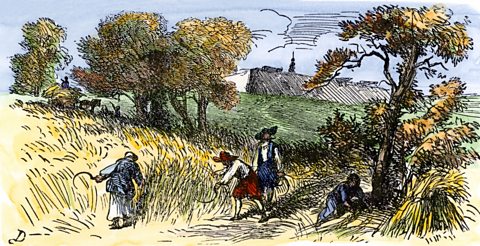 Image source, North Wind Picture Archives/ALAMY
Before the Industrial Revolution, the majority of Scotland's population lived in rural areas. By 1830, 60% of people earned their living from the land. (Source: An Economic History of Scotland in the Eighteenth Century, H. Hamilton, 1963.)
Life was hard for most people. Most workers produced little and earned little. They grew the crops and raised animals needed to feed their family and any small amount of surplus was sold to generate a little extra income.
People in rural areas were almost entirely self-sufficient and they made most of their own clothing, furniture, and tools from the raw materials they produced on the farms or from forests. Most of the manufacturing was done within the home – known as "cottage industry".
Life revolved around the agricultural seasons; planting, cultivating, harvesting, and then processing the harvest. The way of life changed little from one generation to the next, and most sons followed their father's trade.
For many there was a constant threat that their crops might fail which could have devastating consequences such as hunger, poverty and even death.
Image source, North Wind Picture Archives/ALAMYThe Agricultural Revolution
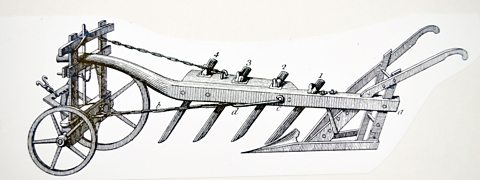 Image source, Photo 12/ALAMY
From the mid 17th century through to the end of the 18th century – overlapping with the Industrial Revolution – agricultural practice in Britain underwent its own revolution.
- new technologies such as ploughs and seed planting machines made farm work more efficient
- the selective breeding of livestock improved health, durability, and meat yields from animals
- new farming techniques, such as crop rotation, improved the yields of crops
- new type of crops, such as turnips, were introduced
- land improvements such as draining and irrigation increased the amount of land that could be farmed
- shared common land was claimed through enclosure to make larger, more profitable farm lands
The advancements during this period saw harvests of key food crops increase significantly. This helped the population grow, which in turn helped provide the workers that powered the Industrial Revolution that transformed Britain into the main global economic and military power.
Image source, Photo 12/ALAMYWhat effect did the Agricultural Revolution have on Lowland Scotland?
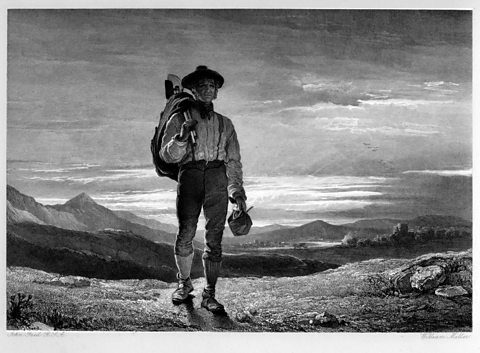 Image source, Historic Images/ALAMY
The changes brought about by the Agricultural Revolution made life increasingly hard for people living and working in the rural areas of Lowland Scotland.
The enclosure of common land to form bigger, more profitable farmland deprived communities of grazing land to raise their own livestock.
After 1840 the process of rural depopulation was accelerated in the Lowlands by the introduction of labour-saving technology, such as the self-binding reaper and the potato digger.
In 1840 it took 22 man days to tend an acre of barley; by 1914 it was down to 12 and by 1951 it had dropped to three days.
Many people who had previously relied upon their small holdings for a living now made up a large landless labour force dependant on seasonal work. Tenants of smaller farms – sub-tenants or cottars – became employees on much larger farms.
Because tenant farmers rented houses with the land they worked, if they did not find employment they also lost their homes.
At the same time, the factories and mills of Scottish towns and cities had a demand for labour. For many Lowland Scots, the promise of year-round employment, with the potential of better working and living conditions, was enough to make them migrate to urban centres.
Image source, Historic Images/ALAMYThe appeal of urban living
The attraction of towns and cities was a result of several pull factors for migration.
- Industrial work offered significantly higher wages than farm labour.
- Although work in a factory could be hard it had set hours and was indoors - sometimes with days off.
- Agricultural labourers worked long hours and had limited opportunities for leisure.
- Urban life delivered a more varied social life than in rural areas.
- Towns offered shorter working hours, more free time, and greater independence.
- Many rural workers lived in poor conditions - they sought better housing in the towns and cities.
These factors contributed to a substantial decline in rural population in the Lowlands between 1861 and 1891.
Lowland migration patterns
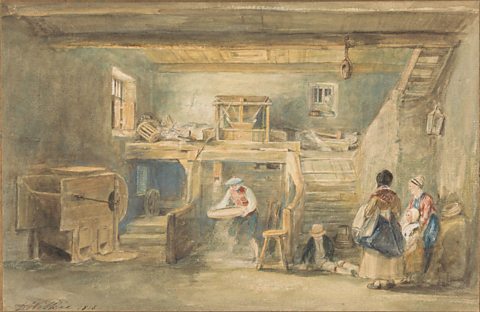 Image source, Gallery Of Art/ALAMY
Patterns of Lowland migration saw displaced farm laborers moving to the nearest towns for work and accommodation. For example, a significant portion of Peeblesshire's population moved to Edinburgh by 1851.
Growing towns actively recruited from surrounding rural areas. These towns sometimes served as temporary stops for migrants transitioning to urban life. Falling agricultural prices led to further job losses for both skilled and unskilled farm workers.
Additionally, the rise of power looms devastated cottage industry textile manufacture in rural villages, prompting large-scale migration. The expanding railway network also undermined traditional rural trades by facilitating the distribution of cheap factory goods.
By the end of the 19th century, out-migration from all rural Lowland areas exceeded natural population increase, leading to irreversible population decline. Between 1861 and 1901 urban populations grew significantly faster than a natural increase from rising birth rates:
- town populations were growing by an average of 13% per decade (3% higher than the anticipated natural rise of 10% per decade)
- rural populations dropped by 5% decade-by-decade
Image source, Gallery Of Art/ALAMYLowland emigration after World War One

After the end of World War One in 1918, Scotland's heavy industries experienced a serious decline.
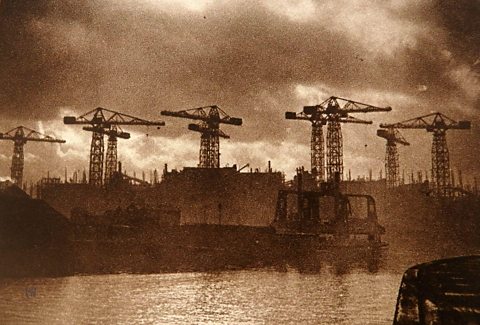
No longer building warships, or making armaments and ammunition, demand for industrial products built in Lowland factories and mills declined significantly. Scottish shipbuilding firms struggled to win new contracts leading to high unemployment on the Clyde.
Facing economic hardship, many Lowland Scots contemplated emigration to seek employment and a new life in the territories of the British Empire.
With the demobilisation of men who had fought in the war, unemployment in post-war Britain was high.
Government action
After World War One, the government set up the Overseas Settlement Committee to help ex-soldiers emigrate.
The Empire Settlement Act was introduced in 1922. This provided the first large scale government assisted migration programme. In an attempt to , the UK government passed the Empire Settlement Act of 1922.
It was intended to ease the unemployment rate while boosting the rural populations of Canada, Australia, and New Zealand. The act offered financial assistance to emigrants who agreed to work the land for a certain period of time.
The Canadian government actively encouraged emigration from Scotland. Full-time agents based in Glasgow and Inverness promoted a move to Canada.
To escape unemployment and hardship at home, many Scots took advantage of the scheme and sought a new life abroad.
Emigration from Scotland after World War One
In the period between the two World Wars, Scotland had the highest emigration rate of any European country:
- Many Scots saw emigration as an escape from the depressed industrial areas of the central Lowlands .
- Scots moving abroad made up 60 per cent of the total British emigration in the 1920s.
- This resulted in a ‘brain drain’ where skilled and educated Scots left Scotland in search of better wages abroad.
- The 1931 census showed a drop in Scotland's population for the first time since official records began in 1801.
Test what you have learned
Quiz
Recap what you have learned
Numerous factors dove migration of Scots from rural Lowland areas during the 18th and 19th centuries.
Before the Industrial Revolution transformed Scottish towns and cities, an Agricultural Revolution was already transforming work and life in Scotland's rural areas.
- new technologies, such as ploughs and machines, transformed agriculture and modernised work practices
- changes in land use meant farms got bigger but smaller workforces were required
- rising rents and decrease in shared land and employment meant fewer tenant farmers could support their families
- new employment opportunities in towns and cities in mills and factories
- factories often offered better pay and conditions
- urban living offered more social and recreational activities
More on Migration and Empire
Find out more by working through a topic
- count3 of 13