Introduction to transformations on different shapes

This page has been put together to help you practise and revisit some of the brilliant skills you’ve learned all through primary school.
It’s a great way to boost your confidence in Maths and get you ready for the exciting next step into Year 8!
Let's move those shapes!
Complete this page and you’ll discover:
- the 3 ways to transform (move) a shape: rotation (turn), reflection (flip), and translation (slide)
- how to fully describe a rotation using its angle, direction, and centre
- how transformations are linked to coordinates on a grid
- how to perform multi-step transformations (one move after another)
The three transformations
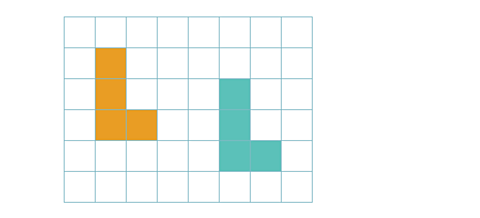
A transformation is a specific way to move a shape on a grid without changing its size.
- Translation (slide) This is the simplest move. The shape just slides to a new position. It doesn't turn or flip.
How to describe it: you just need directions, eg "Translate 5 squares right and 2 squares up."
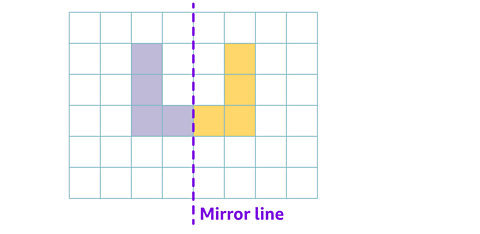
- Reflection (flip) The shape is flipped over a 'mirror line' (also called a 'line of reflection').
How to describe it: you just need the position of the mirror line, eg "reflect in the y-axis" or "reflect in the x-axis."
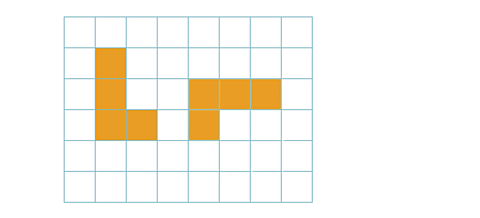
- Rotation (turn) This is a turn. It is the most complex transformation because it needs three pieces of information.
- Angle. How far to turn (eg 90°, 180°).
- Direction. Clockwise or anti-clockwise.
- Centre of rotation. The point the shape spins around (eg the origin (0,0) or a corner of the shape).
Multi-Step transformations
A multi-step problem asks you to do two or more transformations, one after the other.
The order is very important!
"Translate then reflect" can give a different result than "Reflect then translate".
Coordinate transformation
Summary
You've mastered transformations! You can now move a shape in three different ways:
Translation (a slide, described with directions like 'right' and 'up').
Reflection (a flip, described with a mirror line).
Rotation (a turn, described with an angle, direction, and centre).
You also know how to work with coordinates and follow multi-step instructions.
Brain boost
Think about these questions to stretch your thinking and sharpen your skills!
What is the only piece of information you need to describe a Translation?
What are the three pieces of information you always need to describe a Rotation?
"A 180° rotation is the same as a reflection." Is this statement true or false? Why?
Have a chat about your answers with a parent, teacher or your class.
More on Practise and revise KS2 maths
Find out more by working through a topic
- count23 of 24
- count24 of 24
- count1 of 24
- count2 of 24