Introduction to symmetry and tessellations
This page has been put together to help you practise and revisit some of the brilliant skills you’ve learned all through primary school.
It’s a great way to boost your confidence in Maths and get you ready for the exciting next step into Year 8!
Let's look at shapes, patterns, and reflections!
In this guide, you will learn:
- what a line of symmetry is (a 'fold line' or 'mirror line' that makes two halves match perfectly)
- which common shapes have lines of symmetry and why a square has more than a rectangle
- how symmetry is used in architecture, nature, and art
- what tessellations are and how they link to transformations (flips, slides, and turns)
What is a line of symmetry?
A shape has a line of symmetry if you can draw a straight line through it (like a fold) and one side becomes a perfect mirror image of the other.
A rectangle has 2 lines of symmetry (one vertical, one horizontal).
A square has 4 lines of symmetry (one vertical, one horizontal, and two diagonal).
Why does a square have more? A square has diagonal lines of symmetry because all its sides are the same length. When you fold it diagonally, the corners match up perfectly. A rectangle's sides are not all the same length, so folding it diagonally doesn't work!
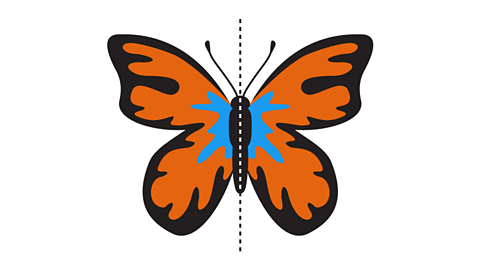
You can see symmetry all around you, from the wings of a butterfly to the windows on a building.

Tessellations and transformations
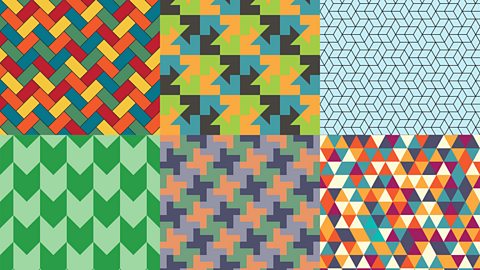
A tessellation is a pattern made of one or more shapes that fit together perfectly with no gaps or overlaps, like tiles on a floor or the pattern on a brick wall.
These patterns are made using three "transformations" (ways to move a shape):
Translation (slide): The shape simply slides to a new position without flipping or turning. (eg a brick wall pattern).
Reflection (flip): The shape is flipped over a mirror line (a line of symmetry) to create the next part of the pattern.
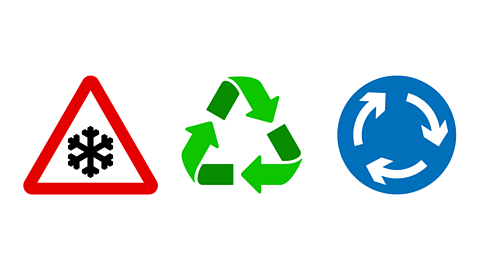
Rotation (turn): The shape is turned around a fixed point.
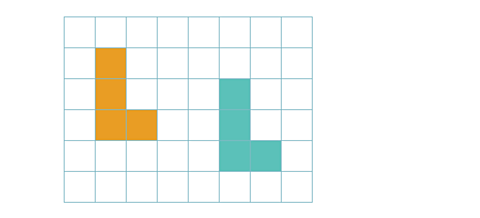
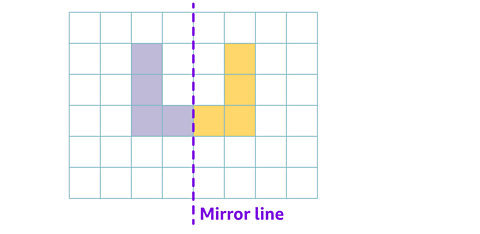
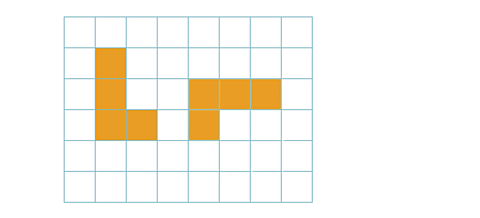
Symmetry Activity
Transformation detective
Summary
Fantastic! You are now a symmetry expert.
You know that a line of symmetry is a mirror fold and you can explain why a square has more lines than a rectangle.
You can also spot the transformations (flips, slides, and turns) used to make tessellating patterns.
Brain boost
Think about these questions to stretch your thinking and sharpen your skills!
Think of three capital letters of the alphabet. How many lines of symmetry does each one have? (eg A, H, T, B, F)
Why does a perfect circle have 'infinite' (too many to count) lines of symmetry?
Look at the pattern on a brick wall. What shape is tessellating? What transformation (slide, flip, or turn) is used to make the pattern?
Have a chat about your answers with a parent, teacher or your class.
More on Practise and revise KS2 maths
Find out more by working through a topic
- count19 of 24
- count20 of 24
- count21 of 24
- count22 of 24